Description
Start with the two words on the box
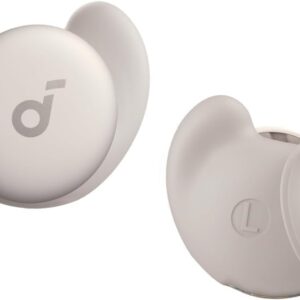
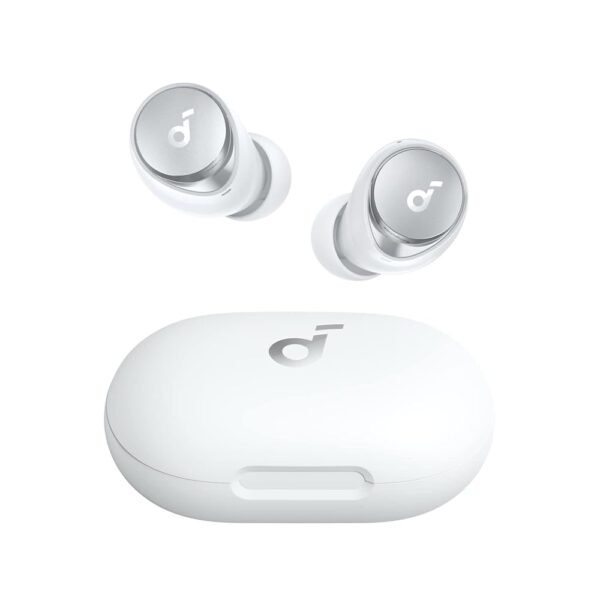
This is a Renewed unit of the Soundcore Space A40 by Anker, and that belongs in the first line rather than buried in the fine print. Renewed means the earbuds have passed through a refurbishment process rather than arriving as a factory sealed first sale. On a product whose entire value proposition is battery life and a sealed acoustic fit, that matters twice over: lithium cells lose capacity with age and cycles, and a housing that has been opened and reassembled is not guaranteed to seal the way a new one does. Wireless Emporium also carries a separate listing of the same A3936 model in standard retail form, so if the refurbishment status is a problem for you, that is the version to look for.
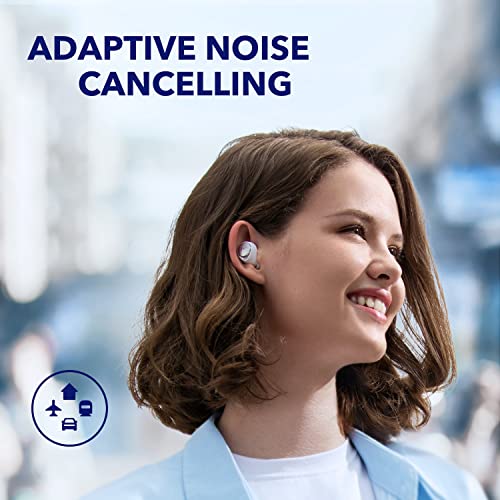
Setting that aside, the Space A40 is aimed at a commuter or a desk worker who wants adaptive noise cancellation and a long battery in a physically small earbud. Anker positions it as the smallest of its noise cancelling sets, and the fit argument is a real one, because a lot of ANC earbuds are bulky enough to press uncomfortably during a long flight.
Connection, and the one place the high resolution claim holds up
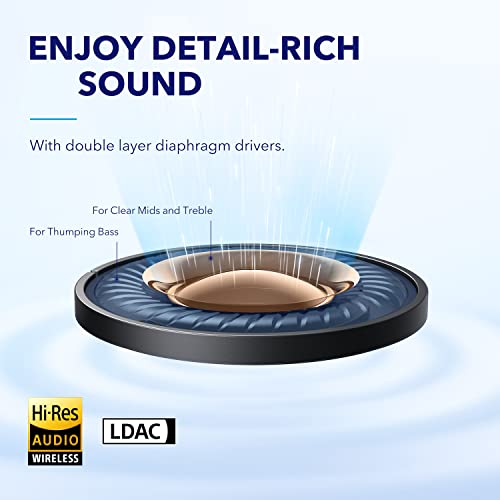
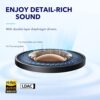
The listing headline says Hi-Res Sound, and unusually for this catalog, the bullets actually name the codec that would deliver it: LDAC. That is worth crediting, because most listings making a high resolution claim never name anything. LDAC is Sony’s codec, licensed widely on Android, and it carries a higher bitrate than SBC or AAC. The condition attached to it is absolute. LDAC only engages when the source device also supports LDAC and has it enabled. That means an Android phone running a recent version of the operating system with LDAC available in developer or Bluetooth settings. iPhones do not support LDAC at all. If you are on iOS, the Space A40 will connect over AAC or SBC and the Hi-Res wording on the box will describe a capability you cannot use.
The Bluetooth version this listing never publishes
There is no Bluetooth version anywhere in the specification block. The only radio figure given is a 10 meter range, which is the generic Class 2 number and appears on nearly every earbud sold. If Bluetooth version matters to you, and in most cases it should not, you will need to confirm it with Anker before ordering. A version number is not a sound quality specification in any case. It affects connection stability, power draw and support for newer standards, and nothing else.
The listing does not mention multipoint, so do not assume the buds will hold a phone and a laptop simultaneously. It does not mention wear detection either. It does name a Soundcore app for customization, and the control method field lists App, which is where the equalizer and the noise cancellation modes live.
Battery, and a total that does not add up
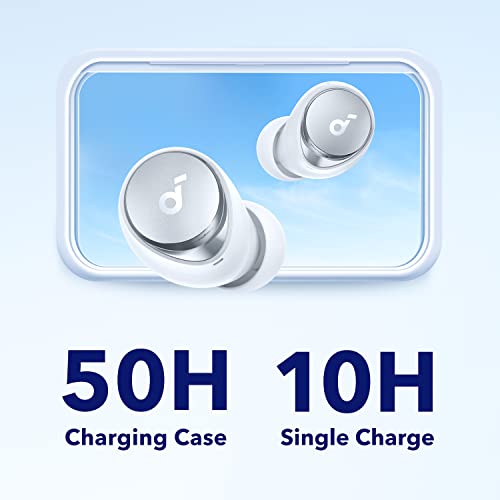
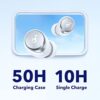
Anker quotes 50 hours of playtime as the headline figure and 10 hours as the single charge playtime of the buds themselves. Those are the two numbers to keep separate: 10 hours is what you get in your ears, 50 hours is the marketing total across case recharges. A fast charge claim of 4 hours of listening from a 10 minute top up is also published, and the case supports wireless charging.
The arithmetic does not close. The structured specification field reads “Carrying Case Battery Average Life = 24 Hours”. Ten hours in the buds plus 24 hours in the case is 34, not 50. One of those figures is wrong and the listing gives no way to tell which. It is possible the 50 hour headline refers to a different configuration, perhaps with noise cancellation off, while the 24 hour case field was entered from a different variant. We are flagging the discrepancy rather than picking a number. Separately, the 10 hour bud figure is a best case that assumes moderate volume, and adaptive noise cancellation running continuously will cut into it by an amount Anker does not publish.
Fit, seal and the water rating that does not exist
The ear tip selection is the strongest thing on this listing. Five sizes ship in the box: extra small, small, medium, large and extra large. That is above the three size norm and it genuinely matters, because seal decides perceived bass on any sealed earbud and it caps how much the noise cancellation can achieve. Active cancellation works on top of whatever passive isolation the tip provides, so a bad seal degrades both at once. Five sizes gives a meaningfully better chance of finding one that works, particularly for smaller ear canals where the standard medium tip often fails.
The water rating is the gap. There is no IP code published anywhere on this listing. Not IPX4, not IPX5, nothing. The recommended uses include exercising, which implies some sweat tolerance, but an implication is not a rating. We are not going to write a water resistance claim that the listing does not state. If you intend to train in these, treat them as unrated and confirm with Anker directly. As a general point, no IP rating covers seawater or pressurized water, and seals degrade with age, which on a Renewed unit is an additional unknown.
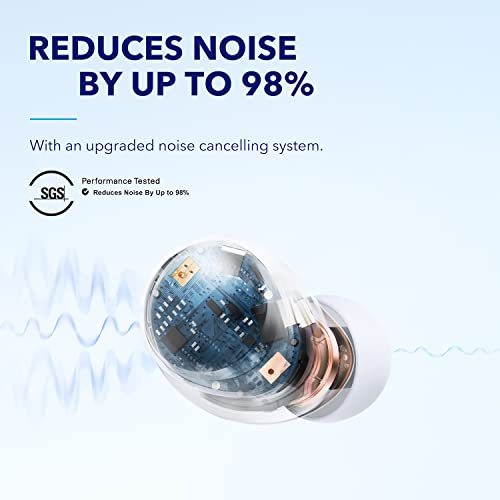
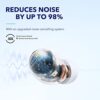
Anker’s noise cancellation headline is a reduction of up to 98 percent. That figure comes from Anker, no test standard is named, and no frequency band is specified. Active noise cancellation is genuinely effective against constant low frequency sound such as engine drone, cabin noise and air conditioning, and it is considerably weaker against speech and sudden sounds. A single percentage figure with no methodology behind it does not describe that difference and should not be read as making a room silent. Note also that this is a closed, actively cancelling design, which makes it the wrong choice for cycling or road running where hearing traffic is a safety requirement. For that use, look at our open fit headphone listings.
The data problems, and what to consider instead
This listing has no written product description at all, only bullets, which is why several basic facts are missing. Among the fields that are present, a few are clearly wrong. Material is listed as Paper, which appears to have been lifted from Anker’s own line about the buds being as light as a sheet of paper. Carrying case weight reads “0.1 Hundertstel Pfund”, a fragment of a German unit conversion that never got translated. Driver size is not published, only that Anker uses a double layer diaphragm dynamic driver. The 20 Hz to 20,000 Hz frequency range carries no tolerance figure and is close to meaningless without one. Item weight of 18.14 grams and 0.64 ounces at least agree with each other.
Customer feedback sits at 4.3 out of 5 across 623 ratings, which is a reasonable sample. Amazon places it around 36,896th in Electronics, 167th in Renewed Headphones and 2,651st in earbud and in ear headphones. If you want a current Soundcore set on a standard listing with a published IP rating, our Soundcore P30i review is the closer comparison, and the Soundcore A3949 review covers a bass focused alternative in the same family. If you would rather have over ear noise cancellation at a similar outlay, the Soundcore Life Q20 review is the obvious step sideways. For a flagship where the codec and rating picture is fully documented, see the Sony WF-1000XM5 review. Wider options are in our wireless earbud listings.
Buy or skip
Buy it if you are on an Android phone that supports LDAC, you want a genuinely small ANC earbud, and you need the wide tip range to get a seal. Skip it if you are on an iPhone and were buying for the Hi-Res line, because LDAC will not engage. Skip it if you need a stated water rating for training, because this listing publishes none. Skip it if the Renewed status and the aged battery question bother you, since battery life is the main reason to buy this model. Before ordering, ask the seller which total playtime figure is correct, because 50 hours and 24 hours of case reserve cannot both be right.