

Description
A sleep specific earbud, sold here as a Renewed unit
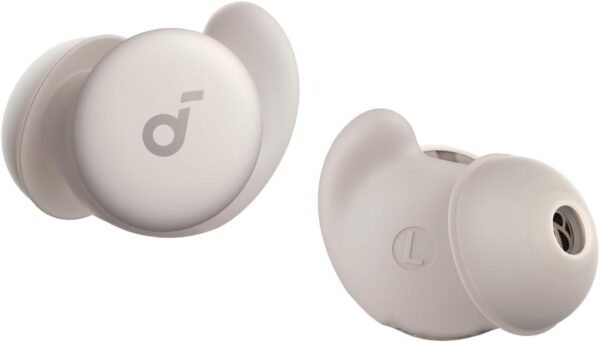
This is a Renewed unit of the Soundcore Sleep A20 by Anker, and both facts shape the review. Renewed means the set has been refurbished rather than sold factory sealed, which on a product built around an 80 hour battery figure is worth weighing, since lithium cells lose capacity with age and cycles. The Sleep A20 is not a general purpose earbud that happens to be comfortable lying down. It is a purpose built sleep device with a sleep position sensor, a white noise library, a personal alarm and a housing shaped specifically to sit below the profile of your ear so a pillow does not press it into your canal.
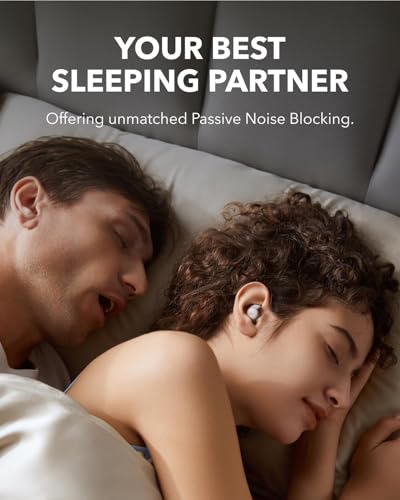
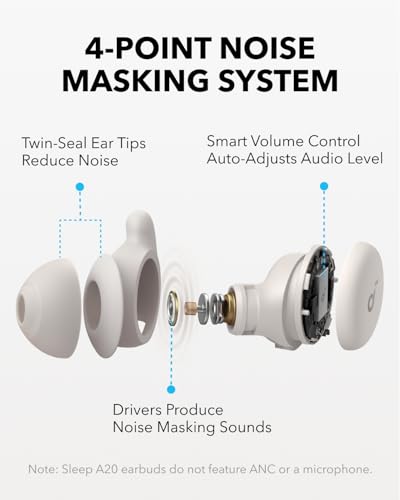
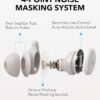
Anker is also unusually straightforward about what it is not. The listing states plainly that the Sleep A20 does not feature active noise cancellation. What it offers instead is passive blocking through twin seal ear tips, plus sound masking, which is a different approach: rather than cancelling noise electronically, it covers it with broadband sound. That is the correct engineering choice for sleep, because ANC processing adds power draw and works poorly on the sounds that actually wake people, which are speech and sudden noises rather than steady drone.
Connection, and what it is designed to stream
Bluetooth 5.3 is published. As always, the version number is not a sound quality specification; it governs connection stability, power behavior and support for newer standards. No audio codec is named anywhere on this listing, which for a sleep product carrying a balanced armature driver and a white noise library is a defensible omission rather than a serious one. There is no basis here for a high resolution claim and Anker does not make one, which is to its credit.
Two operating modes, and they are not the same product
The Sleep A20 runs in two distinct modes and the difference matters more than any other specification on the page. In sleep mode it plays from its own onboard sound library without a phone connection, which is why the battery figure is so high. In Bluetooth mode it streams from your device, which costs considerably more power. Compatible devices are listed as iPhone, iPad and Computer, an oddly narrow list for a product whose companion app exists on both major platforms, so confirm Android support with Anker if that is what you use.
There is no mention of multipoint anywhere, and for this use case that is fine. The sleep tracking runs off a MEMS sensor combined with a real time clock, logging position and movement through the night, and the alarm is designed to wake only the wearer rather than a partner, which is the genuinely clever part of the concept.
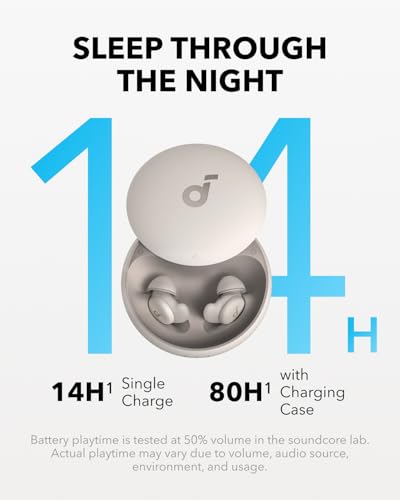
Battery: four figures, split across two modes
Anker publishes the numbers properly here. In sleep mode the buds run 14 hours on a single charge, extending to 80 hours with the case. In Bluetooth mode the buds run 10 hours on a charge, with an additional 55 hours from the case. Keep the bud figures and the case totals separate. The number that decides whether these get through a night is 14 in sleep mode or 10 in Bluetooth mode, and both comfortably cover a full sleep cycle. The 80 hour headline describes roughly five nights between wall charges, not a single session.
The structured specification field agrees with the sleep mode bud figure at 14 hours, which is unusual in this catalog and worth noting as a point in the listing’s favor. The usual caveat still applies: quoted playtime assumes moderate volume, and higher volume shortens it.
Fit, seal and a rating that is not published
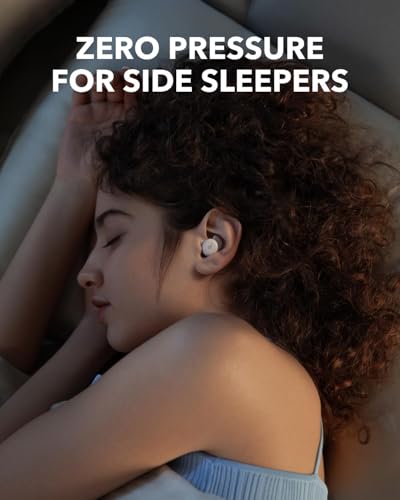
The fit system is the most thoroughly specified part of this listing, and it deserves the space. The box contains four sealed ear tip sizes, three breathable ear tips and three ear wings. That is a far wider fit kit than almost anything else in this catalog, and it exists because a sleep earbud has to work while a pillow is pressing on it. Anker describes the housing as combining an Air Wing with a three dimensional ergonomic shape in a soft material, specifically so a side sleeper is not putting pressure through the bud into the ear canal. The distinction between the sealed tips and the breathable tips is worth understanding: sealed tips block more noise, breathable tips are more comfortable over many hours and let more sound in. You are trading isolation against all night comfort and the box lets you choose.
The driver is a balanced armature rather than a dynamic driver, which is the right pick for a small housing playing quiet content, and impedance is listed at 16 ohms. Anker claims the twin seal tips deliver three times stronger passive noise blocking, a figure with no baseline stated and no test standard named, so attribute it rather than treating it as measured.
The water rating is a gap. The specification field says “Water Resistance Level = Waterproof”, and no IP code appears anywhere on the listing. Waterproof with no IP code is not a rating, it is a word. We are not going to publish a water resistance claim this listing does not support. For a bedside device it is a minor issue, but it should not be described as protected against anything.
The safety dimension nobody puts on the box
A sleep earbud raises questions a normal earbud does not, and they are worth stating rather than skipping. Wearing sealed earbuds through an entire night means several hours of continuous audio and several hours of occluded ear canals. Anker includes what it calls smart volume control to prevent unwanted volume, which is a sensible feature, but a volume limit is only meaningful if it cannot be bypassed and the listing does not say whether it can be. Keep the level as low as the content allows, and understand that a longer exposure at a given volume is not equivalent to a short one.
The second point is more practical. Sealed tips plus sound masking is a combination designed to stop you hearing your environment, and that includes a smoke alarm, a crying child, a knock at the door or a phone. Anker’s onboard alarm is designed to wake the wearer, which addresses your own alarm but nothing else. Decide deliberately whether that trade is acceptable in your household, and consider the breathable tips rather than the sealed ones if it is not. If a lower isolation approach appeals, a fabric headband design is the other common route, covered in our MUSICOZY sleep headband review.
Data problems, and what else to consider
Some fields are inherited nonsense. “Cable Feature = Detachable” appears on a fully wireless product. “Number of USB 2 Ports = 1” has no meaning on an earbud and has clearly been carried over from another category. Item weight of 7.4 ounces and package dimensions of 4.45 by 4.25 by 2.17 inches describe the shipping box, not the buds. The frequency range of 20 Hz to 20,000 Hz has no tolerance figure attached and tells you nothing.
Customer feedback is 3.8 out of 5 across 131 ratings, the softest score among the Soundcore products in this catalog, and low enough that it is worth reading the negative reviews before committing. Amazon places the listing around 8,936th in Electronics, 56th in Renewed Headphones and 973rd in earbud and in ear headphones. Note also that this catalog carries more than one Sleep A20 listing under different ASINs, so check the item number when comparing.
If you want a conventional Soundcore earbud for daytime use rather than sleep, our Soundcore P30i review and our Soundcore Space A40 review cover the mainstream options. If comfort in bed matters but you also want cancellation for travel, the over ear route in our Soundcore Life Q20 review is a different compromise. Broader alternatives are in our earbud headphone listings.
Buy or skip
Buy it if you are a side sleeper, you want onboard masking sounds without keeping a phone connected, and the wide fit kit solves a problem ordinary earbuds have not. Skip it if you wanted active noise cancellation, because Anker states there is none. Skip it if you need to hear your household at night. Skip it if the 3.8 rating and the Renewed status together feel like too much risk on a device with sealed batteries. Confirm Android compatibility before ordering, since the compatible devices field lists only Apple hardware and computers.