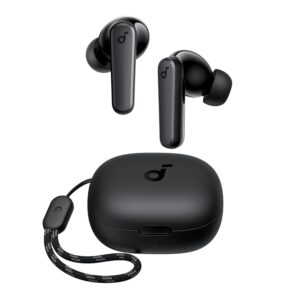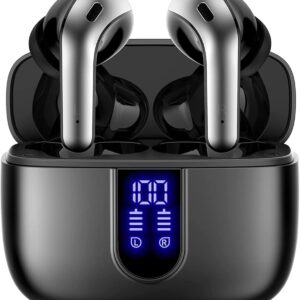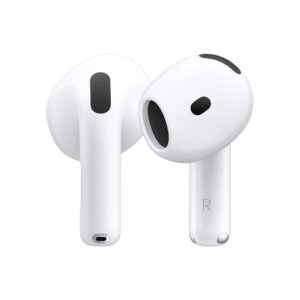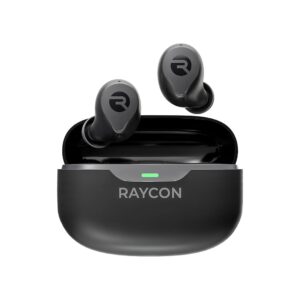



Description
Sony lists these earbuds under a title that opens with the words “The Best True Wireless Noise-Canceling Earbuds.” That is the manufacturer’s own marketing line, not a measured placing, and this review sets it aside. Everything below is taken from the published listing. We do not wear or measure any product covered on this site, so every figure here is attributed to whoever published it.
The listener this shape of product suits
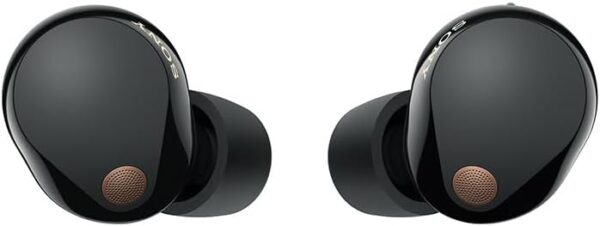
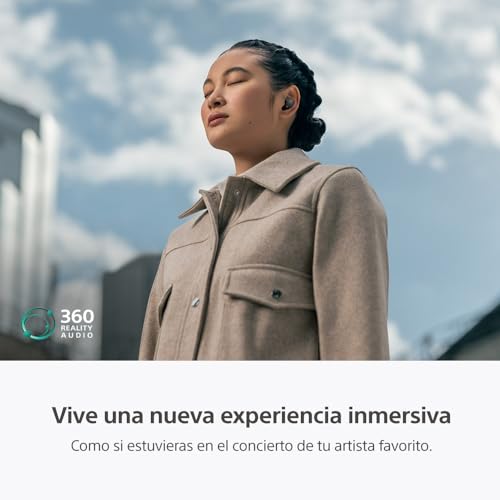
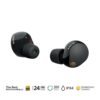
The WF-1000XM5 is a small sealed in-ear bud with active noise cancellation, supplied with a wireless charging case, a USB-C cable and four earbud tips. Sony records the intended uses as travel, entertainment and business, and lists compatible devices as phones, tablets, laptops, desktops and smart TVs. That is a commuter and desk profile: something that seals against cabin drone and disappears into a jacket pocket between uses.
It is a poor fit for anyone who needs to hear traffic. A sealed bud with cancellation engaged removes the low frequency cues a cyclist or road runner relies on, and nothing in this listing changes that. Readers shopping for outdoor awareness want a different design entirely, which is why this catalog keeps a separate shelf of designs that leave the ear canal open.
One oddity in the specification table deserves naming rather than quietly skipping. The field “Recommended Uses For Product” contains the single value “Hearing Aids.” This is a consumer Bluetooth earbud, it is not described anywhere as a hearing device, and no hearing assistance feature is claimed. Treat that field as import noise, along with “Theme: No Theme,” “Cartoon Character: no subject character” and “Style: national,” which are inherited from unrelated product categories.
How it connects, and what that actually delivers
This is where the listing contradicts itself, and the contradiction is worth stating plainly rather than resolving by guesswork. The manufacturer description says the earbuds use “Bluetooth 5.2.” The specification table says “Bluetooth Version: 5.0.” The feature bullet says “Bluetooth 5.0: Enjoy a stable wireless connection and seamless pairing.” Two of those three cannot be right. The listing does not say which is correct, and neither do we.
It matters less than the numbering suggests. A Bluetooth version number is not a sound quality figure and it is not a range figure. What a newer version changes is connection housekeeping: power draw, pairing behavior, stability in crowded radio environments and, at 5.2 and above, eligibility for LE Audio. The listing separately states a Bluetooth range of 10 meters, which is the ordinary figure for this class of device and assumes clear line of sight.
The codec claim, and what it requires
The description states that the WF-1000XM5 “supports LDAC for high-resolution audio streaming.” LDAC is a named codec, which puts this listing ahead of most in this catalog, but the claim only holds under a condition the listing never mentions: the source device has to support LDAC too. LDAC is an Android feature. It is present on most modern Android handsets and it is absent from iPhones, which top out at AAC over Bluetooth. The same listing title advertises that the product “Works with iOS & Android.” Both statements are true, and read together they are misleading, because an iPhone owner buying these for the high resolution claim will not get LDAC. On iOS this pair falls back to AAC like almost everything else, and the resolution claim does not apply.
The listing names no other codec, and it makes no statement about aptX, multipoint pairing to two devices at once, or wear detection. Where a feature is not published, we do not assume it exists.
The battery picture, separated properly
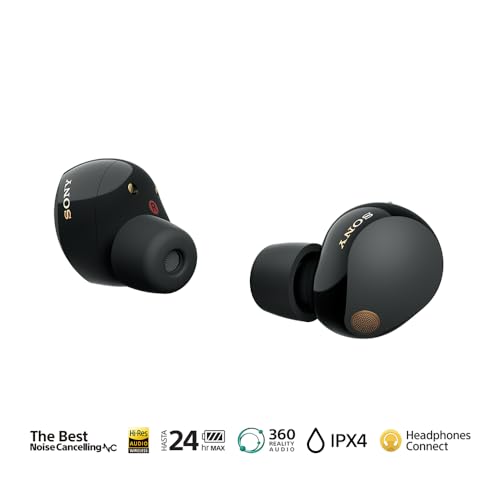
The listing title says “Up to 24 Hrs Battery,” and taken alone that number is misleading. The specification table breaks it down: “Battery Life: 8 Hours” for the buds themselves, and “Carrying Case Battery Average Life: 24 Hours” for the case. The feature bullet agrees, describing “up to 8 hours on a single charge and an additional 24 hours from the charging case.” So the honest reading is eight hours in your ears before the buds need the case, with the case holding roughly three more refills.
Two qualifications the listing does not make. An eight hour figure on a noise cancelling bud is a best case number, normally quoted at moderate volume, and cancellation running continuously pulls it down; Sony does not say whether the eight hours assumes cancellation on or off. And quick charging is claimed only in general terms, with no minutes-to-hours ratio published, so there is nothing specific to hold the manufacturer to.
Fit, seal, controls and the water rating
Fit decides how these sound. A sealed bud that does not seal loses its bass and most of its cancellation at the same time, so the tip count is a real specification. The listing says “4 Earbud Tips” are included. It does not say whether that means four sizes or two pairs, which is a meaningful difference for anyone with unusually small or large canals. Sony records the earpiece shape as a rounded tip, the driver as a dynamic type with no size published, and the impedance as 16 ohms. Weight is given as 0.4 ounces, and the 3.86 by 2.11 by 3.46 inch dimensions are clearly the retail package rather than the buds.
Controls are touch and voice. Here the listing disagrees with itself again: the product title advertises “Alexa Built-in,” while the specification table lists “Control Type: Google Assistant.” Both assistants may be reachable in practice, but the listing does not reconcile the two, and a buyer who cares which assistant is native should confirm before ordering.
On water, the title states an IPX4 rating and the bullet repeats it, calling the design “resistant to splashes and sweat.” That is the correct way to describe IPX4 and we will not upgrade it. IPX4 covers splashing from any direction. It does not cover immersion, it does not cover a shower, it says nothing about dust, and no IP rating covers seawater or pressurized water. The separate specification field simply reads “Water Resistant,” with no code at all. Ratings also degrade as seals age, so an IPX4 bud two years in is not the bud that left the factory.
What the listing does not publish, and where to look instead
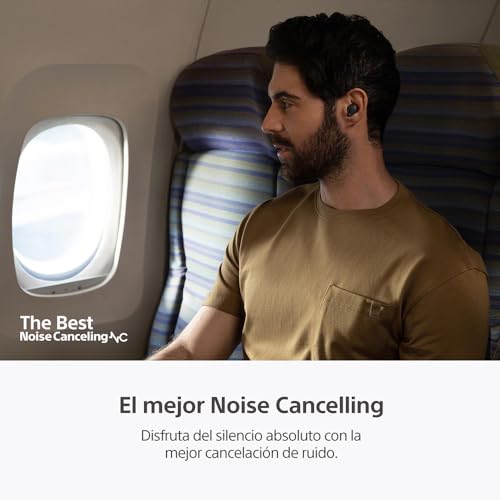
No decibel reduction figure is given for the cancellation, which is the honest outcome, because a decibel figure without a named test standard is not comparable between brands. Cancellation of this type works on constant low frequency noise such as engine and cabin drone and does much less against speech, so it will quiet a plane far more convincingly than it quiets an office. No product in this catalog makes a room silent and this one does not claim to.
Customer feedback sits at 4.2 out of 5 from 467 ratings, and the sales rank is given as 11,300th in Electronics and 1,075th in the earbud and in-ear headphone group. The model number is recorded as WF1000XM5/BCUC, a variant SKU, and this same model appears elsewhere in our catalog under a different ASIN, which is worth knowing before comparing listings. We cover that second entry in our writeup of the alternate Sony WF-1000XM5 listing.
If cancellation matters more than pocketability, our Sony WH-1000XM5 over-ear review covers what changes with a full sized cup. The cheaper Sony LinkBuds S publishes a shorter runtime still, while the Bose QuietComfort Earbuds II is the closer competitor on cancellation. Our wider shelf of true wireless earbuds lists the alternatives at every size.
Who should buy it and who should not
Buy it if you are on Android, you want LDAC, you commute in constant low frequency noise, and eight hours of bud runtime covers your longest listening stretch. Do not buy it for the high resolution claim if you are an iPhone owner, because LDAC will not be available to you. Do not buy it if you need awareness on the road, and do not expect a shower-proof bud, because IPX4 is splash and sweat only. Before ordering, confirm the Bluetooth version, confirm whether four tips means four sizes, and confirm which voice assistant is native, because this listing answers none of those three consistently.