


Description
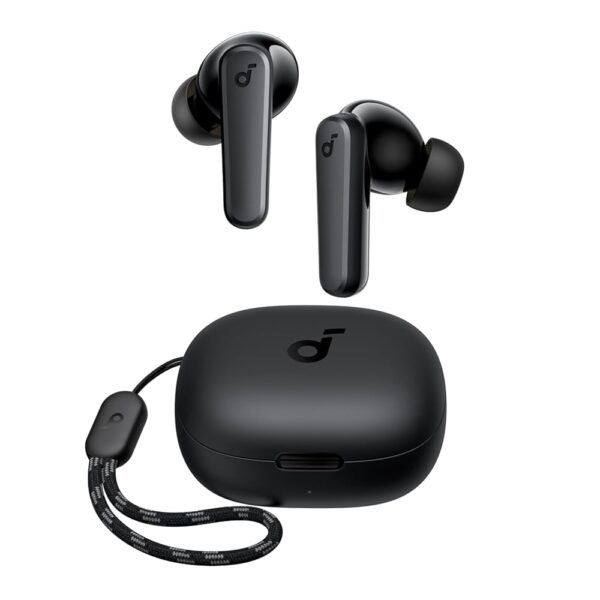
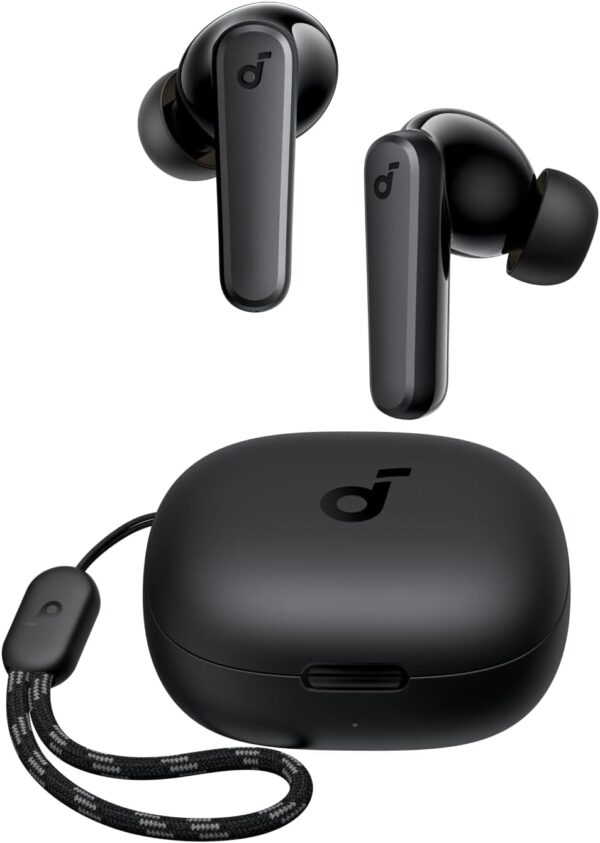
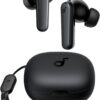
This listing covers the Soundcore P20i from Anker, catalog number A3949. It is a sealed true wireless earbud with 10 millimeter drivers, Bluetooth 5.3, a lanyard on the case and a companion app with 22 equalizer presets. It has no active noise cancellation, and the record contains a direct contradiction about how long the buds run, which is the first thing to settle.
The battery figures disagree with each other
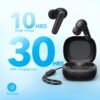
Anker’s own feature bullet states 10 hours of battery life on a single charge, with the case extending it to 30 hours, and a 10 minute quick charge giving 2 hours of playtime. The attribute block on the same record states a battery life of 5 hours, and separately records 30 hours against the carrying case.
Ten and five are not the same number and we are naming the gap rather than choosing one. The bullet figure comes from Anker’s marketing copy; the attribute figure comes from the structured data. If you need a bud that survives a long working day without returning to the case, treat 5 hours as the conservative reading and confirm before ordering. The 30 hours is the combined bud-plus-case total in either case, not a per-session figure.
A third field compounds it: charging time is listed as 10 hours, identical to the higher battery figure. That is the copied-field error that recurs throughout this catalog and is not a credible recharge time for an earbud. No real charge time is published anywhere.
Who these suit
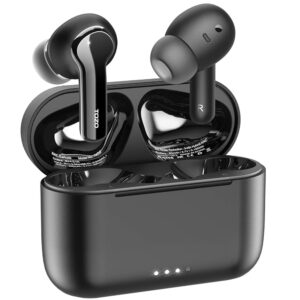
These are for someone who wants a simple sealed bud with app control and does not need cancellation. The case is compact with a lanyard attached, so it clips to a bag or keys, and the housing material is listed as PC plus ABS plastic for both buds and case. The specific use is given as music and the recommended uses as calls and listening.
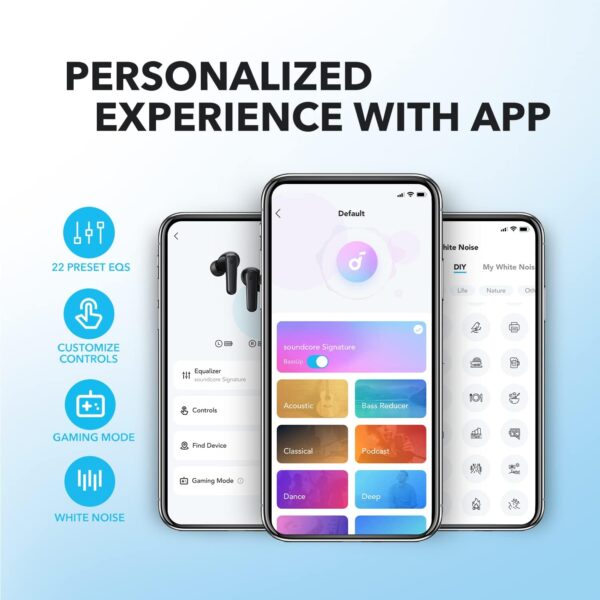
The app is the differentiator at this level. Twenty-two EQ presets is a generous count, control customization is supported, and there is a find-my-earbud function that makes a lost bud emit a sound. That last feature appears in a bullet that is broken mid-sentence in the source data, reading “Use the soundcore app to customize the controls and choose from 22 EQ presets. With” followed by a fragment beginning “, a lost earbud can emit noise to help you locate it.” The feature name has been lost from the import, but the function is described clearly enough.
How they connect
Bluetooth 5.3 is listed with a 10 meter range. A version number describes connection stability, power draw and available feature sets. It does not make audio better, and 5.3 is not audibly superior to 5.2 on that basis alone.
No codec is named
There is no AAC entry, no aptX and no LDAC anywhere on this record. Where nothing is named, SBC is the only codec that can be assumed, because SBC is the baseline every Bluetooth device supports. Nothing here supports a high resolution or lossless claim, and any codec that did appear would still require your phone to support the same one for it to be used.
Multipoint is not mentioned. Wear detection is not mentioned. Instant pairing is described, where the buds enter pairing mode on first opening the case and afterwards reconnect to the last paired device automatically. Two microphones per set handle calls with what Anker describes as an AI algorithm to pick up your voice, which is outbound processing and does nothing for what you hear.
Fit, isolation and the water rating
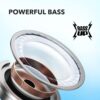
The drivers are 10 millimeter dynamic units, which Anker describes as oversized and which is genuinely at the larger end for an in-ear. Published frequency range is the nominal 20 Hz to 20 kHz that appears on almost every consumer earbud and distinguishes nothing. Impedance and sensitivity are absent.
Noise control is listed as sound isolation, which is honest: there is no active cancellation here, and any reduction in outside noise comes from the physical seal of the tip. That makes tip fit the entire isolation story, and a poor seal makes any earbud sound thin at the bottom end regardless of driver size. The listing does not state how many ear tip sizes are included, which is a real gap on a product whose sound depends on the seal. The included components field, rather than listing components, contains a paragraph of pairing instructions, so there is no component list on this record at all.
The water rating is where this listing overreaches. The attribute block says “Waterproof.” The marketplace title says only “Water-Resistant.” Neither gives an IP code, and no ingress rating appears anywhere on the record. Without a code there is no specification, only an adjective, and “waterproof” is the wrong adjective in any case for an earbud that publishes nothing. Treat this as having no published water rating, keep it away from immersion, and note that no IP code covers seawater or pressurized water and that protection degrades as seals age.
Other oddities in the record
The item weight is listed as 0.016 ounces, roughly half a gram, which no earbud weighs and which is unusable. The carrying case weight of 0.05 pounds, about 23 grams, is plausible. The theme field reads ‘Audio Equipment” or “Headphones’ with the quotation marks broken mid-value, another unresolved either-or. The source category path degrades into reviewer names after “Electronics, Headphones, Earbuds and Accessories,” so the category data carries no weight. First availability is May 2023.
Note also that this catalog holds several Soundcore listings whose model numbers and marketing names do not line up cleanly, so a buyer comparing across our pages should match on the A-prefixed model number rather than the marketing name.
What to compare
Within our own listings, the Soundcore P30i is the next step up and adds active cancellation with a fully published battery split, while the Soundcore P40i sits above both. Outside the brand, the JBL Vibe Beam is the closest direct competitor with published ingress ratings, and the JLab Go Air Pop offers hardware EQ presets instead of app-only ones. The wider wireless earbud listings we track cover the rest of the field.
Who should buy them, who should not
Buy the P20i if you want a plain sealed bud with 10 millimeter drivers, deep app-side equalization and a case you can clip to a bag. Skip them if you need active cancellation, if you need a published ingress rating before wearing them for exercise, if multipoint matters, or if you cannot proceed without knowing whether the per-charge runtime is 5 hours or 10. That question is open on this record.