


Description
The case for an open ear hook
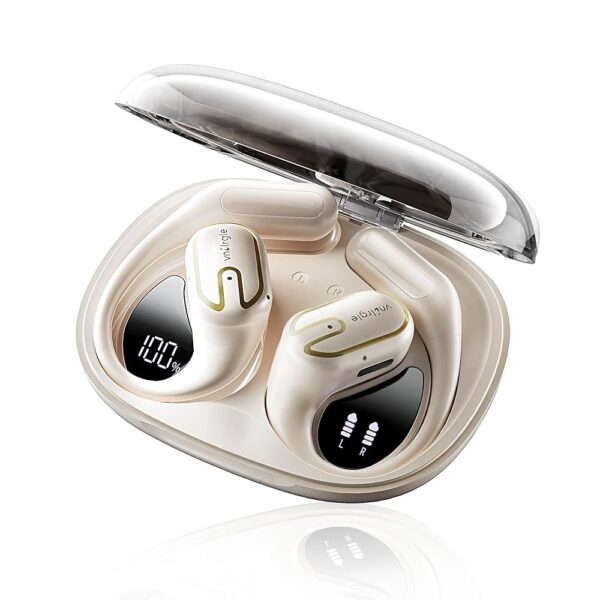
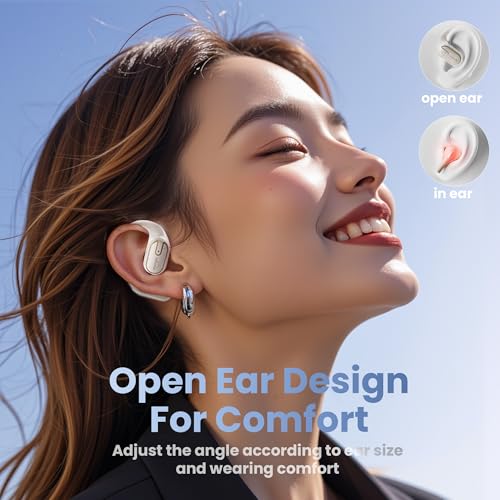
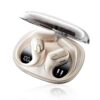
The vnilrgle T15 is an open ear headphone with an adjustable hook that loops over the ear and holds a driver just outside the canal entrance. Nothing goes in, nothing seals, and the ear stays open to the room. vnilrgle describes the hook angle as adjustable to the size of your ear, which is a more useful design detail than most listings in this bracket bother to publish.
The reason to want this shape is awareness. A sealed earbud, and especially a cancelling one, removes the ambient cues that tell you a car is approaching from behind. An open ear design keeps them. That makes it the sensible option for road running, for cycling where local rules permit headphone use, for dog walking and for anyone who works in an environment where being reachable matters. It also makes it the wrong option for a plane cabin, an open plan office or a train, because there is nothing between your ear and the noise. Bass is thinner than a sealed bud can manage, the sound leaks audibly to anyone nearby, and in a loud environment the natural reaction is to raise the volume, which is the one habit worth resisting.
Connection: version 5.4, and a claim that cannot be true
vnilrgle lists Bluetooth 5.4 with a 10 meter range and describes the earbuds as connecting as soon as they leave the case. Bluetooth 5.4 improves connection stability and power behavior over older revisions. It does not improve sound quality by itself, and it is not a range specification.
The bullet then claims music “with zero delay.” No wireless audio link has zero latency, and this listing publishes no latency figure at all, unlike several competing open ear products that quote a number in milliseconds. Read the zero delay claim as marketing, and if low latency matters for video or gaming, ask for a figure before buying.
No Bluetooth audio codec is named anywhere in the title, the bullets or the specification table. That means SBC, the baseline every Bluetooth device supports, is the only one you can assume. There is no published evidence of AAC, which matters on Apple devices, and none of aptX or LDAC, which only function when the phone and the headphones support the same codec. The bullets describe “HiFi Sound with Enhanced Clarity” and say the tuning was done by engineers to reduce distortion. Neither statement is supported by any published measurement, and a high fidelity claim with no codec behind it is not something we will repeat as fact.
The frequency numbers are wrong
The specification table gives Frequency Range as 2000Hz to 20000Hz. A lower limit of 2kHz would mean the headphones produce nothing below the upper midrange, no bass and no lower vocals, which is not a product anyone would ship. It is almost certainly a typing error for 20Hz. A separate field lists Frequency Response as “20 KHz,” a single number that is not a response at all. Impedance is given as 16 ohms, which is plausible. Treat the frequency data on this page as unusable.
Battery: three different figures for the same product
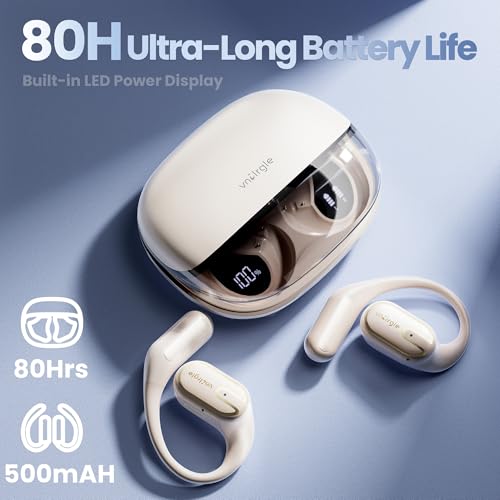
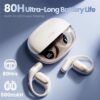
The marketing bullet says the headphones run 10 hours on a full charge and extend to 80 hours with the charging case. The specification table then lists Battery Life as 40 hours, and a separate case field as 80 hours. Ten, forty and eighty cannot all describe the same thing.
The reading that makes sense is the bullet: roughly 10 hours from the buds, with the case providing the rest up to 80 hours total. The 40 hour entry has no supporting text anywhere on the page. This is the standard problem with headline battery claims, and it is why bud runtime and total with case should always be read as two separate numbers. The 80 hour figure is what you get before the case itself needs a cable, across roughly seven bud recharges, and it tells you nothing about how long you can listen in one sitting.
The case holds 500mAh, charges in about two hours and carries an LED display showing the remaining charge for both the case and the earbuds. It is also large: vnilrgle lists it at 70 by 28.5 by 80 millimeters and 79.75 grams, which is closer to a small power bank than a pocketable earbud case. Quoted playtimes are best case figures at moderate volume, and open ear listening outdoors tends to run louder, so expect less.
Drivers, fit and the water rating
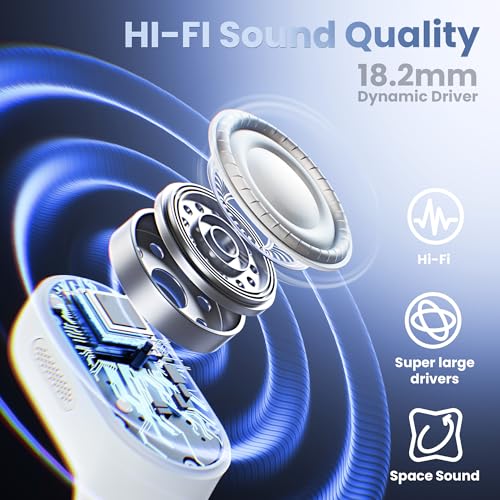
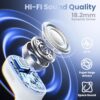
vnilrgle quotes 18.2 by 11.2 millimeter dynamic drivers, an oval or racetrack shape rather than a circle, and the specification table records the size as 18.2mm. That is large for a wearable driver and it is the usual approach for open ear designs, which need to move more air to compensate for having no seal.
Because there is no ear tip, the number of tip sizes that dominates sealed earbud reviews is not a factor here. The fit variable is the hook: how it sits against the ear, how it interacts with glasses arms, and whether the adjustable angle holds position during movement. The hooks are ABS with a polycarbonate housing. The 5.3 ounce item weight in the specification table refers to the shipping package, not the headphones.
The water rating is IPX7, stated in both the title and a bullet, with the specification field falling back to the word “Waterproof” with no code. IPX7 is a genuine immersion rating, tested in fresh water at roughly one meter for about thirty minutes, so sweat and heavy rain are comfortably within scope. What it does not cover is seawater, high pressure water such as a shower jet, or the gradual degradation of seals and port covers over months of use.
The fields that are not real, and what else to look at
The specification table lists Noise Control as “Sound Isolation.” An open ear headphone provides no isolation, by design, and that field is simply wrong. Elsewhere the page carries a “Cartoon Character” field containing the word White, a “Number of Power Levels” field reading 15, and a theme list running through video games, movies and sports. All of it is import noise. The recommended uses field includes motorcycling and snowboarding, and an ear hook worn under a helmet is not a sensible application whatever the field says.
vnilrgle also lists the age range as “all” and publishes no volume limit anywhere. There is no evidence of any cap on output, so no assumption should be made about suitability for a child’s hearing on the strength of this listing. Amazon lists the T15 as ranked 672nd in Electronics and 10th among open ear headphones, with a 4.8 star average across roughly 1,528 ratings, which is a high average on a moderate sample from a brand with little history. Within the same format, the Eigsupia X18 open ear headphones and the CXK EP03 with its published Bluetooth specification compete directly, while the Soundcore AeroFit 2 from Anker and the Baseus Bowie MC1 clip-on design come from brands with more published data behind them. The full set sits in our open ear headphone reviews, with sealed alternatives in our earbud headphone reviews.
Buy it, or skip it
Buy the T15 if you want awareness while you run or ride, an adjustable hook rather than a fixed one, an immersion grade IPX7 rating and around 10 hours per charge with a case display. Skip it if you need bass depth, if you need to block out noise, if you want a named codec or a real latency figure, or if you need the published specification to agree with itself, because on battery, frequency response and noise handling this listing contradicts its own marketing copy.