

Description
The listener a clip-on open ear serves
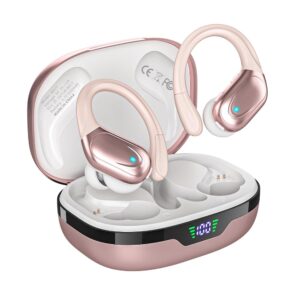
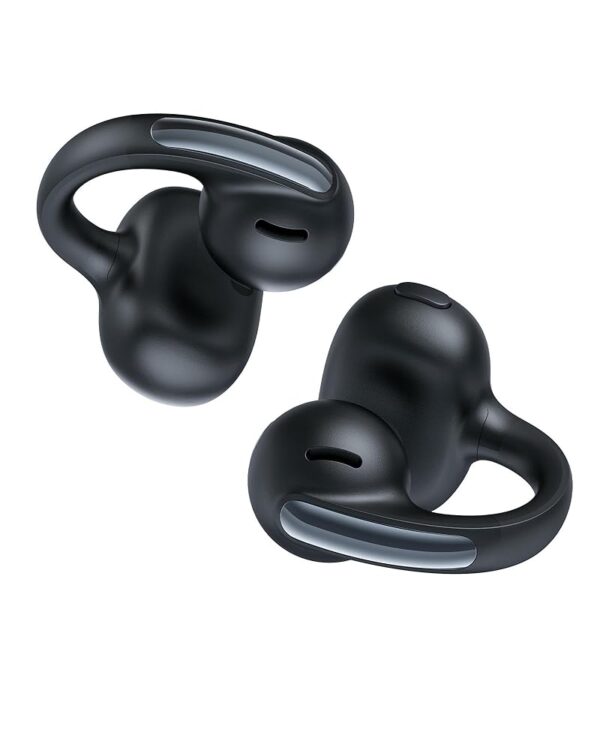
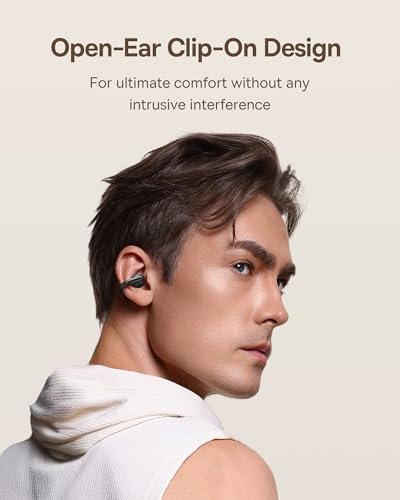
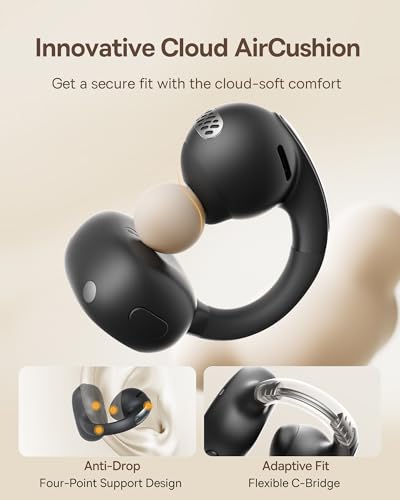
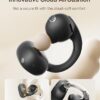
The Baseus Bowie MC1 is an open ear earbud that clips onto the outer ear rather than going into it. A flexible bridge wraps around the ear ridge with the driver sitting in front of the canal and a counterweight behind, and Baseus calls the cushioning a Cloud AirCushion design. Nothing is inserted, nothing seals, and the ear canal stays completely open.
That is the reason to buy this shape. With the canal open you hear traffic, cyclists, footsteps and conversation at full natural volume while music plays underneath. For road running, for riding where local rules allow headphone use, for walking in a city and for people who cannot tolerate silicone tips, an open ear clip does something no sealed earbud can. Baseus also notes the clip fits alongside glasses, which matters more than it sounds, because that piece of ear is contested real estate.
The tradeoffs are permanent and worth stating up front. Bass is thinner than a sealed bud because there is no seal to load the ear. Sound leaks to anyone standing near you, so this is not an open plan office product despite the directional sound claim. And in a genuinely loud place the instinct is to raise the volume until the music wins the argument, which is exactly the listening pattern that damages hearing over time. Open ear designs are safer for awareness and no safer for volume.
Connection and the codec that is not named
Baseus lists Bluetooth 5.4 with a 10 meter range and compatibility across iOS, Android, Windows, macOS and Nintendo Switch. Bluetooth 5.4 improves connection stability and power behavior over older revisions, and that is all a version number establishes. It does not raise sound quality on its own.
No Bluetooth audio codec is named anywhere on this listing. That leaves SBC, the baseline every Bluetooth device supports, as the only codec you can safely assume. There is no published evidence of AAC, which is what Apple devices use, and none of aptX or LDAC, which only function when the source device supports the same codec. There is no latency figure either, which is a gap worth noting given that Baseus explicitly lists the Switch as a compatible device and gaming is where latency shows up first. Nothing here supports a high resolution or lossless description of the audio.
Baseus does publish a companion app for customizing the button controls, which is a real feature rather than an implied one. Multipoint pairing to two devices at once is not mentioned, so assume it is not there.
The percentages that mean nothing
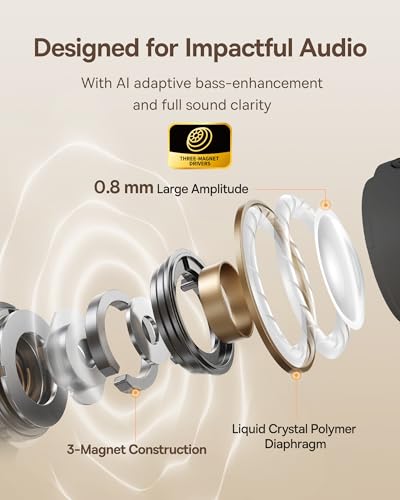
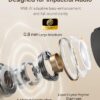
The comfort bullet claims the design delivers “198% stability and 200% comfortability.” Neither figure has a baseline, a test method or a unit, and comfort is not a quantity that can be measured to three significant figures. The sound bullet claims “0.8mm larger amplitude” without saying larger than what. Read all three as marketing copy. The specification table separately records the driver type as hybrid, which normally means a dynamic driver paired with a balanced armature, but no driver size and no count are published to confirm what is actually inside.
Battery: one number, and the important one is missing
Baseus quotes 40 hours of playtime, and that is the only battery figure on the entire listing. The specification table repeats it as Battery Life, 40 hours, and adds a 1.5 hour charging time. What the listing never states is how long the earbuds themselves run on a single charge before they need the case.
That omission matters more than the headline. In this product class a 40 hour total typically means somewhere between 6 and 10 hours from the buds with the case supplying the rest, but Baseus publishes nothing, so there is nothing to work from. If you are buying for a long run, a shift or a flight, the bud runtime is the number you need and this listing does not give it. Ask before you buy. By contrast the TOZO OpenEarRing publishes both halves of its 40 hour claim, quoting 10 hours from the buds and 30 from the case, which is the level of disclosure to expect at this price.
Whatever the split turns out to be, the quoted total is a best case figure measured at moderate volume, and open ear listening outdoors runs louder than indoor listening does.
IP57, controls, and what the noise claim covers
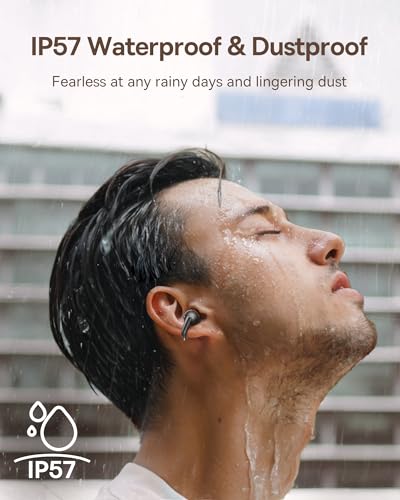
The water rating here is genuinely strong and worth reading correctly. IP57 is a two part code: the 5 is dust protection, meaning dust may enter but not in a quantity that interferes with operation, and the 7 is the water digit, covering immersion in fresh water at roughly one meter for about thirty minutes. That is a real immersion rating, not a splash rating, and it is better than the IPX4 and IPX5 codes common in this category. The usual limits still apply. No IP rating covers seawater or high pressure water such as a shower jet, and the seals and port covers degrade with age and use. The specification table falls back to the bare word “Waterproof” with no code, which is less informative than the title.
Controls are physical buttons, which Baseus specifically justifies as preventing accidental activation, and that is the right choice for a product you will use with wet or gloved hands. The specification table then contradicts the bullets by recording the control method as touch. The buttons are the credible reading given how explicitly the copy describes them.
The title advertises “Adaptive Noise Cancelling Calls,” and it is important to read that phrase precisely. The specification field for Noise Control says “None,” and the bullet describes a DNN algorithm with two microphones that cancels wind noise and picks up your voice. That is call side processing: it improves what the person on the other end hears. It is not active noise cancellation for your own listening, and an open ear design could not do that anyway with no seal to work against. Nothing here reduces the noise you hear, and nothing on the listing claims otherwise once you read past the title.
Where it sits, and what to compare
Amazon lists the Bowie MC1 as ranked 569th in Electronics and 8th among open ear headphones, with a 4.4 star average across roughly 306 ratings, which is a modest sample for a product first listed in December 2024. The specification table also claims the product requires “3 A batteries,” which is impossible for a sealed rechargeable earbud and is an import error, and the 4.2 ounce item weight is the shipping package rather than the earbuds.
The obvious cross shopping in this format is the Shokz OpenFit, from the brand that built the open ear category, and the Bose Ultra Open Earbuds at the top of the segment. For a more directly comparable price and feature set, the Soundcore AeroFit 2 from Anker publishes more of its specification than Baseus does here. The full format sits in our open ear headphone reviews, and the sealed alternatives are in our true wireless earbud reviews.
Buy it, or skip it
Buy the Bowie MC1 if awareness is the point: running and riding on roads, glasses friendly clip-on fit, physical buttons you can find without looking, app customization, and an IP57 rating that genuinely covers immersion. Skip it if you want bass depth or any reduction in the noise around you, if you need a named codec or a latency figure, or if you need to know how long the earbuds last on one charge, because Baseus publishes a 40 hour total and never breaks it down.