
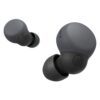




Description
Sony’s LinkBuds S sits awkwardly in its own range: lighter and cheaper than the flagship, but sealed and cancelling, unlike the open ring shaped LinkBuds it shares a name with. The listing is short on hard specification and long on adjectives, and its specification table contains at least two fields that are plainly wrong. We do not wear or measure the products covered on this site.
Who this is for
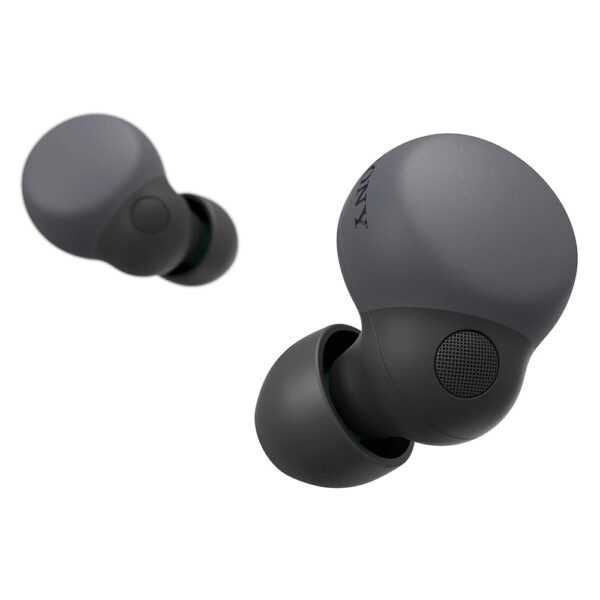
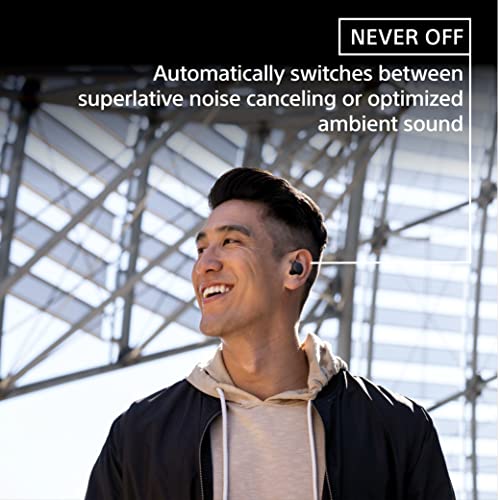
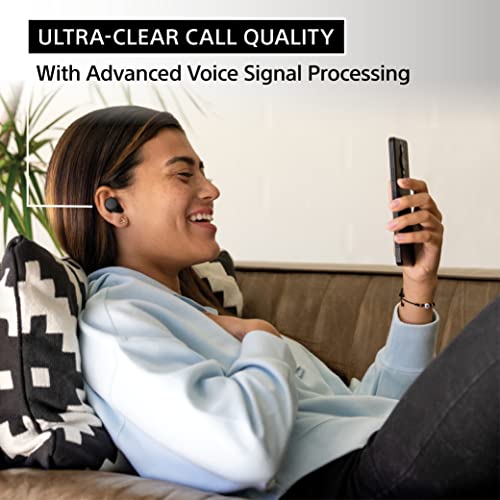
This is a very small sealed in-ear bud with active noise cancellation and an ambient sound mode, sold with a charging case, a USB-C cable and ear tips. Sony’s description sells it on automation rather than power: settings that “learn from your behavior” and switch between cancellation and ambient sound depending on where you are. Recommended use in the specification table is calling. The physical fact that matters most here is size, given as 0.176 ounces, or about 5 grams, per bud.
That points at a specific buyer: someone who wants cancellation but has found flagship buds too heavy or too deep in the ear, and who will accept a shorter battery figure to get it. If you have small ear canals or you sleep on your side, small and light is a real advantage rather than a marketing point. If you want maximum cancellation, this is not the model in Sony’s range that delivers it, and our review of the Sony WF-1000XM5 covers the step up.
Connection: Bluetooth 5.0, and no codec at all
The specification table records Bluetooth version 5.0 and a 10 meter range, and a feature bullet confirms it in slightly garbled form as “Bluetooth Specification version 5.” That figure tells you about connection housekeeping and power draw. It does not tell you anything about sound, and no Bluetooth version number ever does.
What the listing does not contain is a single named codec. There is no mention of SBC, AAC, aptX or LDAC anywhere in the title, the description, the bullets or the specification table. This matters because Sony’s marketing for this range routinely leans on high resolution audio, and this listing includes a bullet headed “IMMERSIVE SOUND QUALITY” that consists entirely of the sentence “With the Integrated Processor V1.” A processor name is not a codec and it is not a resolution claim. On the published specification alone there is no basis for saying this pair delivers high resolution or lossless audio, and we will not say it. If high resolution streaming is your reason for buying, confirm with Sony which codecs the current firmware supports, then confirm your phone supports the same one.
Multipoint, and the fine print on it
Multipoint is one of the few advanced features this listing does name: “MULTIPOINT CONNECTION: Connect two devices at once (Available via firmware update).” That parenthesis is important. The capability is delivered by an update rather than being present out of the box, which means a companion app, an account and a successful update before you get it. Buyers of old stock in particular should plan for that step. Wear detection is not mentioned anywhere in this listing.
Battery: six hours in the ear, twenty in total
Sony states the figure cleanly for once: “Up to 6 hours of battery life and up to 20 hours with charging case. Quick charging gives up to 60 minutes of playback with a 5 minute charge.” The specification table repeats six hours in its Battery Life field. So bud runtime is six hours and the case carries roughly two further refills to reach twenty.
Six hours is short by current standards and it is the price of the small shell. It is a best case number, quoted at moderate volume, and running cancellation continuously will bring it down. Sony does not state whether the six hours assumes cancellation on or off. On a long haul flight, six hours of bud runtime means at least one case stop.
One specification field is almost certainly a data error. It reads “Charging Time: 6 Hours.” Six hours is exactly the quoted battery life, and no earbud of this size takes six hours to charge, so that looks like the battery figure copied into the wrong field. The listing publishes no genuine charge time.
Fit, controls and the water rating
The bullet is specific and correct: “IPX4 RATING: Protects against sweat and splashes on these wireless ear buds.” IPX4 is a splash and sweat rating. It is not a shower rating, it is not an immersion rating, it says nothing about dust, and it does not survive seawater or pressurized water. The separate specification field reads only “Water Resistant” with no code, which is a bare word rather than a rating. Seals age, so an IPX4 bud worn daily for two years is not the bud that left the box. Anyone wanting genuine immersion protection needs a listing that publishes IPX7 or higher, and there are several across the true wireless earbud listings.
On fit, the listing includes “Earbud Tips” among the components but never says how many sizes are supplied. That is a meaningful omission, because with a sealed bud the tip decides how much bass you hear and how much noise gets blocked. A poor seal makes any sealed earbud sound thin and makes its cancellation look weak.
Controls are touch and voice, with play, pause, skip, volume, voice assistant and call answering listed. The specification table records the control type as Alexa, so Alexa is built in. Materials are given as silicone and plastic.
Two specification fields that are simply wrong
Two entries in this table should be ignored outright, and naming them is more useful than quietly dropping them. The first reads “Frequency Response: 2.4 GHz.” A frequency response for a headphone is a range in hertz and kilohertz describing audible sound. 2.4 GHz is the radio band Bluetooth operates on. Those are unrelated quantities and the field has been mis-mapped. The listing therefore publishes no frequency response at all. The second reads “Theme: Video Game.” There is nothing about this product that relates to gaming, no low latency mode is claimed and no console compatibility is stated. It is inherited category noise.
Also worth noting is what the listing says about its own claims. Two bullets carry dated qualifiers: Sony’s “best transparent ambient sound in truly wireless headphones” is qualified “as of May 9th 2022. Excluding Open style,” and the call quality claim is qualified “as of May 19th 2022.” Those are internal comparisons against Sony’s own range at a fixed past date, not comparisons against the market, and they say nothing about how this pair stands today.
What the ratings say, and the alternatives
Customer feedback is the number most worth pausing on: 3.8 out of 5 from 5,194 ratings. That is a large sample and a below average score for a name brand product in this catalog, and it should be weighed against the marketing copy. The sales rank is given as 7,396th in Electronics and 783rd in the earbud and in-ear headphone group, and the date first available is May 2022. The listing states the product is not discontinued by the manufacturer.
If six hours of bud runtime is the sticking point, Sony’s cheaper models publish longer figures with no cancellation, and our Sony WF-C500 review covers that trade. For cancellation at a lower price than this pair, see our Sony WF-C700N review and the newer Sony WF-C710N review. Readers who would rather have a headband than a bud, and the much longer battery life that comes with it, should look at our Sony WH-CH720N review.
Who should buy it and who should not
Buy it if you want cancellation in the smallest and lightest shell Sony offers, you value the automatic switching between cancellation and ambient sound, and six hours per charge fits your listening pattern. Do not buy it for a high resolution claim, because this listing names no codec and therefore supports no such claim. Do not buy it for a shower or a swim, because IPX4 covers splashes only. Do not buy it if you need a long single session without returning the buds to the case. And before ordering, ask how many ear tip sizes are in the box, because the listing does not say.