



Description
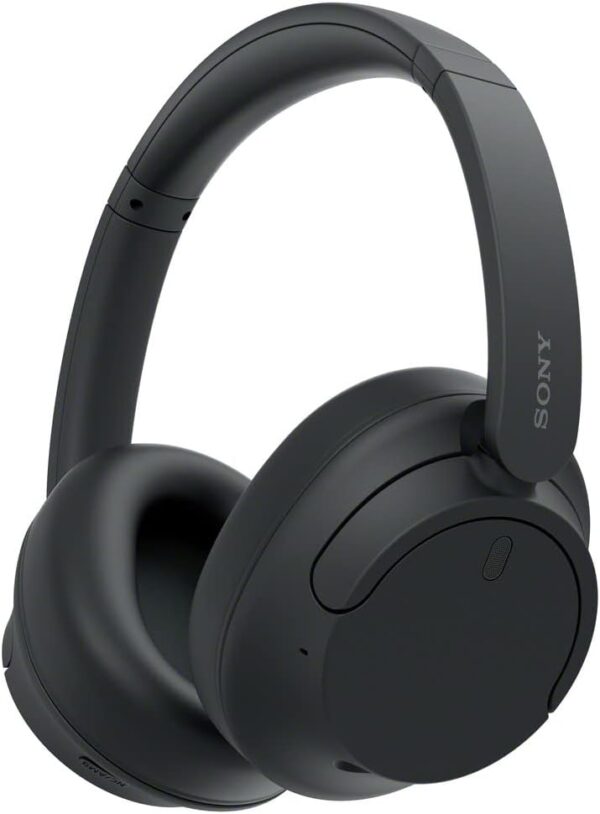
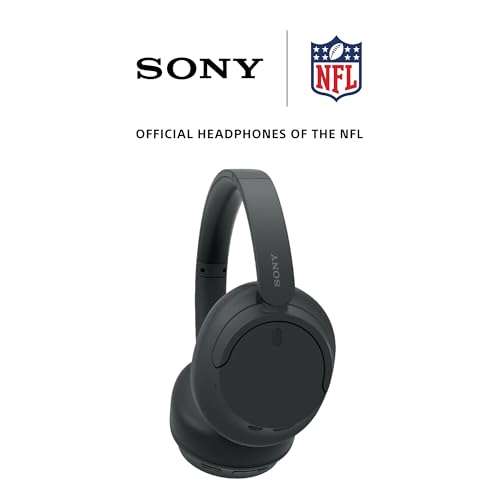
The Sony WH-CH720N is an over-ear noise cancelling Bluetooth headphone in black, listed as new condition, with Alexa built in and a quoted 35 hours of playback. Sony’s own headline claim for it is weight: 192 grams, which the listing describes as the brand’s lightest wireless noise cancelling design. That is the single most useful fact on this page, and it is worth more day to day than most of the audio wording around it.
The rest of the listing, however, is thin. The imported specification block contains five fields: brand, color, ear placement, form factor and impedance. Almost everything else you would normally check before buying a cancelling headphone is not published here, and one of the five fields that is published does not look credible. Both points are covered below.
Who this is for
The CH720N is aimed at someone who wants Sony’s cancellation and mode switching without the weight of the flagship line. At 192 grams it is roughly a quarter lighter than several cancelling over-ear headphones in this catalog, and weight is the variable that decides whether a headphone is comfortable at hour four rather than hour one. If you work at a desk in an open office, take long train journeys, or wear a headphone through a working day, that is the case this product makes.
It is not a workout or outdoor sport headphone. No IP rating is published and there is no water resistance field in the record at all, so there is no stated protection against rain or sweat and we will not infer one. It is also a closed, actively cancelling design, which means it should not be worn while cycling or running near traffic: cancellation is specifically good at removing the low frequency engine noise that would otherwise warn you a vehicle is behind you.
Connection: what is stated and what is missing
Sony names Dual Noise Sensor Technology and the Integrated Processor V1 as the cancellation hardware, and lists Adaptive Sound Control together with an Adjustable Ambient Sound mode. Adaptive Sound Control changes settings based on what you appear to be doing, and the ambient mode is a transparency setting that lets outside sound through on demand. Those two are real, usable features and they are stated plainly.
Beyond that, the connection specification is largely absent. No Bluetooth version number is published. No codec is named. There is no mention of SBC, AAC, aptX or LDAC anywhere in this listing, which means SBC is the only baseline you can assume and no high resolution claim would be supportable even if one were made. There is also no mention of multipoint pairing to two devices at once, no wear detection, no charging port type, and no companion app feature list. Where a listing does not mention a feature, treat it as absent rather than assume it is there. If multipoint is a requirement, the Sony WH-1000XM4 states it explicitly and the JLab JBuds Lux ANC does the same lower down the market.
The impedance figure does not add up
The one detailed number in the specification block reads “Impedance = 325 Ohm.” For context, this is a Bluetooth headphone intended to be driven by a phone, and consumer headphones in this class are typically in the 16 to 50 ohm range. A 325 ohm load is studio and desktop amplifier territory, and it would be a strange specification for a product whose entire pitch is lightweight portable convenience. We are flagging the figure rather than correcting it. If wired impedance matters to your setup, confirm it with Sony’s own documentation, because this listing’s number should not be relied on.
Battery: one figure, no conditions
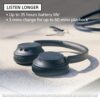
Sony quotes up to 35 hours of continuous playback on a single charge, and a 3 minute quick charge returning up to 1 hour of playback. As a single headphone with no charging case, 35 hours is the entire figure; there is no bud runtime and case total to separate here.
What is not stated is the condition. The listing does not say whether 35 hours is measured with cancellation on or off, and it gives no volume level. On a cancelling headphone that distinction commonly costs a substantial share of the runtime, and other manufacturers in this catalog do publish the split. The Soundcore Life Q20, for instance, gives 60 hours without cancellation and 40 hours with it at 60 percent volume. Sony gives one number here, so read 35 hours as the best case and plan for less with cancellation and adaptive mode switching both active.
No full charging time is published, no battery capacity is given, and the charging connector is not identified in the imported record. The 3 minute claim is the only charging data on the page.
Fit, comfort and what the cancellation will and will not do
At 192 grams this is a genuinely light over-ear headphone, and that weight is doing most of the comfort work. Over-ear cups seal around the ear rather than pressing on it, so passive isolation is already better here than on any on-ear design before the electronics contribute anything. The listing publishes no clamping force, no headband adjustment range, no ear cushion material and no folded dimensions, so beyond the weight there is little to evaluate on fit.
On the cancellation itself, be clear about the mechanism rather than the adjectives. Active cancellation works well against constant low frequency noise: aircraft cabin drone, bus and train engines, air conditioning, road rumble. It works poorly against speech, keyboard noise and sudden sounds, because those are irregular and higher in frequency. No headphone makes an environment silent. This listing publishes no decibel attenuation figure at all, which means there is no number to hold Sony to, and describing the cancellation as “superior” without a measurement is brand language rather than specification.
What the listing does not tell you
Missing from the record: Bluetooth version, codec support, driver diameter, frequency response, sensitivity, microphone count, multipoint, wear detection, charging port, charging time, IP rating, folded size, warranty terms, and the customer rating and sales rank that most products in this catalog carry. For a mainstream Sony product that is a large amount of blank space, and it means several things a careful buyer would want to check simply cannot be checked from this page.
If you want a fuller published specification in the same family, the Sony WH-1000XM5 sits at the top of the range and documents considerably more, while the Bose QuietComfort is the standing cross-brand comparison for this category. Wider options across the shape sit in the wireless headphones section.
One note on volume. The real hearing benefit of a cancelling headphone is that it removes the background noise which otherwise pushes people to turn the music up on a train or a plane. Use it that way round: switch the cancellation on and then bring the volume down, rather than treating the new quiet as room to push further.
Who should buy it
Buy the WH-CH720N if low weight is your priority, you want Sony’s ambient and adaptive modes, and 35 hours of quoted battery covers your travel. Skip it if you need multipoint, a named codec, a water rating, a battery figure that separates cancellation on from off, or a specification sheet you can actually verify, because this listing publishes almost none of that and the one detailed number it does give, the 325 ohm impedance, does not look right.