


Description
What you are actually buying here
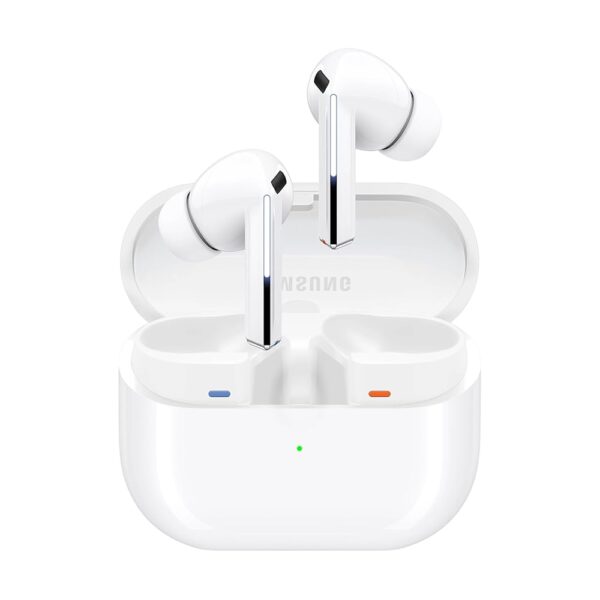
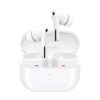
This listing is a Renewed unit of the Samsung Galaxy Buds 3 Pro in white, and the seller also describes it as an international model without domestic warranty. Both facts belong at the top of any honest write up. Renewed means the unit has been through a refurbishment process rather than arriving factory sealed as a first sale, and an international model means the warranty path that would normally apply in the United States does not. Neither of those makes the product bad, but they change what you are comparing against, and they change what happens if something fails. If you want the same earbuds on a standard retail listing, see our Samsung Galaxy Buds3 Pro SM-R630NZAEXAR review, which covers the non renewed version of the same hardware.
The Buds 3 Pro sit at the top of Samsung’s earbud line and are built almost entirely around Samsung’s own ecosystem. Nearly every headline feature on this page has a Galaxy phone attached to it as a condition. That is the single most important thing to understand before buying, and it is the thread running through the rest of this review.
Connection, and the codec question that decides everything
Bluetooth 5.4 is published. As always, a version number is not a sound quality specification. What it changes is connection stability, power behavior and support for newer standards, and nothing about it improves the drivers. The part that matters is the codec list, and here the listing names SSC HiFi and UHQ audio, quoting 24 bit at 96kHz.
Why the high resolution claim needs a Galaxy phone
SSC stands for Samsung Seamless Codec. It is Samsung’s proprietary codec and it only negotiates between Samsung Galaxy devices and Samsung earbuds. UHQ is Samsung’s branding around the same ecosystem. That means the 24 bit, 96kHz claim on this page is conditional in a way the marketing does not make obvious: it requires a compatible Samsung Galaxy source device, with the feature enabled, and it will not engage from an iPhone, a Windows laptop, a non Samsung Android phone or a television. On any of those, you fall back to a baseline codec, most likely SBC or AAC, and the high resolution figure on the box becomes irrelevant. We will not describe this product as delivering high resolution audio without stating that condition, because without a Samsung source it does not.
The same conditionality applies to the rest of the feature set. Samsung states that Galaxy AI features, including the real time interpreter and personalized sound, require a Samsung Galaxy device for full functionality. 360 Audio with Direct Multi-Channel is described as delivering its full effect when paired with Galaxy devices. Compatibility is quoted as Android 8.0 or later with at least 1.5GB of RAM. The buds will pair with an iPhone over standard Bluetooth and play music, but a large share of what you are paying for will be inert. If you are on iOS, this is not the product to buy.
Battery, and three different published numbers
This listing gives you three answers to one question, and they do not agree. The written overview says up to 8 hours of playback with active noise cancellation on, and up to 18 hours with the charging case. The feature bullets say 5 to 8 hours depending on ANC usage, and again up to 18 hours with the case. The structured specification field simply reads “Battery Life = 6 Hours”. We are naming that rather than picking one, because there is no basis on this page for choosing.
What is consistent is the shape of the claim. The bud figure and the case figure are separate things and should never be merged. A number somewhere between 5 and 8 hours is what you get in your ears before a case visit, and 18 hours is the total across the case, which is a comparatively modest reserve for this class. Case charging is listed as supporting both wireless and wired input with a fast charge function. As with every quoted playtime in this category, the top figure assumes moderate volume, and the range Samsung gives is at least honest that noise cancellation moves the number.
Fit, seal, controls and the IPX7 rating
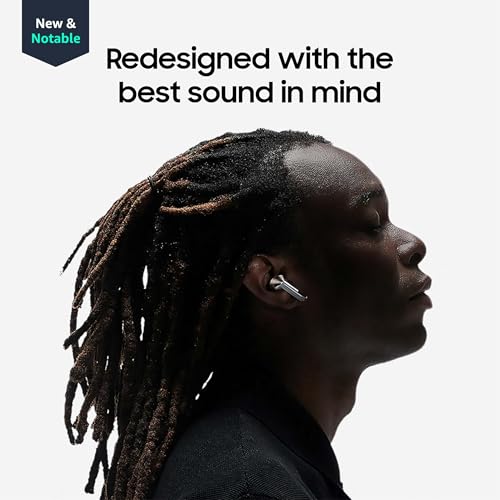
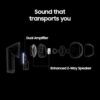
The Buds 3 Pro use a stemmed design, a change from the beanlike shape of earlier Samsung models, and Samsung describes the fit as redesigned for stability. Three ear tip sizes ship in the box, small, medium and large. Three is the common count. Seal is worth taking seriously because it decides perceived bass on any sealed earbud and it sets the ceiling on how well the noise cancellation can work, since ANC operates on top of the passive isolation the tip achieves. Controls are touch based on the stems. The buds are listed at 0.19 ounces.
The water rating is quoted as IPX7 in the description, which is the immersion tier: protection against submersion in one meter of fresh water for thirty minutes under test conditions. That is a genuinely higher rating than the IPX4 splash tier most earbuds carry. Two caveats apply and both matter. First, the structured specification block on this listing does not repeat the IPX7 code and only says “Water Resistant”, a phrase with no defined meaning, so the code comes from the description alone. Second, no IP rating covers seawater, chlorinated water or pressurized water, ratings are tested on new units, and seals degrade with age. On a Renewed unit, where the housing has been opened or reassembled at some point in its life, the original rating is a less safe assumption than it would be on a new one. Treat IPX7 here as a manufacturer specification for the model rather than a guarantee about this particular unit.
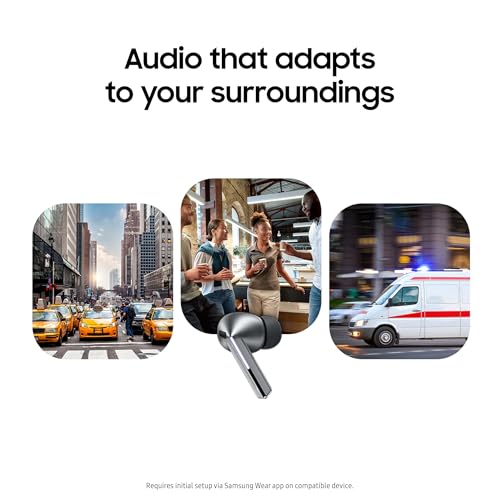
One more point on use. This is a closed, actively noise cancelling earbud. It is not appropriate for cycling or for running on open roads, where you need to hear traffic clearly. Samsung’s ambient mode passes outside sound through electronically, but a transparency mode is a processed approximation and should not be relied on in traffic. If awareness while moving is the requirement, start with our open fit headphone listings instead.
What the listing does not tell you, and the alternatives
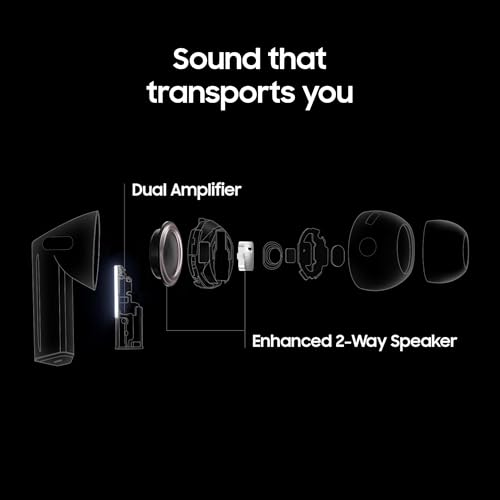
Multipoint is not mentioned anywhere on this page, which is a notable omission on a flagship. Samsung’s own auto switch feature works within the Galaxy ecosystem, but that is not the same as holding two arbitrary Bluetooth devices at once, and you should not assume it. Wear detection is not stated. Driver size is not published, only that a dynamic driver is used. The frequency range of 20 Hz to 20,000 Hz carries no tolerance figure and therefore tells you almost nothing. A field reading “Number of Power Levels = 15” appears to be inherited from an unrelated product category and means nothing on an earbud. Product dimensions of 6 by 4 by 2 inches describe the retail box.
The customer feedback on this listing is 5.0 out of 5, but from only 6 ratings, which is far too small a sample to draw anything from. Amazon places it around 3,212nd in Electronics, 26th in Renewed Headphones and 441st in earbud and in ear headphones. If you want the current generation without the renewed and international caveats, the Samsung Galaxy Buds 3 Pro review covers a standard listing. To spend less inside the same ecosystem, the Samsung Galaxy Buds 3 review and the Samsung Galaxy Buds FE review are the two obvious steps down. If you are not on a Galaxy phone at all, the Sony WF-1000XM5 review covers a flagship with a less ecosystem dependent codec story. Broader comparisons are in our wireless earbud listings.
Who should buy it and who should not
Buy it if you own a recent Samsung Galaxy phone, want the SSC HiFi path and the interpreter features, and are comfortable with a Renewed unit carrying no domestic warranty. Skip it if you use an iPhone, since most of the value evaporates. Skip it if warranty coverage matters to you, because an international model without domestic warranty is a real risk on a product with sealed batteries. Skip it if you need reliable multipoint across mixed devices, since the listing never claims it. And confirm the actual bud runtime with the seller before ordering, because this page publishes 5 to 8 hours in one place and 6 hours in another.