



Description
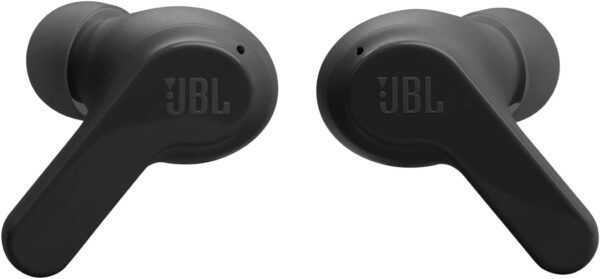
The JBL Vibe Beam is a sealed true wireless earbud aimed at the value end of JBL’s range, built on 8 millimeter drivers with Bluetooth 5.2, a 32 hour combined battery figure and separate ingress ratings for the buds and the case. It is a straightforward product, and the most useful thing this review can do is separate what JBL claims from what the imported attribute data claims, because on one important point they flatly disagree.
There is no active noise cancellation here
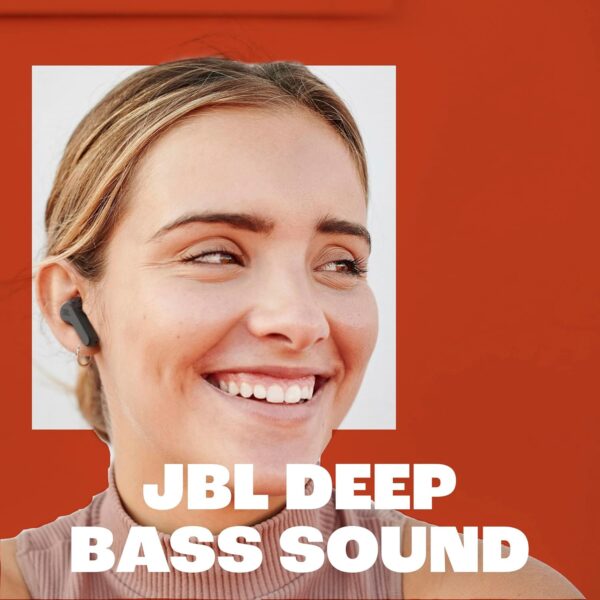
The attribute block records “Noise Control = Active Noise Cancellation.” JBL’s own feature bullet describes “JBL Deep Bass Sound and noise isolation,” and nothing in the marketplace title, the bullets or the feature list mentions active cancellation, a transparency mode, cancellation microphones or a decibel reduction figure. On the published evidence this is a passive isolating earbud, and the attribute entry is import noise.
That distinction matters because it changes what you should expect on a train or in an office. Passive isolation comes entirely from the physical seal of the ear tip. It attenuates high frequency sound reasonably well and does very little against low frequency engine and cabin drone, which is the opposite of what active cancellation is good at. If cancellation is the requirement, the JBL Tune Flex is the model in the same brand’s range that publishes it properly, with battery figures for both states.
Who these suit
These are for someone who wants a name-brand sealed bud with a long total runtime and does not need cancellation. Three ear tip sizes are included, along with the charging case, a USB-C to USB-A cable, a quick start guide and a safety sheet. Three sizes is the standard provision, and on a bud with no cancellation the tip is the entire isolation story, so getting the seal right is what decides both bass and how much of the outside world you hear.
VoiceAware balances how much of your own voice is routed back into the buds during calls, which is the feature that stops people shouting on a sealed earbud. Controls are touch panels. Touch is quick, but it misfires when hands are wet, which is worth weighing against the sweat resistance these carry.
How they connect
Bluetooth 5.2 is listed with a 10 meter range. A version number describes connection stability, power draw and available feature sets. It does not make audio better, and 5.2 is not audibly worse than 5.3 for that reason alone.
Latency is published, and it is high
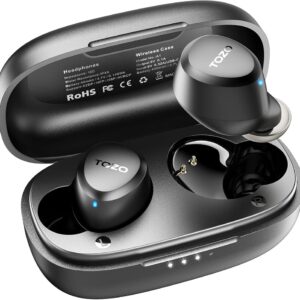
The attribute data gives an audio latency of 100 milliseconds. That figure is genuinely useful and few listings publish it, so credit where it is due. It is also a high number. At 100 milliseconds, lip sync on video is noticeably out unless the app compensates, and casual gaming will feel behind. For comparison, the TOZO A1 Mini publishes 60 milliseconds. If you watch a lot of video without a compensating player, this is the specification to weigh.
No audio codec is named anywhere on this record. There is no AAC entry, no aptX and no LDAC. Where nothing is named, SBC is the only codec that can be assumed, because SBC is the baseline every Bluetooth device supports. Nothing here supports a high resolution or lossless claim, and any codec that did appear would still require your phone to support the same one. Multipoint and wear detection are not mentioned either.
The battery figures, and one mislabeled field
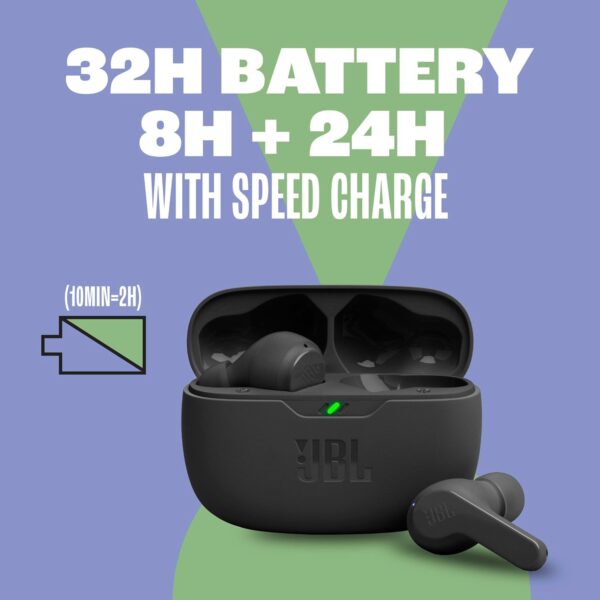
JBL states 8 hours in the earbuds plus 24 hours in the charging case, for up to 32 hours of playtime, with a 10 minute quick charge giving 2 extra hours. Full charge time is listed as 2 hours. Those numbers are consistent and properly separated in JBL’s own bullet, which is the correct way to state them.
The attribute block then records “Battery Life = 32 Hours.” That is the combined total placed in the field that should hold the per-bud runtime, and anyone reading the attribute table alone would take away a figure four times the real per-charge number. Eight hours is what governs a single sitting. Thirty-two is what you get across recharges before the case needs power.
There is no cancellation drawing current here, which is consistent with 8 hours from a small housing. Whether the case charges wirelessly is not stated, and neither is its capacity.
Fit, drivers and the water ratings
The drivers are 8 millimeter dynamic units. That is on the small side for an in-ear, and it is one reason the tip seal matters so much: a small driver has less area to move air with, so any leak in the seal takes the low end with it. No frequency response, impedance or sensitivity is published, so 8 millimeters is the only acoustic figure on offer.
The water ratings are stated properly and separately, which is unusual and good practice: IP54 for the earbuds and IPX2 for the case. IP54 means protection against dust ingress at a limited level and against splashing from any direction, so sweat and rain are covered. IPX2 on the case covers only dripping water at a slight tilt, which is close to no protection at all. Keep the case dry even when the buds are not, because it is the case that will fail first.
Neither rating is an immersion rating. These should not be submerged, worn in a shower or taken swimming. No IP code covers seawater or pressurized water, and protection degrades as seals age and as debris collects around the mesh and the charging contacts.
Other oddities, and what to compare
The carrying case material field reads “plastic or aluminum,” which is an unresolved either-or rather than a specification. The item weight of 1.7 ounces and the dimensions of 5 by 3.5 by 1.25 inches are packaged figures, not the weight of a pair of earbuds; the case is separately listed at 1.4 ounces, which is plausible. The included components field lists “1 x 3 sizes of eartips” in a way that reads oddly but means three pairs. The source category path degrades into reviewer names, so the category data is unusable. First availability is February 2023 and the model number is JBLVBEAMBLKAM.
Within our own listings, the Soundcore P20i competes directly with a larger driver and a similar battery pattern, the JLab Go Air Pop covers the compact end with hardware EQ presets, and the JBL Tune 770NC is the over-ear alternative if a bud is not the shape you want. The wider wireless earbud listings cover the field.
Who should buy them, who should not
Buy the Vibe Beam if you want a straightforward sealed bud from a known brand, an 8 hour per-charge runtime, three tip sizes and separately stated ingress ratings. Skip them if you need active noise cancellation, if 100 milliseconds of latency would bother you on video, if multipoint or wear detection is on your list, or if you want a rating that lets the case get wet.