

Description
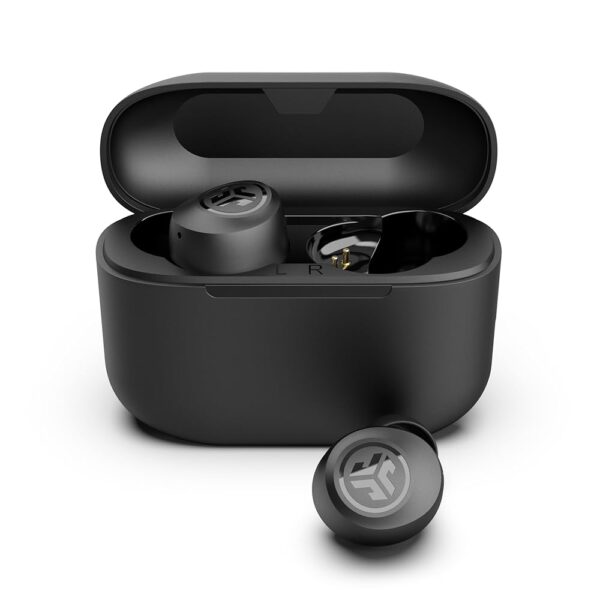
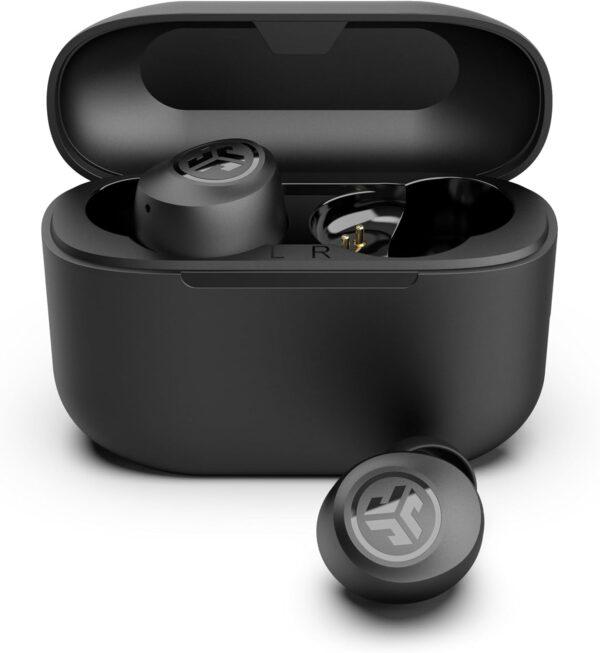
This listing sells a compact JLab true wireless earbud with a long combined battery figure, three onboard EQ presets and an IPX4 rating. Before the specifications, one thing needs stating: the record does not agree with itself about which product it is. The catalog title and the model number EBGPOPPBLK50WEB point at the Go Air Pop, while the manufacturer description, the attribute model name and the marketplace title all describe the Go Pop+, a later and slightly different model. We are naming that rather than picking one, and a buyer should confirm which is being shipped.
Who these suit
Both candidate models are aimed at the same buyer: someone who wants a small, light earbud that lives in a pocket, does not need active cancellation, and wants a long total runtime. JLab describes the case as smaller than a credit card and the buds as 15 percent smaller and 40 percent lighter than the previous Go Air generation. Three tip sizes are supplied, and JLab is explicit that the seal is what produces clear sound, which is correct on any sealed bud without cancellation.
Dual Connect is the feature worth calling out. Each bud works independently or as a pair, so one can stay in the case charging while the other is in use. That is genuinely useful for calls and for anyone who wants one ear free, and it is not universal at this level.
How they connect
The description states Bluetooth 5.3 and the attribute data agrees. The marketplace title says only “Bluetooth 5 Connection,” which is less specific but not contradictory. A version number describes connection stability, power draw and available feature sets. It does not make audio better, and 5.3 is not audibly superior to 5.0 for that reason alone. The Bluetooth range field reads “1E+1 Meters,” which is scientific notation for 10 and another reminder that these imported figures need reading rather than trusting.
No codec is named
There is no AAC entry, no aptX and no LDAC anywhere on this record. Where nothing is named, SBC is the only codec that can be assumed, because SBC is the baseline every Bluetooth device supports. Nothing here supports a high resolution or lossless claim, and any codec that did appear would still require your phone to support the same one for it to be used.
Google Fast Pair is listed, which speeds up the first pairing on Android and enables the find-my-earbuds function. Multipoint is not mentioned. Wear detection is not mentioned. Each bud carries a MEMS microphone for calls, and no microphone specification beyond that appears.
The battery figures, and one mislabeled field
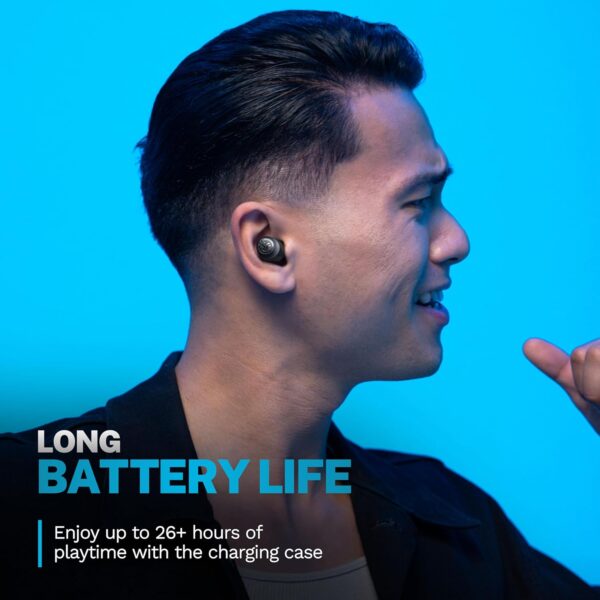
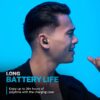
JLab quotes 9 or more hours of playtime in each earbud and 26 or more additional hours from the charging case, for a total of 35 or more hours. Those numbers are internally consistent and properly separated, which is more than many listings in this catalog manage. Nine hours governs a single sitting; 35 is the combined figure across recharges.
The attribute block then records “Battery Life = 35 Hours,” which is the combined total placed in the field that should hold the per-bud runtime. That is exactly the confusion this specification exists to prevent, and anyone reading the attribute table alone would take away a figure roughly four times the real per-charge number. The carrying case field correctly holds 26 hours.
There is no active cancellation here to drain the battery further, which is consistent with a 9 hour bud runtime from a small housing. Charge time for the buds or the case is not published, and neither is quick charge behavior or wireless charging support.
Fit, sound modes and the water rating
Three tip sizes are supplied and the earpiece shape is listed as a bud. Published frequency range is the nominal 20 Hz to 20 kHz that appears on almost every consumer earbud and distinguishes nothing. Driver diameter, impedance and sensitivity are all absent. On a sealed bud with no cancellation, the tip is the entire isolation story, and a poor seal makes any earbud sound thin at the bottom end.
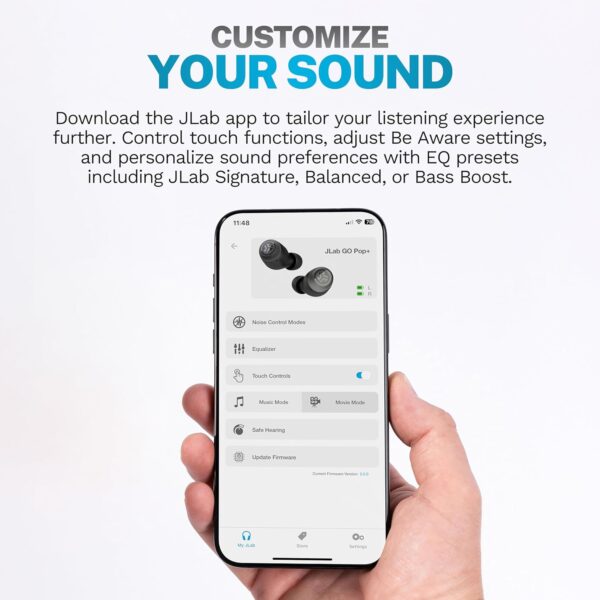
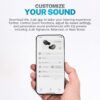
The EQ3 system offers three presets on the hardware, JLab Signature, Balanced and Bass Boost, with further adjustment through the JLab app. Presets stored in the buds rather than the app is a small practical advantage, because they work the same on every device you pair to.
Be Aware Mode lets ambient sound in. JLab describes it as being for safe listening, and it is worth being precise about what that does and does not mean. An ambient mode helps you notice announcements and conversation. It is not a substitute for open ears near traffic, and a sealed earbud with music playing is the wrong choice for cycling or road running whichever mode it is in.
The water rating is IPX4, stated in the marketplace title. The attribute block says only “Water Resistant” with no code attached, so take the specific figure. IPX4 covers splashing from any direction, which means sweat and rain. It is not an immersion rating, so these should not be submerged, worn in a shower or taken swimming. No IP code covers seawater or pressurized water, and protection degrades as seals age.
Other oddities in the record
The item weight is listed as 0.011 ounces, which is roughly a third of a gram. No earbud weighs that, and the figure is unusable. The included components list contains only “Protective Case,” omitting the buds themselves, the tips and the charging cable that the description describes. The feature bullets carry unrendered emoji tokens at the start of each line, artifacts of the import rather than anything in the product. The source category path degrades into reviewer names, so there is no usable category data on this record either.
Unpublished: driver size, impedance, sensitivity, real bud and case weights, case dimensions, charge times, multipoint support and wear detection.
What to compare
Within our own listings, the JLab Epic sits above this in the same brand’s range, the TOZO A1 Mini competes directly on size with five tip sizes rather than three, and the JBL Vibe Beam is the name-brand alternative in the same shape. If cancellation is what you actually want, the Soundcore A3949 is a better starting point, and the wider wireless earbud listings are where battery splits can be compared directly.
Who should buy them, who should not
Buy these if you want a small, light sealed bud with a 9 hour runtime, hardware EQ presets and independent use of either side. Skip them if you need active cancellation, a named codec, multipoint or a rating beyond splash and sweat. And before ordering, confirm with the seller whether the Go Air Pop or the Go Pop+ is actually in the box, because this listing describes both.