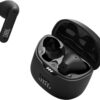
Description
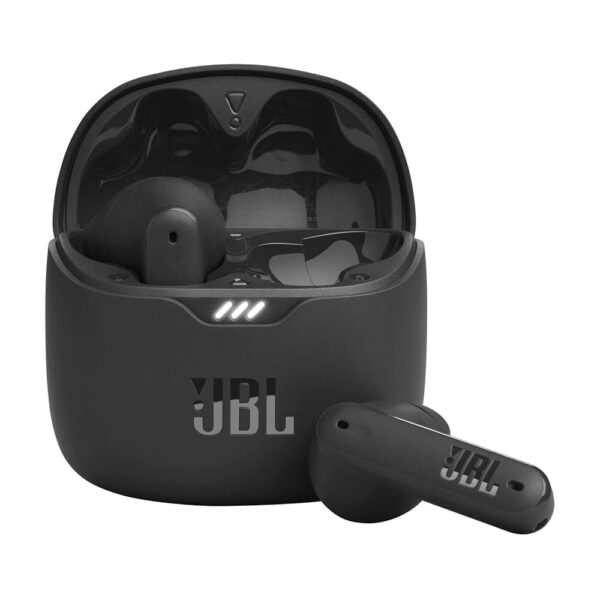
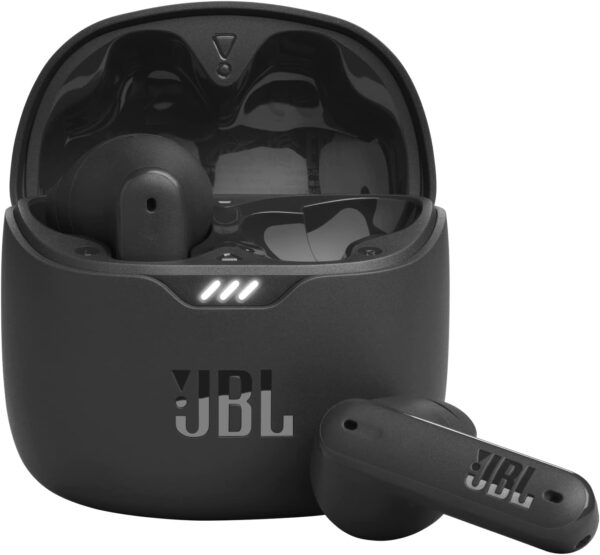
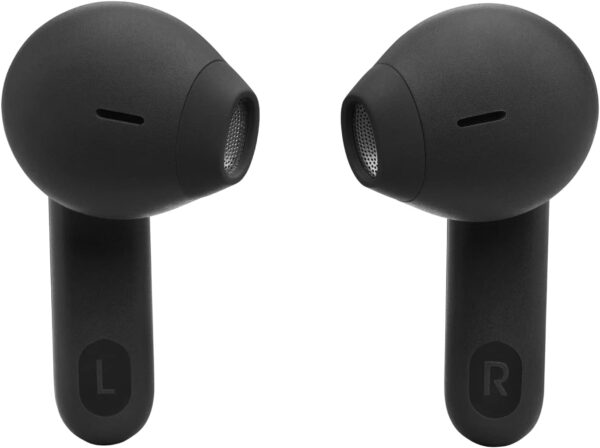
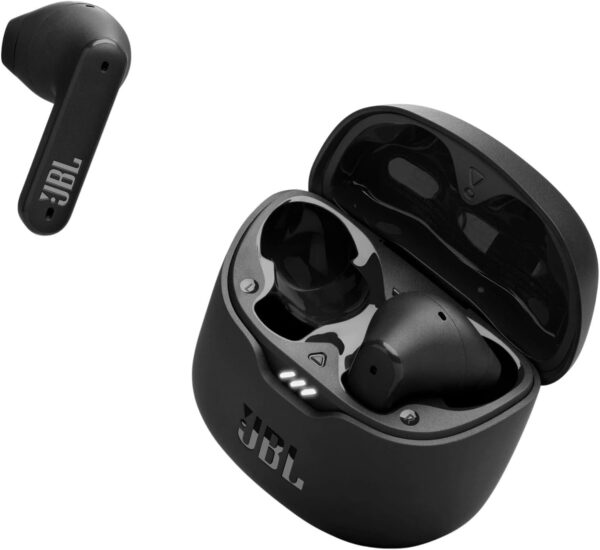
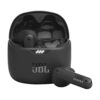
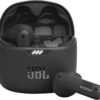
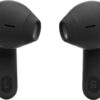
The JBL Tune Flex is a stick-form true wireless earbud with active noise cancellation, four microphones and a genuinely useful trick: JBL supplies both sealing tips and open tips, so the same buds can be worn as a sealed in-ear or as an unsealed one. Of all the listings in this catalog, it also publishes the cleanest battery data, giving separate figures for cancellation on and cancellation off.
Who these suit
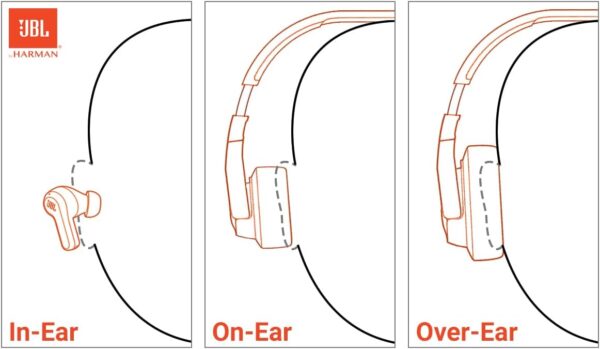
These are for someone who has not settled on whether they want a sealed earbud or not. A sealed tip blocks more outside sound and gives cancellation something to work against, which improves both isolation and bass. An open tip is more comfortable for long wear, does not create the plugged-ear pressure some people cannot tolerate, and leaves you more aware of your surroundings. Being able to change your mind after purchase is a real advantage, and it is not something the Beats Studio Buds or most sealed competitors offer.
It is worth being honest about what the open configuration means. Active cancellation depends on a sealed cavity. Run these with the open tips and you lose most of the cancellation’s effectiveness along with the low end. The two modes are genuinely different products in use, not a cosmetic choice.
How they connect
This listing publishes no Bluetooth version and no audio codec. There is no AAC entry, no aptX and no LDAC anywhere in the description, the bullets or the attribute data. Where nothing is named, SBC is the only codec that can be assumed, because SBC is the baseline every Bluetooth device supports. Nothing here supports a high resolution or lossless claim, and any codec that did appear would still require your phone to support the same one for it to be used.
The features that do change daily use
JBL describes four microphones for calls, with VoiceAware letting you choose how much of your own voice is routed back into the buds. That is the feature that stops people shouting on a sealed earbud, and it is more useful than it sounds. Ambient Aware lets outside sound in, and TalkThru lowers the music for a quick conversation without taking a bud out.
Multipoint is not mentioned anywhere on this record. Neither is wear detection. Both are the sort of feature that buyers assume is present at this level and frequently is not, so treat them as unconfirmed. The JBL Headphones app is referenced for EQ, cancellation levels and a find-my-earbuds function.
The battery figures, published properly
JBL gives four numbers rather than one, and the listing deserves credit for it. With cancellation off: 8 hours in the buds plus 24 hours from the case, for 32 hours total. With cancellation on: 6 hours in the buds plus 18 hours from the case. A 10 minute speed charge is quoted at 2 hours of playtime.
Read the 6 hour figure as the one that matters, because most people who buy a cancelling earbud leave the cancellation on. Six hours covers a working day of intermittent use or a medium-haul flight. The 32 hours on the front of the box is the combined bud-plus-case total with cancellation off, which is the least representative of the four numbers and the one most listings quote alone. The Soundcore P30i is the other set in this catalog that publishes all four states, and comparing them side by side is far easier as a result.
What is not published: the full charge time for buds or case, the case capacity, and whether the case supports wireless charging.
Fit, drivers, cancellation and the water rating
The drivers are 12 millimeter dynamic units, which JBL says the stick form factor helps by giving the housing more internal volume. Twelve millimeters is generous for an in-ear and is a real figure rather than an adjective. The published frequency response, impedance and sensitivity are all absent, so 12 millimeters and the tip options are the only physical specifications on offer.
On the cancellation itself, JBL describes two microphones feeding the system and offers no decibel reduction figure. That absence is preferable to a figure quoted with no test standard named. What is reliably true of active cancellation is that it removes constant low frequency sound such as engine drone, train rumble and air conditioning well, and does comparatively little against speech. No earbud makes an open-plan office quiet.
The water rating is IPX4, which is stated clearly and is the correct code for sweat and splash resistance. The bullet describing it, however, overreaches: it says there is not a workout or downpour the Tune Flex cannot handle. IPX4 covers splashing from any direction. A sustained downpour, submersion, a shower or a swim are all outside it. Take the code rather than the sentence. No IP rating covers seawater or pressurized water in any case, and ingress protection degrades as seals age.
The same bullet list also promises “perfect calls every time” and “perfect clarity,” which is manufacturer language rather than a specification, and there is no microphone frequency response or call noise reduction figure published to support it. Four microphones is the number; the rest is copy.
What the listing does not publish, and what to compare
This record carries no structured attribute data at all, so there is no weight for the buds or the case, no dimensions, no Bluetooth version, no charge time, no included-components list and no statement of how many tips of each type are supplied. The source category path degrades into reviewer names after “Electronics, Headphones, Earbuds and Accessories,” so the category data on this record is unusable.
The tip count is the omission worth chasing before purchase. The interchangeable open and sealed tips are the reason to buy this product, and how many sizes of each arrive in the box is not stated anywhere.
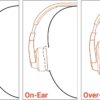
Within our own listings, the JBL Vibe Beam sits below this without cancellation, and the JBL Tune 770NC is the over-ear equivalent in the same range if you would rather have a headphone than a bud. The wider wireless earbud listings we track are where battery splits can be compared directly.
Who should buy them, who should not
Buy the Tune Flex if the sealed-or-open choice appeals, if you want cancellation with an honest battery figure attached to it, and if VoiceAware and TalkThru sound like features you would use rather than ignore. Skip them if you need confirmed multipoint, if you want a named codec, if you need a rating beyond splash and sweat, or if you want to know exactly what is in the box before you open it.