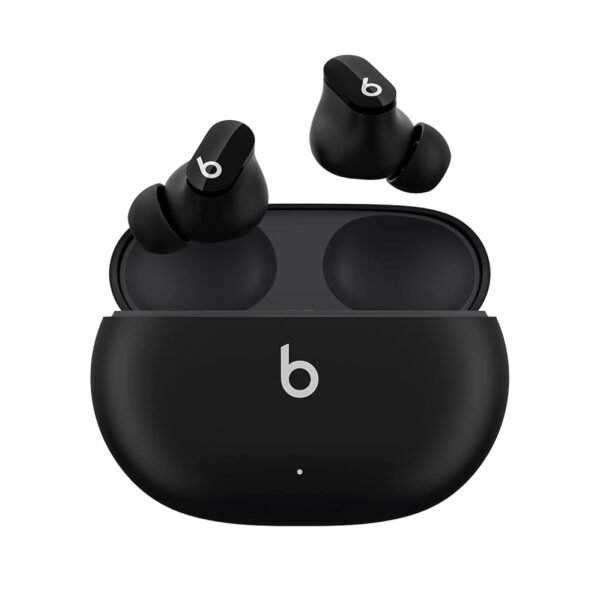
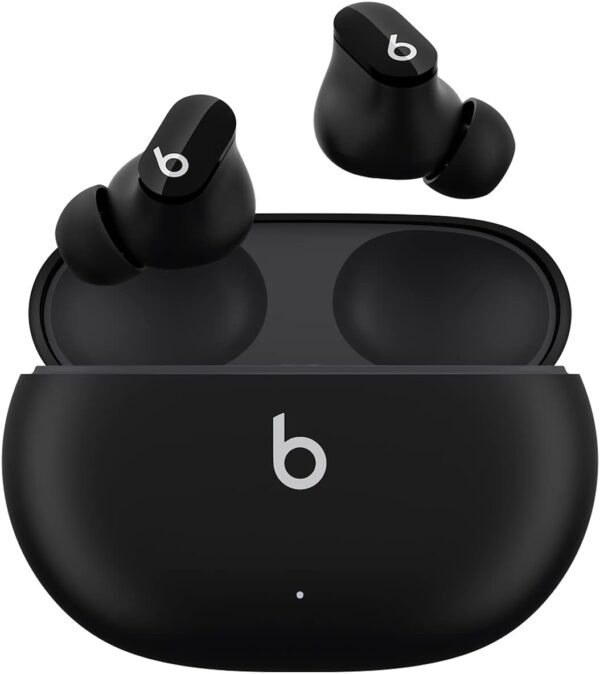


Description
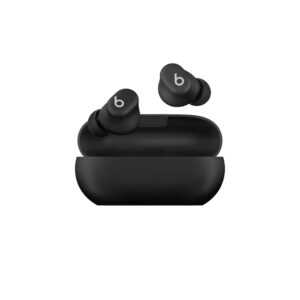
The Beats Studio Buds are a sealed true wireless earbud with active noise cancellation and a transparency mode, sold in a version that Amazon lists as “Without AppleCare+.” Beats publishes a clean battery split, a specific water rating and a tip count, which is more than most listings in this catalog manage. What it does not publish is a Bluetooth version, an audio codec, or a second battery figure for cancellation running.
Who these are for
These suit someone who wants cancellation in a small sealed bud and who may be on either platform. Beats states compatibility with Apple and Android devices explicitly, and that is the practical distinction between this and an Apple-only set. The box contains the buds, a charging case, ear tips in three sizes, a USB-C to USB-C charging cable, a quick start guide and a warranty card. The USB-C power adapter is sold separately, which is worth knowing if these are a gift.
The three tip sizes matter more here than the number suggests. Active cancellation depends on a sealed cavity to work against, so a bud that does not seal loses both its bass and most of its cancellation at the same time. Beats describes the tips as providing a stable fit and an acoustic seal, and that seal is doing double duty.
How they connect, and what is missing
Beats states Class 1 Bluetooth, describing it as giving extended range and fewer dropouts. Class 1 is a transmit power classification rather than a version number, and it does generally mean more range than the Class 2 radios most earbuds use, so the claim is meaningful as far as it goes. But this record publishes no Bluetooth version at all.
No codec is named, so no high resolution claim stands
There is no AAC entry, no aptX and no LDAC anywhere on this listing. Where nothing is named, SBC is the only codec that can be assumed, because SBC is the baseline every Bluetooth device supports. Nothing here supports a high resolution or lossless claim, and any codec that did appear would still require your phone to support the same one for it to be used. Most iPhones support neither aptX nor LDAC at all, which is why AAC support is the specification Apple-platform buyers usually want confirmed, and it is not confirmed here.
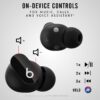
Multipoint is not mentioned. Wear detection, which pauses playback when a bud leaves the ear, is not mentioned. An app is not mentioned, though the Beats and Apple ecosystems normally handle these buds through system settings rather than a separate application. Treat all three as unconfirmed on this record rather than implied by the brand.
The battery picture
Beats quotes up to 8 hours of listening time from the buds, and up to 24 hours combined with the pocket-sized charging case. That is the correct way to state it, with the per-bud number given first and the combined figure identified as combined, and it is a distinction many listings blur. Eight hours governs a single sitting. Twenty-four is what you get across recharges before the case itself needs power.
What the listing does not say is which cancellation state those figures assume. Active cancellation runs microphones and a processing chain continuously and always costs battery, and manufacturers who publish two figures typically show a drop of a quarter to a third. Compare the JBL Tune Flex, which publishes both states plainly: 8 hours plus 24 with cancellation off, and 6 hours plus 18 with it on. Beats gives one pair of numbers, so read 8 hours as the ceiling and expect less with cancellation active.
No quick charge figure, no full charge time and no case capacity are published. Whether the case charges wirelessly is also not stated.
Fit, cancellation and the water rating
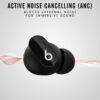
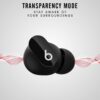
Beats describes a custom acoustic platform and two listening modes, active noise cancellation and transparency. Having a proper transparency mode is a real functional difference from a set that only offers isolation, because it lets you hold a conversation or hear an announcement without removing a bud. It should not, however, be treated as a road safety feature. A sealed cancelling earbud is the wrong choice for cycling or running near traffic, and no transparency mode changes that enough to rely on.
On what cancellation actually does: it works well against constant low frequency sound such as engine drone, cabin noise and air conditioning, and poorly against speech and other irregular sound. No earbud makes an office quiet. Beats publishes no decibel reduction figure here, which is preferable to publishing one with no test standard named, as several other listings in this catalog do.
The water rating is stated properly and specifically: IPX4, described as sweat and water resistant. That is the correct wording for that code. IPX4 covers splashing from any direction, which means sweat and rain. It is not an immersion rating, so these should not be submerged, worn in a shower or taken swimming. No IP rating covers seawater or pressurized water, and ingress protection degrades as seals age.
What the listing does not publish
Absent from this record: driver diameter, frequency response, impedance, sensitivity, bud and case weights, case dimensions, microphone count, Bluetooth version, codec support, charge times and the app or firmware situation. There is no structured attribute data at all on this listing, and the source category path contains nothing but reviewer names, so there is no usable category information either.
That is a lot of blank space for a name-brand product, and it is worth setting against what Beats does publish, which is the three things that most often go unstated elsewhere: a real tip count, a proper battery split, and a specific IP code rather than the word “waterproof.”
Within our own listings, the Beats Solo Buds sit below these with no cancellation and a case that holds no battery, while the Apple AirPods Pro 2 are the obvious step up for anyone staying on Apple hardware. The Apple AirPods 4 take the opposite approach with an unsealed fit, and the wider wireless earbud listings are where cancellation and battery splits can be compared side by side.
Who should buy them, who should not
Buy the Studio Buds if you want cancellation in a compact sealed bud, if you use both Apple and Android hardware, and if a specific IPX4 rating and three tip sizes cover your requirements. Skip them if you need a confirmed codec or Bluetooth version, if multipoint or wear detection is on your list, if you want a published battery figure for cancellation running, or if you need water resistance beyond splash and sweat.