


Description
This review has to start with an unusual admission. The TOZO T10 Classic Edition listing in our catalog contains a product title and nothing else. There is no manufacturer description, no feature bullet list and no structured attribute data at all. Every other review in this catalog can weigh a specification against a marketing claim; here there is only the title, and this page is written to say exactly what that title supports and what it does not.
What the title actually establishes
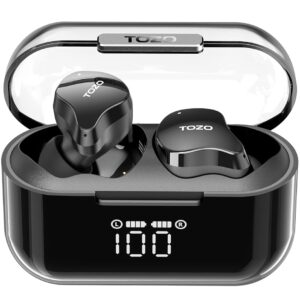
The listing describes a TOZO T10 Classic Edition with Bluetooth 5.3, a wireless charging case, an IPX8 water rating, a built-in microphone, 32 preset equalizer settings accessible through an app, and a size and color designation of large black. That is the complete set of published claims.
Everything else a buyer would normally want, and everything the short description previously on this page asserted, is absent from the record: battery life per bud, battery life with the case, driver size, frequency response, sensitivity, ear tip count and sizes, charging time, weight, dimensions, latency, codec support, multipoint and wear detection. We have removed the previous claims of ten hours per charge, thirty-five additional hours from the case and multiple tip sizes, because nothing in this listing supports them.
The IPX8 rating, which is the one substantial claim
IPX8 is the highest code on the water axis of the IP scale, and it is worth understanding precisely, because it is the reason to consider this model over cheaper TOZO sets.
The 8 means continuous immersion in water beyond one meter, under conditions the manufacturer specifies. That last clause is the important part: unlike IPX7, which has a defined test of one meter for thirty minutes, IPX8 has no fixed depth or duration in the standard. The manufacturer defines the conditions, and if the manufacturer does not publish them, as here, the code tells you the buds survived something more demanding than IPX7 without telling you what.
The X in the first position means dust protection was not tested. It does not mean the buds are vulnerable to dust, only that no figure exists.
Three practical limits apply regardless of the code. No IP rating covers seawater, which is corrosive in a way fresh water is not. No IP rating covers pressurized water, so a shower head is outside it even at IPX8. And ingress protection degrades over time as seals age and as sweat residue and debris collect around the mesh and the charging contacts. An IPX8 earbud is a good choice for rain and heavy sweat and a poor choice for regular swimming, not least because Bluetooth barely travels through water at all.
Bluetooth 5.3, and what it does not tell you
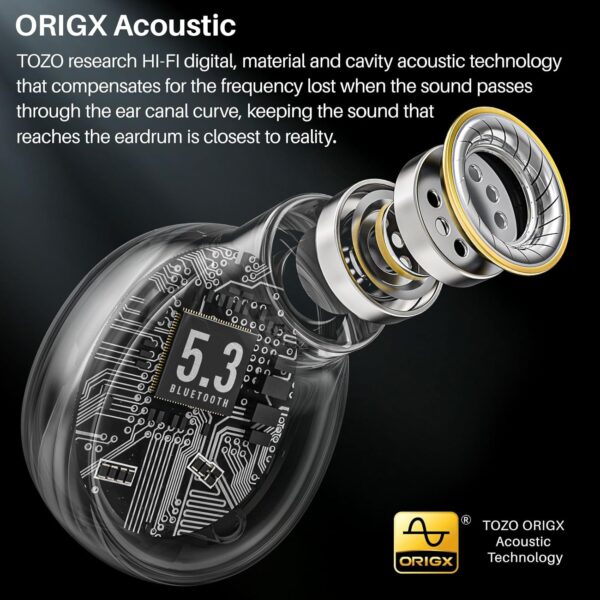
Bluetooth 5.3 is the other firm claim. A version number describes connection stability, power efficiency and which feature sets the chip is capable of supporting. It does not make audio sound better, and it does not indicate range, which depends on transmit power and antenna design rather than on the version.
No audio codec is named. Where nothing is named, SBC is the only codec that can be assumed, because SBC is the baseline every Bluetooth device supports. The title’s “Premium Sound with Deep Bass” wording is marketing language with no transmission or driver specification behind it, and no high resolution or lossless claim can be made about this product. Any codec that did appear would still require your phone to support the same one.
The app and the 32 presets
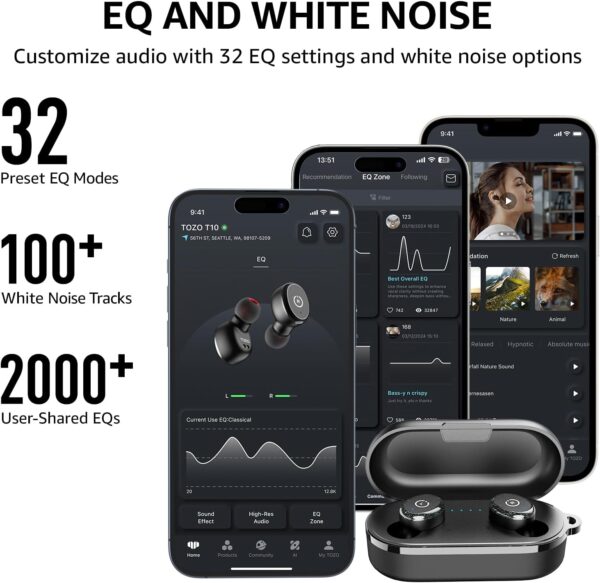
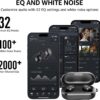
Thirty-two equalizer presets through a companion app is a real feature and a generous count. It also implies the app exists and is maintained, which on a product line this long-running is worth checking before purchase, since app support is what determines whether the presets remain available in a few years.
What the app does not do is add cancellation. Nothing in this title mentions active noise cancellation, a transparency mode or ambient sound. The T10 is a sealed passive earbud, so isolation comes entirely from the tip seal, and how well that works depends on tips whose sizes this listing does not state. If cancellation is what you want from TOZO, the TOZO NC2 is the model that publishes it.
Wireless charging, and the size designation
The case supports wireless charging, which means it will sit on a phone charging pad rather than needing a cable. That is a convenience several sets in this catalog do not confirm, and it is a genuine reason to prefer this listing over a cheaper one.
The “Large” in the title is a size or edition designation used across the TOZO range rather than a description of the earbud, and this listing gives no dimensions to clarify what it refers to. If you are matching a replacement to a set you already own, confirm the variant with the seller.
Why a title-only listing is worth naming
It is tempting to fill the gaps by borrowing figures from other TOZO models, since the range shares components and the T10 has been sold for years. We have deliberately not done that. Model designations in this range change without changing the name, editions are sold in parallel, and the same product code has appeared against different hardware. A figure copied from a sibling listing would read as a specification and would not be one.
The practical effect is that this page can tell you what the water rating means, what the Bluetooth version does and does not do, and what the absence of a codec implies, but it cannot tell you how long the buds last. That is the single most important number on any true wireless earbud, and it is missing.
What to confirm before buying
Given how little this record publishes, a short list is more useful than an assessment. Before ordering, confirm the per-bud runtime, the total runtime with the case, the number and sizes of ear tips supplied, whether a charging cable is included and what connector it uses, the driver diameter, and whether the app is still supported on your phone’s operating system version. Any seller can answer those, and a seller who cannot is telling you something.
Within our own listings, the TOZO T6 publishes six ear tip sizes, a 45 millisecond latency figure and case capacity, the TOZO E2 publishes a 10 millimeter driver and a sensitivity figure, and the TOZO T12 covers the same bracket. Any of those is easier to judge than this one. The wider wireless earbud listings we track are where full specifications can be compared side by side.
Note as well that this catalog carries more than one T10 listing under different product codes, so you may encounter the same model twice while comparing.
Who should buy it, who should not
Buy the T10 Classic Edition if the IPX8 rating and wireless charging are what you are shopping for, if a 32 preset app appeals, and if you are comfortable buying against a title rather than a specification. Skip it if you need to know the battery life before committing, if tip sizes matter to your ears, if you want active cancellation, or if a listing that publishes nothing beyond its own title is not a purchase you want to make. That is a reasonable position to take here.