


Description
The FreeBuds Pro 3 listing does something almost nothing else in this catalog does: it names its codecs. Two of them, by name, alongside the certifications that go with them. That is the right way to make a high resolution claim, and it earns the product a serious hearing. It is also a listing that quotes a single battery number, thirty one hours, and never tells you how much of that is in your ears. Everything below comes from the published listing. We do not wear or measure the products covered on this site.
Who this is for
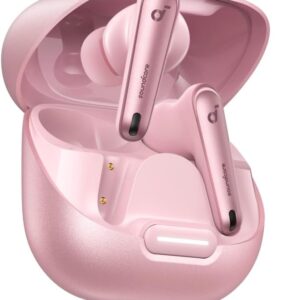
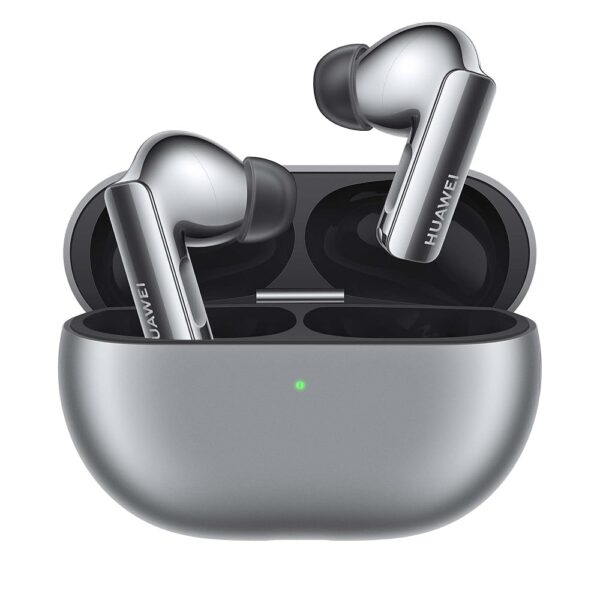
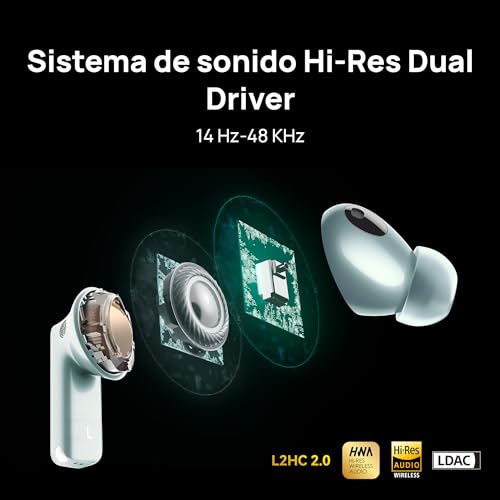
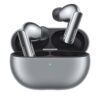
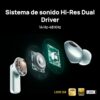
These are sealed in-ear buds in Silver Frost with active noise cancellation, a wireless charging case and four sizes of ear tip. Huawei describes an “Ultra-Hearing Dual Driver” arrangement, with the specification table giving an 11 millimeter driver size, which will be the dynamic unit rather than the pair. The case is documented unusually thoroughly: 510 milliamp hours, 47.7 grams, and dimensions in millimeters.
Four tip sizes is the standout fit specification. Three is the industry norm and it leaves people with small canals struggling, so a fourth size is a genuine advantage rather than a bullet point. On a sealed bud the tip decides both how much bass you perceive and how much outside noise the seal blocks before the cancellation circuit starts work.
The specific uses field lists calling, cycling, running, exercising and gaming. Cycling on a sealed bud with active cancellation is not something we will endorse, because cancellation removes the low frequency engine noise that warns you a vehicle is approaching. Use a design that leaves the ear canal open for road riding, and keep the volume low enough that a car is audible before it is beside you. Huawei’s own open ear clip, covered in our Huawei FreeClip review, is the shape built for that.
The codecs, and the conditions attached to them
The relevant bullet reads: “HWA AND HI-RES AUDIO WIRELESS CERTIFIED: HUAWEI FreeBuds Pro 3 supports the L2HC 2.0 and LDAC codecs, and is certified by both HWA and Hi-Res Audio Wireless to deliver high-resolution audio.”
Naming the codecs is what makes this claim assessable, so here is what each one requires. LDAC is Sony’s high bitrate codec, built into Android and present on most modern Android handsets. It is not supported by iPhones, which top out at AAC over Bluetooth. L2HC is Huawei’s own codec, which means it needs a Huawei source device to be used at all. The Hi-Res Audio Wireless certification itself is awarded on the basis of LDAC or an equivalent codec being present, so it describes a capability of the link rather than a guarantee about what you will hear.
Put plainly: the high resolution claim on this listing is real, and it applies only if your phone supports one of the two named codecs. On an iPhone you will get neither, and the buds will fall back to AAC like almost everything else. On a non-Huawei Android phone you may get LDAC if the phone supports it and it is enabled in the developer settings. That condition is not stated anywhere on the page, and it is the difference between a specification and a promise. For comparison, our Sony WF-1000XM5 review covers a product with the same LDAC condition and the same silence about it.
Dual device connection is advertised in the description, which is multipoint under another name, so a phone and a laptop can be connected at once. The specification table gives Bluetooth 5.0 and a 10 meter range. Note that 5.0 sits awkwardly with a 2023 product advertising multipoint and high bitrate codecs, and no other version number appears to contradict it.
Cancellation and calls
Huawei calls the system Intelligent ANC 3.0, describing an adaptive algorithm working with “the tri-mic hybrid noise cancellation system.” No decibel figure is published, which is the honest outcome, since such a figure with no named test standard cannot be compared between brands. Hybrid topology, using microphones both outside and inside the ear, is generally more effective than the feedforward-only designs used at lower prices. It still works on constant low frequency noise and does much less against speech.
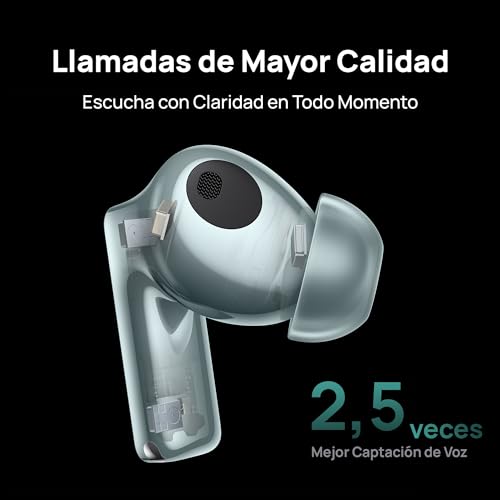
The call system, Pure Voice 2.0, uses “a redesigned bone conduction voice pick-up (VPU) sensor that stays closely fixed to your ears.” That picks your voice up through jaw vibration rather than air, which is what lets it separate speech from wind and background noise. Triple Adaptive EQ is described as detecting volume level, ear canal shape and wearing status in real time and adjusting accordingly.
Battery: one number where two belong
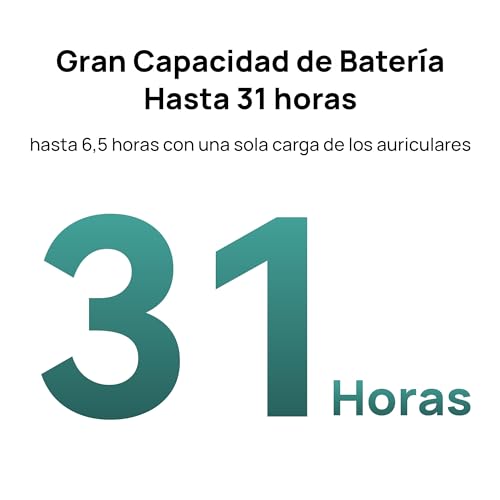
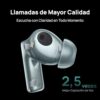
The title says “Up to 31-Hour Battery Life with Charging Case.” The specification table then records the battery life as 31 hours and the carrying case average life as 31 hours, which is the same figure entered twice rather than a split.
Nowhere does the listing state how long the buds run on a single charge. Thirty one hours is the total including the case, and the number a buyer actually needs, the hours you get before returning the buds to the case, is absent. On a cancelling product that number also depends on whether cancellation is running, which is a second thing the page does not address. Ask the seller for both before ordering.
What is published is the charging time, forty minutes, and the case capacity, 510 milliamp hours.
Water resistance, and the rows that are wrong
The description states IP54. That is dust protected and resistant to splashing water from any direction, which covers sweat and light rain. It is not an immersion rating: do not swim or shower in these. No IP code covers seawater or pressurized water, and seals degrade with age. The separate specification field says only “Water Resistant” with no code.
Several rows in the specification table do not survive scrutiny. The frequency response is given as “48000 Hz,” and a second field repeats it as “48,000 Hz.” A frequency response is a range, not a single number, so the listing publishes no usable response figure at all. The control type is listed as touch control while the controller type is listed as button, and those are different things. And the item weight of 45.5 grams, given again as 1.6 ounces, is smaller than the separately stated case weight of 47.7 grams, which is impossible if the item weight is meant to include the case, and far too heavy if it means the buds alone. No reliable bud weight is published.
How it ranks, and the alternatives
Customer feedback sits at 4.6 out of 5 from 511 ratings, which is the highest score of anything covered so far in this catalog on a sample of that size. The sales rank is given as 176,606th in Electronics and 8,279th in the earbud and in-ear headphone group, which is deep and reflects limited distribution rather than the product. The model number is Piano-T100 and the date first available is November 2023.
For another product that names its codec support properly, see our Technics EAH-AZ100 review. For a cancelling rival that names no codec at all, see our Bose QuietComfort Earbuds II review. For the wider field, start from the true wireless earbud listings or the broader in-ear headphone listings.
Who should buy it and who should not
Buy it if you use an Android phone that supports LDAC, or a Huawei phone that supports L2HC, and you want four tip sizes, hybrid cancellation, multipoint and a bone conduction call sensor. Naming the codecs puts this listing ahead of nearly everything else here. Do not buy it on an iPhone expecting the high resolution audio, because neither named codec is available to you. Do not buy it for road cycling. Do not read IP54 as immersion protection. And get the seller to state the bud runtime, because the thirty one hour figure is the case and the buds together.