



Description
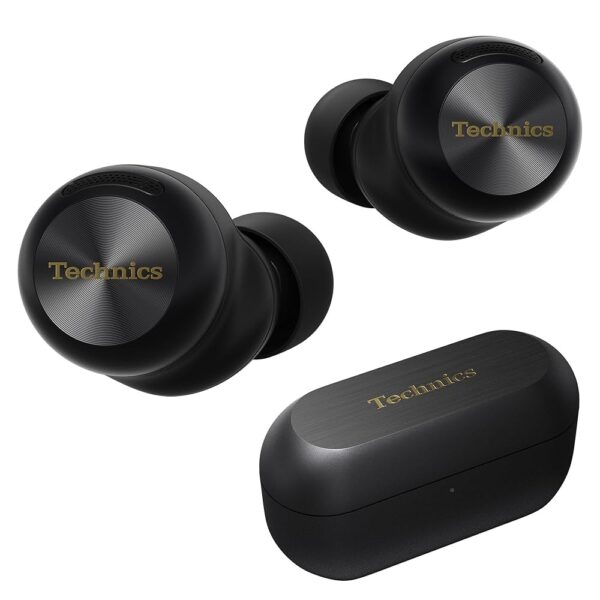
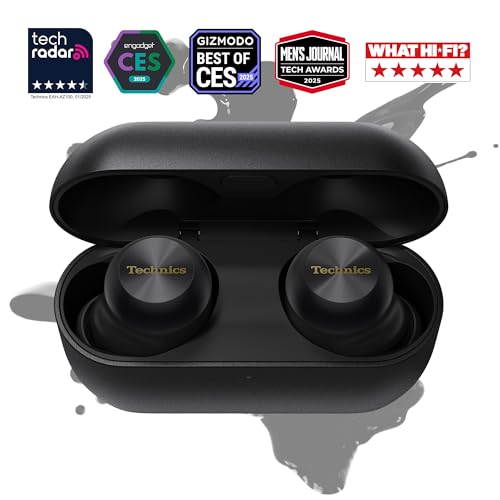
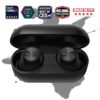
The Technics EAH-AZ100-K is Panasonic’s flagship true wireless earbud under the revived Technics badge, listed in black with adaptive noise cancellation, Dolby Atmos with head tracking, a wireless charging case and a three device multipoint connection. It rates 4.6 out of 5 across 416 ratings and sits 245th in earbud and in ear headphones. It is one of the most capable products in this catalog, and its listing carries one omission that is genuinely surprising for a product sold on audio quality.
The Hi-Res claim with no codec attached
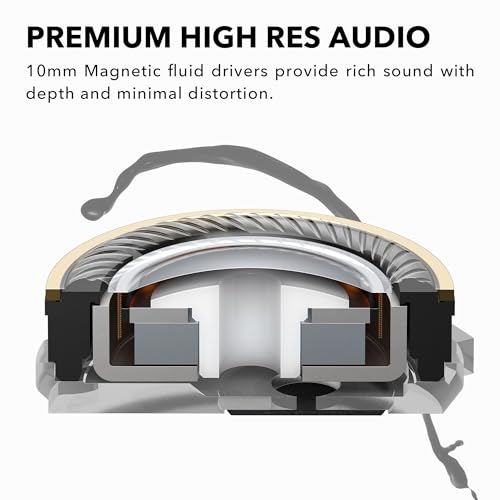
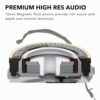
The description promises high resolution sound. The model name field literally reads Technics Reference Class Hi-Fi True Wireless Bluetooth Earbuds. A feature bullet promises new detail and clarity in music.
No Bluetooth codec is named anywhere on this listing. Not SBC, not AAC, not LDAC, not aptX in any form, not LC3. That is an extraordinary gap on a product whose entire positioning rests on audio fidelity, because over Bluetooth the codec, not the driver, determines how much audio information reaches the earbud in the first place.
This matters practically, not just pedantically. A high resolution codec such as LDAC requires support at both ends of the link. If your phone does not support the codec the earbud uses, the connection falls back to SBC or AAC and the resolution advantage disappears entirely. Because this listing publishes nothing, an iPhone owner cannot tell whether they will get anything beyond AAC, and an Android owner cannot tell whether enabling a developer setting will unlock anything. We will not describe this product as high resolution on the strength of this page. Ask Technics directly, citing model EAH-AZ100-K, before buying on the basis of sound quality. For contrast, both the Nothing Ear and the Soundcore AeroFit 2 name their codecs and state the source device requirement, which is the standard this listing should be held to.
The driver description contradicts itself
The description and a feature bullet both credit magnetic fluid drivers, which refers to placing a ferrofluid in the voice coil gap of a conventional dynamic driver to improve heat dissipation and damping. The specification block, however, lists the Audio Driver Type as Planar Magnetic Driver. A planar magnetic driver is a fundamentally different transducer, using a flat diaphragm suspended in a magnetic field rather than a coil and cone. These are not two descriptions of the same thing, and no driver diameter is published for either. The bullet text is the more specific and internally consistent of the two.
Three device multipoint, which is the real headline
The feature that most distinguishes this product is buried in a bullet rather than promoted properly. Standard Bluetooth multipoint holds two simultaneous connections. Technics claims three, with manual prioritization so you decide which device wins when two want the audio path at once.
For anyone running a work laptop, a personal phone and a tablet, that removes a daily irritation that two device multipoint only half solves. It is rare at any price and it is the clearest concrete advantage this product has over its direct rivals. The prioritization control is the part that makes it usable rather than chaotic, since three devices competing for a connection without a hierarchy would be worse than two.
Noise cancellation and spatial audio, described honestly enough
The Noise Control field reads Adaptive Noise Cancellation, and the listing describes the system as responding automatically to the environment, with a Voice Focus AI chip handling call clarity. No decibel reduction figure is published and no test standard is named, which is normal for the category and is why cancellation claims should be read as manufacturer positioning rather than measurement.
What cancellation reliably does is reduce constant low frequency noise: aircraft cabin drone, engine and road rumble, ventilation, rail noise. It works poorly against speech and sudden sounds, and no earbud makes an environment silent. The listing does not describe a transparency or ambient pass through mode anywhere, which combined with a sealed cancelling design means this is not appropriate for road cycling or road running, where hearing a vehicle behind you is the safety input that matters. Our open ear headphones category exists for that use case.
Dolby Atmos with head tracking is claimed, described as adjusting the soundstage as you turn your head so that a source stays fixed in space. Two conditions apply that the listing does not spell out. Spatial audio needs content encoded for it or a virtualization mode applied to stereo, and head tracking needs the motion sensors in the buds plus a source that supports the feature. Neither is universal, so what you actually get depends on your streaming service and your phone.
Battery: honest figures, stated with cancellation on
Technics publishes up to 10 hours of music playback with noise cancellation enabled, and 28 hours with the charging case. The specification field agrees, recording Battery Life as 10 hours. That is a clean, consistent pair and, importantly, the bud figure is quoted with cancellation running rather than switched off, which is the harder and more useful way to state it. Most listings in this catalog quote their best case with cancellation disabled and never mention it.
Ten hours with cancellation active is a strong figure for a sealed bud, and 28 hours total means the case holds not quite two additional charges, which is modest but consistent with a compact wireless charging case. No fast charge figure and no charging time are published. The case supports wireless charging, which is listed in the included components.
Fit, water resistance and the gaps
Technics states the buds are 10 percent smaller and 16 percent lighter than the previous EAH-AZ80, with a lower profile shape following the contours of the ear. Those are relative figures, useful only if you know the AZ80, but the direction is clear. The included components list ear cushions and a wireless charging case, and does not state how many cushion sizes are supplied. On a sealed cancelling earbud the seal does double duty, producing the bass and determining how well cancellation performs, so the tip count is a real specification and its absence here is a gap. Item weight appears as 0.11 pounds and as 1.76 ounces, which agree with each other and describe the packaged product rather than a bud.
The Water Resistance Level field reads Water Resistant. No IP code appears anywhere, in the title, the description, the bullets or the specification block. A phrase without a code is not a rating. IPX4 covers sweat and splashes, IPX7 covers immersion, and the gap between them is the entire question. We will not describe this product as water resistant to any stated degree, and that omission is worth confirming with Technics if you intend to exercise in these.
Two junk fields round out the block. Number of Power Levels reads 15, a category field inherited from something that is not a headphone. The Batteries field states one P76 battery is required and included, on a product with sealed lithium cells. Country of origin is Malaysia.
What to compare it against
Note first that a second finish of this same model exists in our catalog as the EAH-AZ100 in silver under a separate ASIN, so check which variant you are ordering. Direct rivals at this level are the Sony WF-1000XM5, which publishes its codec support, the Bose QuietComfort Ultra Earbuds for cancellation, and the Sennheiser Momentum True Wireless 4 for anyone shopping primarily on sound. More sit in our wireless earbuds category.
Who should buy it, who should not
Buy it for the three device multipoint above anything else, because nothing else in this catalog offers it and juggling a laptop, a phone and a tablet is a daily problem for a lot of people. Buy it if you want a 10 hour runtime quoted with cancellation running rather than off, and if a compact wireless charging case suits your routine. The rating is high across a meaningful sample.
Do not buy it on the high resolution claim alone, because no codec is named and the claim cannot be verified from this page. Do not assume it is sweat rated, since no IP code is published. Do not treat the Planar Magnetic Driver field as accurate, since the bullet text describes a different transducer entirely. And do not use it for road cycling, since it is a sealed cancelling design with no ambient mode described.