Description
The buyer this is aimed at
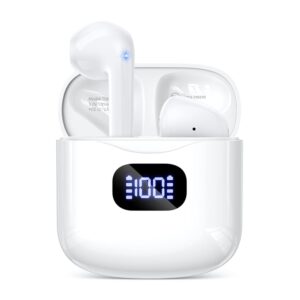
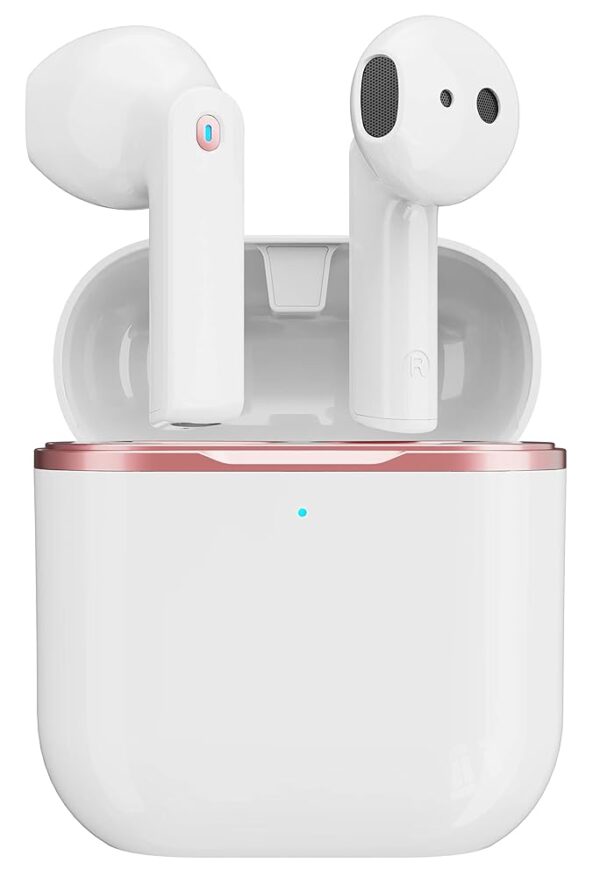
The DRQQ AirBuds 2 is a budget true wireless earbud with a wireless charging case, a stated codec and a modest water rating. The listing’s title reaches for every popular search term at once, stacking noise cancelling, deep bass, long battery and waterproof into a single line, and the job of this review is to separate which of those the specification actually supports. The intended buyer is someone who wants a low cost daily pair with wireless charging, which is a feature that usually costs more than this product does.
The published rating is 4.0 out of 5 across 591 ratings, which is the smallest rating count in this group and worth noting on its own. The listing places the model 485th in the earbud and in-ear headphone category and it first appeared in April 2023. One field on the page reads Specific Uses For Product: Travel, Dry sand, personal, business, amateur, Business. Dry sand is not a use case and Business appears twice. That field is a keyword dump rather than information.
Connection and a codec that is actually named
The specification gives Bluetooth 5.1 with a 10 meter range. Bluetooth 5.1 is a few generations behind current, and what the version governs is connection stability and power efficiency rather than sound quality. It predates the LE Audio groundwork introduced with 5.2.
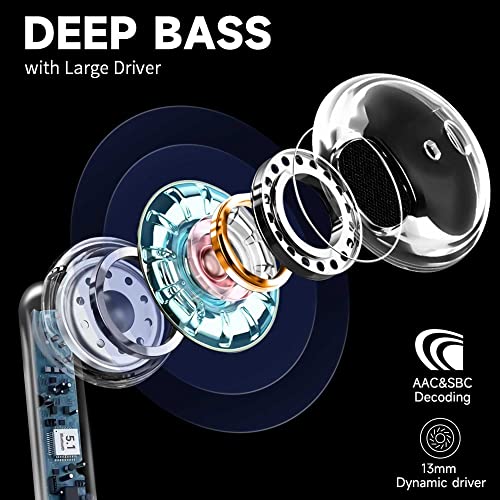
The genuinely useful disclosure is in the first bullet: AAC is named as the codec. That puts this listing ahead of most of its neighbours, which name nothing at all. What AAC means in practice is worth being precise about. AAC is the codec Apple devices use, so an iPhone or iPad owner gets a real benefit from it over the SBC baseline. Android support for AAC exists but implementation quality varies between handsets. What AAC is not is a high resolution codec. It is a lossy format at a similar bitrate range to SBC, tuned better. The bullet’s use of the phrase HiFi audio codec next to AAC oversells it, and nothing on this listing supports describing the product as high resolution or lossless.
Multipoint pairing is not mentioned, so assume one device at a time. Compatible Devices reads only Cellphones, which is narrower than the title’s claim of iPhone and Android support and says nothing about laptops or tablets. No companion app is named and no equalizer is described.
The noise cancellation contradiction
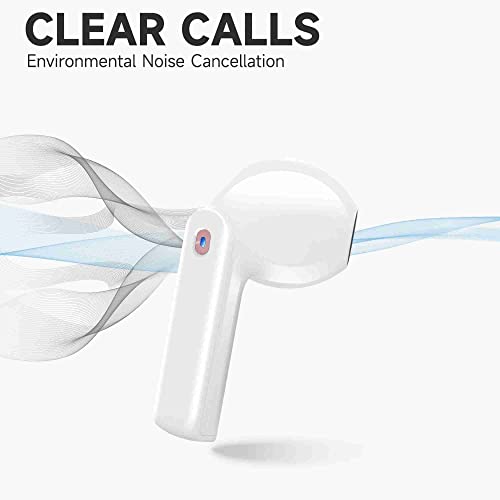
This one needs stating directly because the page argues with itself. The Noise Control specification field reads Active Noise Cancellation. The feature bullet reads noise cancellation with ENC to reduce environmental noise for a crystal clear call. ENC stands for environmental noise cancellation and it is a microphone side technology: it cleans up the signal you transmit so the person on your call hears less background. It does nothing to quiet the world for you while listening. Those two entries describe fundamentally different features, and the more specific one, the bullet, is the more credible. Treat this as a product with call side noise reduction and passive isolation from the ear tip seal, not as an active noise cancelling earbud. If real cancellation is what you want, the TOZO NC2 with hybrid active cancellation is a clearer proposition at a similar level.
Battery, with the split missing
The Battery Life field says 30 hours and the charging time is given as 50 minutes. Nowhere on the listing is the 30 hour figure divided into bud runtime and case runtime. That omission matters, because across this catalog the headline figure is almost always the combined total across several case recharges, with the actual continuous session sitting somewhere between five and ten hours. Assume 30 hours is the total and treat the per charge number as unpublished until DRQQ states it.
The case supports both wireless charging and USB-C, and wireless charging at this price point is the most distinctive thing on the specification sheet. There is no active cancellation circuit drawing current here, whatever the Noise Control field says, so at least there is no hidden ANC battery penalty to account for.
Fit, seal, controls and the IPX5 rating
The water rating is given consistently in the title and in a bullet as IPX5, and the bullet describes it accurately as suitable for light rain and sweat. IPX5 means protection against a low pressure water jet from any direction. It is a step above the IPX4 splash rating that most workout earbuds carry and a long way below immersion. It does not mean waterproof. You cannot submerge these, you should not swim in them, and rinsing them under a running tap is outside what the rating covers. As with every IP code, seawater, chlorinated pool water and pressurized water are excluded, the X means no dust testing was done, and seals degrade with age and heat.
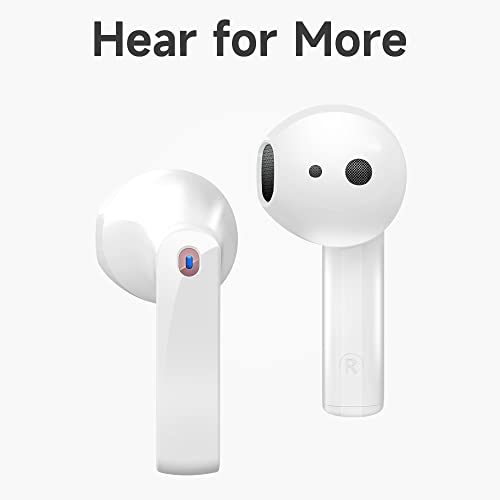
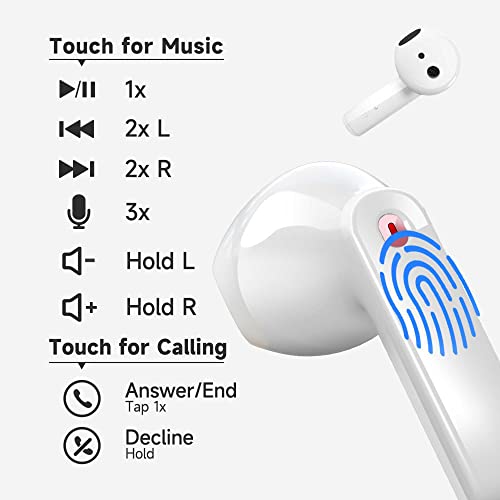
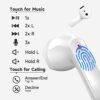
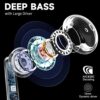
Fit information is thin. The listing does not state how many ear tip sizes are included, does not give a driver size beyond describing it as large, and publishes no impedance, sensitivity or frequency response. Tip count is the specification that decides whether the seal works, and the seal is what produces the deep bass the title promises, so its absence is a meaningful gap on a product sold on bass. Earpiece Shape reads Rounded Tip and controls are touch based across three consistent fields, which is at least one part of the listing that agrees with itself. There is no transparency mode and no wear detection described.
Weight is given as 0.07 kilograms and 2.39 ounces, which agree closely enough and describe the packaged product rather than what sits in your ear.
What else to consider
If the wireless charging case is what drew you here, several products in the catalog offer it alongside a fuller specification. The Soundcore P30i from Anker publishes its cancellation and battery figures properly, the TOZO Crystal Pods with hybrid cancellation sit in a similar bracket, and the Soundcore Space A40 and its adaptive system is the step up worth considering. Browse the true wireless earbud section and the wider in-ear headphone listings for the rest.
Who should buy it, who should not
Buy it if a wireless charging case at a low price is the priority, if you own an Apple device and value AAC being named, and if call side noise reduction is all you need. Skip it if you were buying for active noise cancellation, because the bullets describe a call microphone feature rather than a cancellation circuit. Skip it if you need to know your per charge runtime before committing, and do not read IPX5 as waterproof, because it covers rain and sweat and stops there.