



Description
What this listing is, and how much of it is checkable
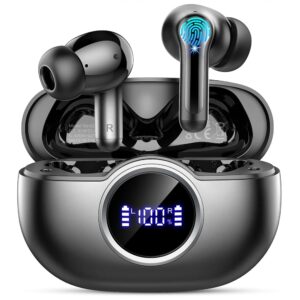
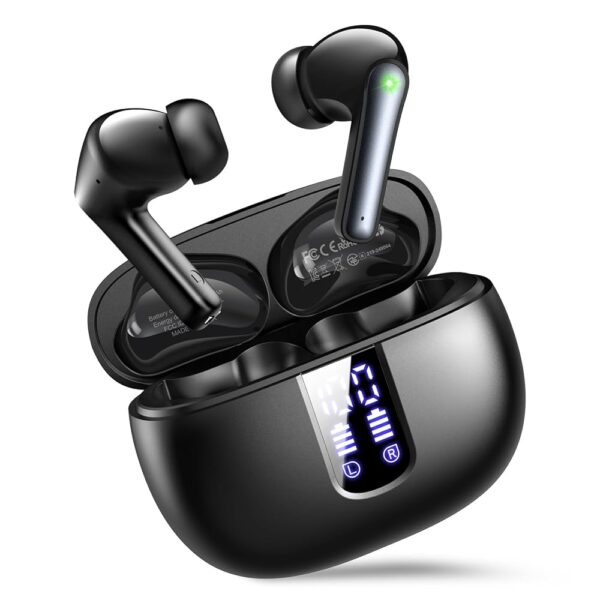
The Foxotin T16 is an inexpensive true wireless earbud with a stemmed shape, touch controls, three ear tip sizes and an LED charge display on the case. Customer feedback is strong at 4.8 out of 5 across 472 ratings, with Amazon placing it around 1,218th in Electronics and 188th in earbud and in ear headphones. The product itself looks conventional for the class. The listing around it is one of the more heavily embellished in this catalog, and separating the two is most of the work in this review.
A note on the name first. This catalog carries more than one product called the T16, across at least three different brand names, and Foxotin itself appears on two separate T16 listings under different ASINs. That is the signature of a shared original design manufacturer selling the same or similar hardware to multiple sellers. It means the brand name carries little information, and it means you should check the ASIN rather than the model number when comparing pages.
Connection, and the one number worth having
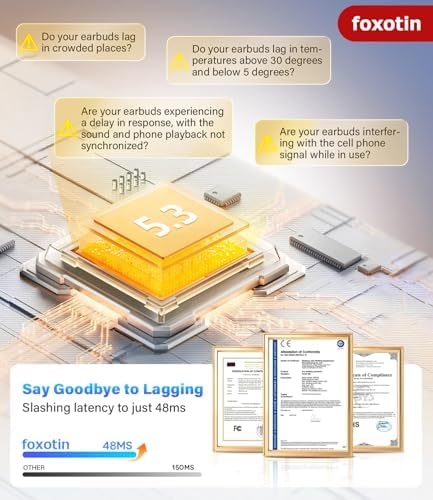
Bluetooth 5.3 is published. The version number is not a sound quality figure; it governs connection stability, power behavior and support for newer standards. What is genuinely useful here is that Foxotin publishes an audio latency figure of 48 milliseconds. Very few listings at this price state one, and latency is the specification that decides whether video looks synchronized and whether games feel responsive. Forty eight milliseconds is low enough for video and high enough that competitive gaming would still feel slightly off.
No codec, and several claims with nothing behind them
No Bluetooth audio codec is named anywhere. Not SBC, not AAC, not aptX, not LDAC. SBC is present by definition, but nothing beyond it is confirmed, so there is no published basis for a high resolution claim. Foxotin instead uses the phrase 3D stereo sound technology, which is marketing language rather than a specification, alongside a claim of HD voice technology for calls that is equally unmeasurable.
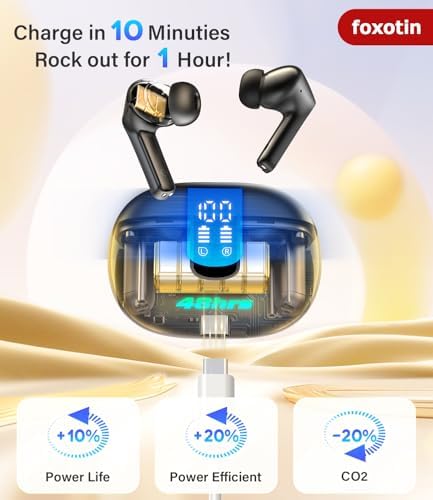
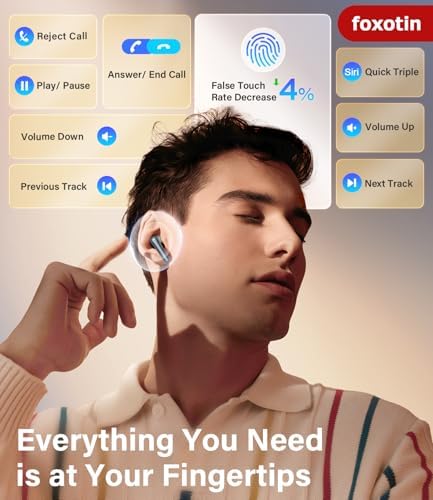
Several other claims on this page deserve to be named rather than repeated. The battery bullet asserts 10 percent more power efficiency and a 20 percent longer lifespan than standard Bluetooth earbuds, with no baseline product, no test method and no definition of standard. The controls bullet claims accidental inputs are minimized by 4 percent, a figure with no stated comparison. The fit bullet cites insights from over 10,000 auricle tests and a 45 degree ergonomic angle. None of those are verifiable and none of them are specifications. We are flagging them as unsupported rather than treating them as features.
There is no multipoint, no companion app, no equalizer, no wear detection and no active noise cancellation anywhere on this listing, and none is claimed. Automatic reconnection when the buds leave the case is included.
Battery, with the most important number missing
The headline is up to 48 hours of battery life with the charging case, plus a fast charge claim of 10 minutes for up to 1 hour of playtime. Both are useful, but the figure that actually decides how long you can listen before returning the buds to the case is never stated. Foxotin publishes no single charge bud runtime anywhere in the bullets.
The structured data gives one clue: the carrying case is rated at 40 hours of reserve with a 500mAh cell and a 2 hour recharge. If the total is 48 and the case holds 40, the buds would be doing roughly 8 hours, but that is an inference rather than a published figure and we are presenting it as such. Ask the seller for the bud runtime before ordering. In this category the combined figure is routinely quoted alone precisely because it is the flattering one, and 48 hours in a title does not mean 48 hours of listening.
Fit, seal and a water rating written two different ways
Three sizes of silicone ear tips ship in the box, small, medium and large, which is the standard count. Seal is the specification that decides perceived bass on a sealed earbud, so work through all three before judging the low end. The driver is published at 14.2 millimeters, which is large for a true wireless earbud, though no frequency response, impedance or sensitivity figure accompanies it, so the number stands alone.
The water rating is where this page needs the most care. The product title says IP7 waterproof. IP7 is not a valid IP code. The IP system uses two digits, the first for solid particle ingress and the second for water, with X standing in where a digit was not tested. IPX7 is a valid code and IP67 is a valid code, but IP7 on its own is not, so as written the title publishes no rating at all. The fifth bullet then does say IPX7, and describes the protection as shielding the buds from sweat and rain during workouts, commutes and travel. Sweat and rain is what an IPX4 rating covers. IPX7 means immersion in one meter of fresh water for thirty minutes under test conditions, which is a much stronger claim than the description supports.
Take the conservative reading. Treat this as sweat and rain protection, do not submerge these and do not swim in them. No IP rating covers seawater, chlorinated water or pressurized water in any case, and seals lose performance with age. The structured field, for what it is worth, says only “Waterproof” with no code at all.
The junk data, and a use case to rule out
The manufacturer field reads “shen zhen shi zi hao ke ji you xian gong si”, a romanized Chinese company name that has not been resolved into anything a buyer can look up. The batteries field says “1 Nonstandard Battery batteries required”. The theme field and a field labeled Cartoon Character both contain the same long string of product keywords, clearly stuffed for search rather than describing anything. The compatible devices field is a list of iPhone model names running to the character limit. Included components lists “T16 Wireless earbuds x 1”, which presumably means one set rather than one earbud. Package dimensions and a 3.2 ounce weight describe the shipping box.
The recommended uses field includes cycling and outdoor pursuits. We would rule that out. This is a sealed in ear design with passive isolation and no transparency mode of any kind, so there is no way to admit ambient sound short of removing a bud. Do not use it where hearing traffic is a safety requirement. If awareness while moving is what you actually need, our open fit headphone listings are the right category to look in.
For budget alternatives that publish their bud runtime rather than only a combined figure, see our ZZU T18 review and our kurdene S8 review. For a longer established option at a similar price, our TOZO T10 review is the sensible comparison, and the Aptkdoe HD65 review covers another long battery contender. Broader options are in our wireless earbud listings.
Buy or skip
Buy it if you want a cheap stemmed earbud with a published latency figure and a case that shows its charge, and the 4.8 average across 472 buyers is enough reassurance for you. Skip it if you need to know the bud runtime before committing, because this listing never states it. Skip it if you need active cancellation, an app or multipoint. Skip it if you read IP7 or IPX7 as permission to swim, because the description on the same page only claims sweat and rain protection. Ask the seller for the single charge runtime and a valid IP code before ordering.
![SAMSUNG Galaxy Buds 3 Pro AI True Wireless Bluetooth Earbuds, Noise Cancelling, Sound Optimization, Redesigned Comfort Fit, Silver [US Version, Amazon Exclusive, 2Yr Warranty]](https://wirelessemporium.com/wp-content/uploads/2025/04/samsung-galaxy-buds-3-pro-ai-true-wireless-bluetooth-earbuds-noise-300x300.jpg "SAMSUNG Galaxy Buds 3 Pro AI True Wireless Bluetooth Earbuds, Noise Cancelling, Sound Optimization, Redesigned Comfort Fit, Silver [US Version, Amazon Exclusive, 2Yr Warranty]")