
Description
Who the Crystal Pods are aimed at
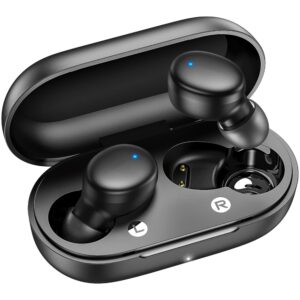
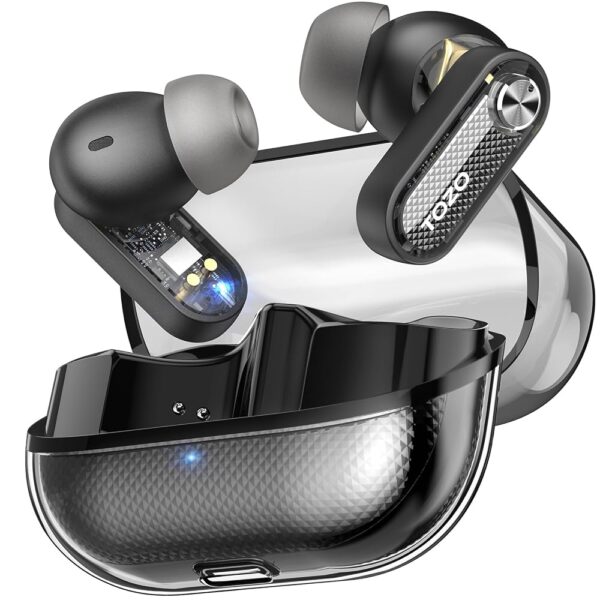
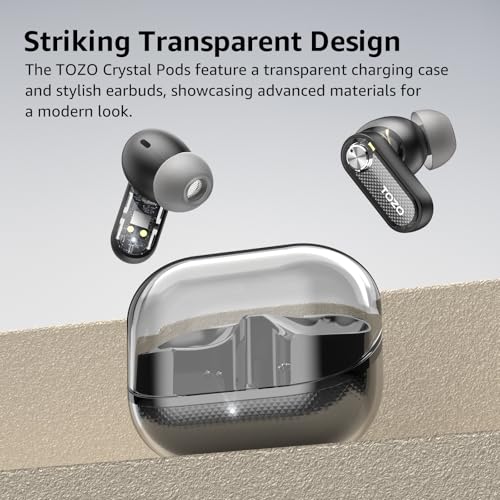
The TOZO Crystal Pods, model T11147, are a sealed in-ear noise cancelling earbud built around a transparent case and transparent bud housings. TOZO listed them in September 2024, and the styling is the first thing the marketing sells. Underneath that, the specification is more substantial than most products at this level, and unusually for this catalog the battery section is written honestly enough that we can use it without translation.
The listener served here is a commuter or a desk worker who wants active noise cancellation, app based equalization and a full working day of use, and who is comfortable with a sealed fit. If you want to hear your surroundings, or you find silicone tips uncomfortable, a sealed cancelling bud is the wrong tool and TOZO’s own OpenEarRing clip-on design answers that need instead.
Connection: Bluetooth 5.4, latency published, codecs not
TOZO lists Bluetooth 5.4 with a 20 meter range and publishes an audio latency figure of 60 milliseconds. A published latency number is worth something, because it is one of the few claims in this category that a buyer can actually check against their own use. Sixty milliseconds keeps video lip sync acceptable for most people and is not low enough for competitive gaming.
What is not published is any Bluetooth audio codec. Not SBC, not AAC, not LDAC, not aptX in any form. The bullets describe an “immersive musical feast” and “delicate treble,” which are adjectives rather than specifications. SBC is present by definition because every Bluetooth device supports it. AAC is the codec that matters on iPhones and iPads. LDAC and the aptX family are the ones marketed as high resolution, and they only work when the source device supports the same codec, which most iPhones do not. Because none of them is named, this review will not describe the Crystal Pods as delivering high resolution or lossless audio. If codec support matters to you, confirm it with TOZO before buying.
Sensitivity is quoted at 100dB and impedance at 32 ohms, both plausible for a 10mm dynamic driver. TOZO names its own OrigX Acoustic 2.0 tuning, which is a brand name for a voicing choice rather than a measurable specification. Multipoint pairing to two devices at once is not mentioned anywhere, so assume it is absent.
Battery: the best written figures in this catalog
This is where the listing earns credit. TOZO publishes four numbers instead of one, and states the noise cancellation condition for each. With cancellation off, the buds run 7 hours on a charge and 35 hours with the case. With cancellation on, the buds run 6 hours and 30 hours with the case. Almost every competing listing quotes a single combined figure and never says whether cancellation was running.
Use the 6 hour number as your planning figure, because if you bought these for the noise cancellation you will be running it. Six hours covers a workday with a lunchtime return to the case, and it will not cover a long haul flight without one. The case holds 350mAh and recharges in about 1.5 hours over USB-C. TOZO also translates the total into “500 plus songs or 35 meetings,” which is a marketing flourish rather than a measurement, since song length and meeting length are not standard units.
The one caveat that applies to every product here also applies to this one: quoted playtimes are measured at moderate volume, and higher volume shortens them.
Noise cancellation, fit and what IPX5 actually covers
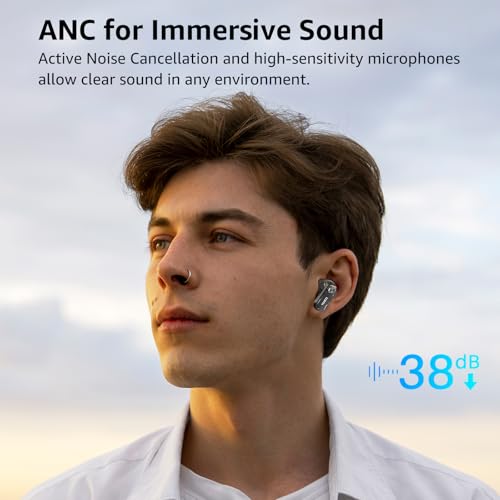
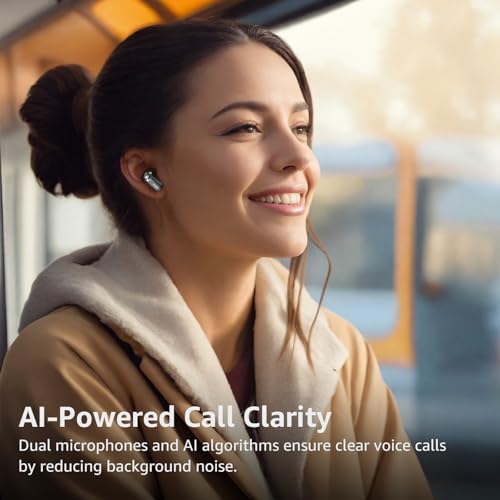
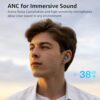
TOZO describes hybrid active noise cancellation with a maximum noise reduction depth of 38dB. That figure is TOZO’s, no test standard is named, and “maximum depth” typically refers to a single frequency at the peak of the cancellation curve rather than an average across the audible range. Attribute it, do not treat it as a broadband figure. Active cancellation works well against constant low frequency sound such as engine drone, cabin rumble and ventilation noise, and poorly against speech and sudden sounds. No earbud makes a room silent, and 38dB at one frequency does not change that. A separate system of four microphones and an AI algorithm handles call noise, which only affects what the person on the other end hears.
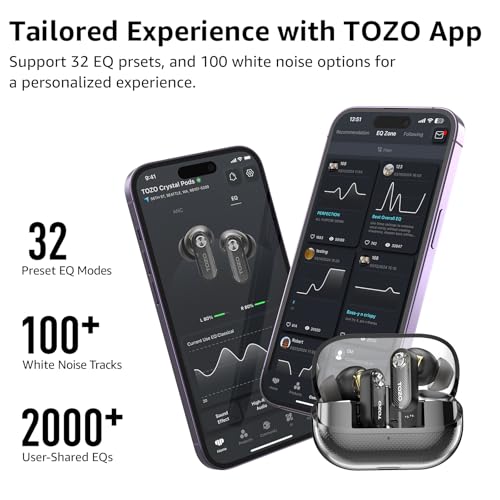
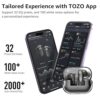
Three pairs of ear tips are included in small, medium and large. Seal decides how much bass you hear and how well cancellation performs, since a leaking seal undermines both, so trying all three sizes is the first thing to do rather than the last. The TOZO app is a published feature with 32 EQ presets and customizable controls, which is genuinely more control than most products at this level offer.
The water rating is the weak point in the copy. The bullet is headed “IPX5 Waterproof.” IPX5 is not waterproof. It protects against low pressure water jets, meaning sweat and rain, and it does not cover immersion. The specification field separately records the water resistance level as “Water Resistant,” which is closer to accurate but still carries no code. No IP rating covers seawater or high pressure water, and IP protection degrades as the housing and port seals age.
Junk fields, wrong recommendations, and the alternatives
Several specification entries on this listing are import noise rather than data. The headphone jack field contains an emoji followed by the word Bluetooth. Connectivity Technology reads “Active Noise Cancelling Wireless Earbuds,” which is not a connectivity value. There is a “Cartoon Character” field listing Animal, Anime, Cartoon and Fantasy, inherited from an unrelated category. The battery is described as lithium metal, which is not the chemistry used in rechargeable earbuds, and a “Number of USB 2 Ports” field appears for no reason.
One of those junk lists carries a real safety implication. The recommended uses field includes cycling, motorcycling, skateboarding and snowboarding. A sealed earbud running active noise cancellation is the wrong choice for any of those, because it removes exactly the ambient cues that keep you aware of vehicles and other people. Treat that field as generated text, not as advice, and keep sealed cancelling buds for trains, offices and planes.
Amazon lists the Crystal Pods as ranked 489th in Electronics and 86th among earbud and in-ear headphones, with a 4.6 star average across roughly 2,470 ratings. Inside TOZO’s own range the naming is dense and easy to confuse: the TOZO NC2 hybrid cancelling earbuds and the TOZO NC3 cover similar ground with different model codes, so check the model number rather than the marketing name. From another brand, the Soundcore Liberty 4 NC publishes its own cancellation figures for comparison. The wider set sits in our true wireless earbud reviews and our earbud headphone reviews.
Buy it, or skip it
Buy the Crystal Pods if you want hybrid noise cancellation with battery figures you can actually plan around, 32 EQ presets in a real app, three tip sizes and a published latency number. Skip them if you need a named codec, multipoint pairing, immersion grade water protection, or more than six hours of cancelling runtime between visits to the case. And ignore the recommended uses field entirely, because sealed cancelling earbuds and road cycling do not belong in the same sentence.