

Description
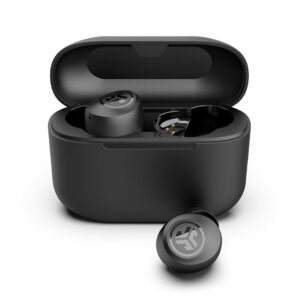
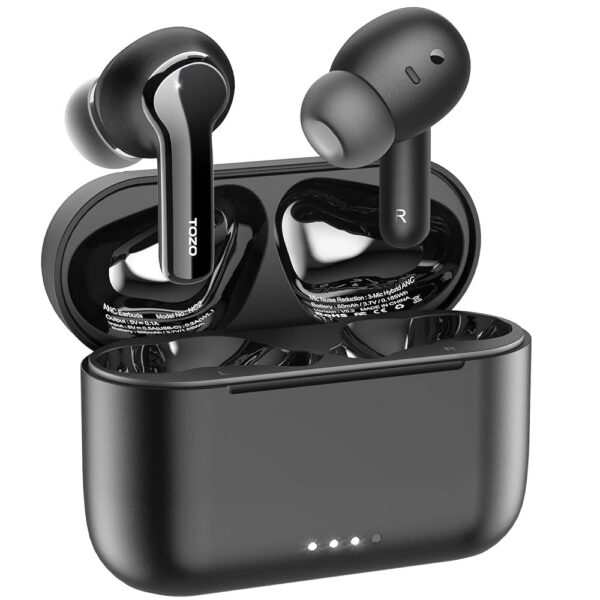
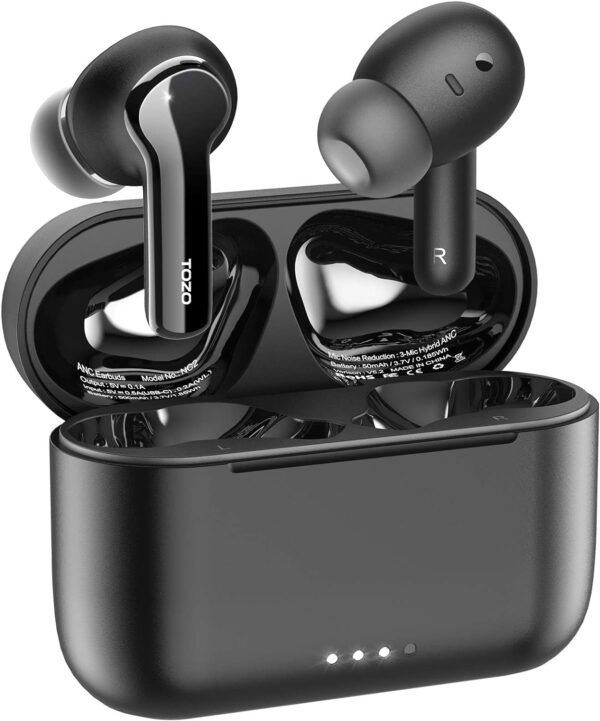
The TOZO NC2 is a sealed true wireless earbud with hybrid active noise cancellation, a transparency mode and confirmed in-ear detection, which is a feature set that usually appears a tier or two higher up. TOZO explains its cancellation architecture in more detail than most listings bother with, and that explanation is worth unpacking, because two of the three claims inside it are doing different jobs.
How the cancellation is described, layer by layer
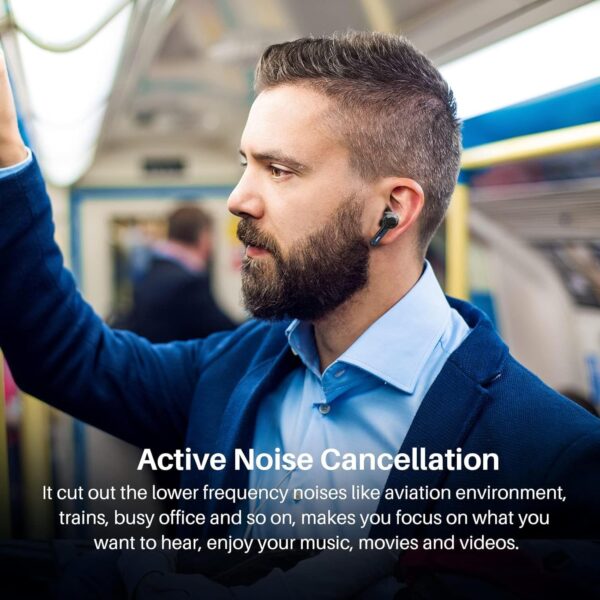
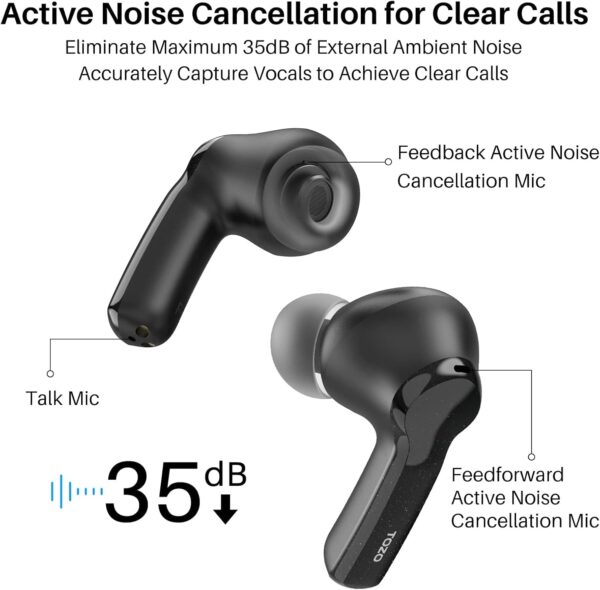
TOZO describes three stages. First, an outward-facing microphone detects external sound and generates an opposing signal, reducing environmental noise by what TOZO states as more than 35 decibels. Second, an inward-facing microphone listens inside the ear canal and cancels what remains. Third, the ear caps physically prevent 90 percent of noise reaching the canal.
The first two stages are active cancellation, and the arrangement of an outward and an inward microphone is what “hybrid” means. It is a genuine architecture and generally more effective than a single-microphone approach. The third stage is not cancellation at all: it is the passive seal of the ear tip, which every sealed earbud has, cancellation or not.
Both figures come from TOZO and neither names a test standard. A 35 decibel reduction and a 90 percent isolation claim are the manufacturer’s own numbers with no measurement method attached, which is normal for this category and the reason they should be read as directional rather than as specifications. What holds true of any active cancellation is that it works well against constant low frequency sound such as engine drone, cabin noise and air conditioning, and poorly against speech. No earbud makes an open-plan office quiet.
A transparency mode is included, described as letting outside sound in so announcements and conversation are audible without removing the buds. That is a real functional difference from a set that only offers isolation. It is not a road safety feature, and a sealed cancelling earbud remains the wrong choice for cycling or running near traffic. If awareness is the requirement, the TOZO OpenBuds are the open-ear design in the same brand’s range.
In-ear detection is confirmed, which is unusual here
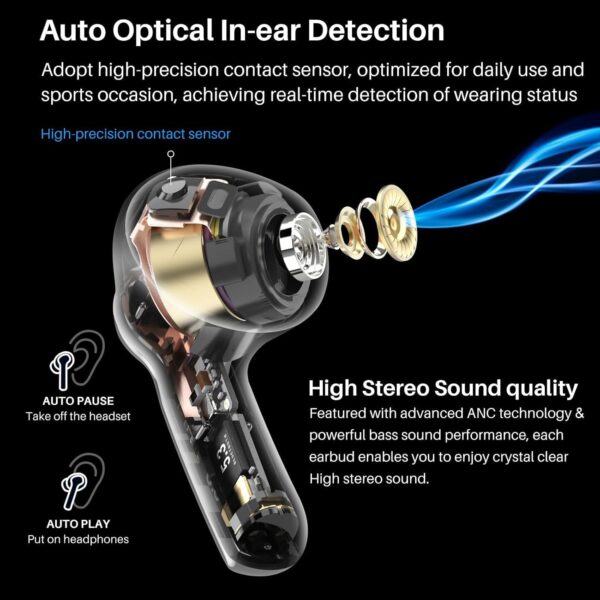
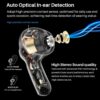
TOZO states that optical sensors detect when the buds are in your ears and pause playback when you take them out, describing a high-precision contact sensor optimized for daily use and sport. Wear detection is the feature buyers most often assume is present and most often is not, and this is one of the few listings in this catalog that states it outright rather than leaving it to be inferred. It matters more than it sounds, because it is what makes a bud practical for an office where you are constantly taking one side out.
One-step pairing is also described: take both buds from the case and they pair to each other automatically, after which you connect from the phone once.
The battery figures
TOZO quotes over 10 hours of playtime from a single charge and 42 hours in total with the compact charging case. Ten hours governs a single sitting and 42 is the combined figure across recharges.
What the listing does not say is which cancellation state those figures assume. Active cancellation runs microphones and a processing chain continuously and always costs battery, and sets that publish both states, such as the JBL Tune Flex and the Soundcore P30i, typically show a drop of a quarter to a third with cancellation running. Read 10 hours as the ceiling and expect less with cancellation on all day. TOZO also expresses the total as “up to 630 songs,” which is a marketing metric rather than a measurement, since song length varies.
Charging is supported both wirelessly and through the supplied USB A to USB C fast charging cable. No charge time is published for either path.
How they connect
Bluetooth 5.3 is listed. A version number governs connection stability, power draw and available feature sets rather than sound quality.
No codec is named
There is no AAC entry, no aptX and no LDAC anywhere on this record. Where nothing is named, SBC is the only codec that can be assumed, because SBC is the baseline every Bluetooth device supports. The title’s “Immersive Sound Premium Deep Bass” wording is marketing language with no transmission specification behind it, and no high resolution or lossless claim can be made about this product. Any codec that did appear would still require your phone to support the same one.
Multipoint is not mentioned. No driver size, frequency response, impedance or sensitivity figure is published, and no app is described, which is unusual for TOZO since most of the brand’s other listings in this catalog advertise a 32 preset equalizer.
The water rating, and a claim we have removed
The title states IPX6, and the bullet explaining it says the rating prevents damage from splashes of sweat and raindrops. That description is accurate for what you would actually do with it, though IPX6 is technically a step above splashing: it covers powerful water jets from any direction.
IPX6 is not an immersion rating. These should not be submerged, worn in a shower or taken swimming, and that distinction separates them from the TOZO models in this catalog claiming IPX8. The X in the first position means dust protection was not tested rather than that it is absent, and no rating is given for the charging case.
Two further limits apply: no IP code covers seawater or pressurized water, and protection degrades as seals age and as sweat residue collects around the mesh and the charging contacts. The short description previously published on this page also claimed these withstand accidental drops. No drop rating is published anywhere in this listing and we have removed that claim.
What is missing, and what to compare
This record carries no structured attribute data, so there is no weight, no dimensions, no case capacity, no charge time, no latency figure and no included components list. The number of ear tip sizes supplied is not published, which matters here more than on a passive bud: active cancellation depends on a sealed cavity to work against, so a bud that does not seal loses both its bass and most of its cancellation at once. The previous short description claimed multiple tip sizes; that is not in the listing and we have removed it.
Note as well that this catalog holds a second NC2 listing under a different product code, so you may see the model twice. Within our own pages, the TOZO T12 is the passive sibling with a longer per-charge figure and hooks, and the wider wireless earbud listings we track are where cancellation and battery splits can be compared side by side.
Who should buy them, who should not
Buy the NC2 if you want hybrid cancellation with a transparency mode and confirmed in-ear detection, and if 10 hours per charge suits your day. Skip them if you need the cancellation-on battery figure before committing, if you want the tip sizes confirmed, if multipoint matters, or if you were expecting the water rating to allow immersion. IPX6 does not.