


Description
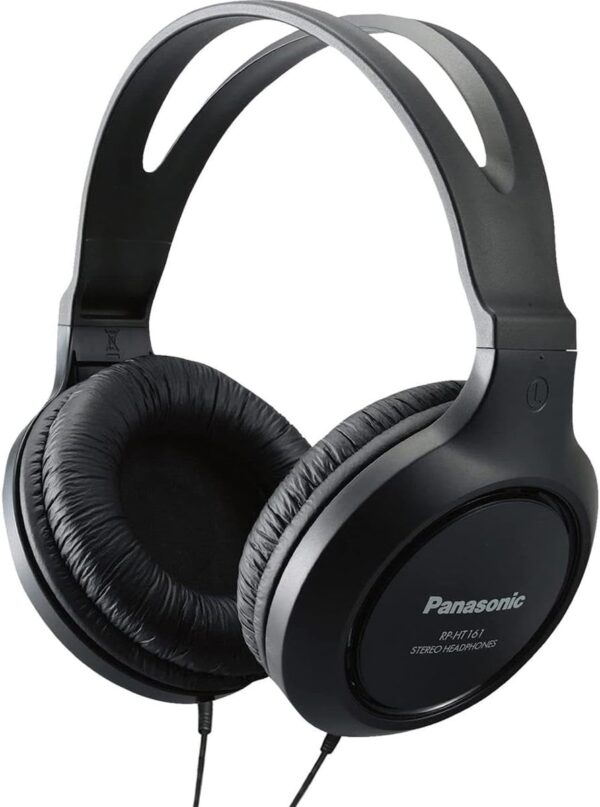
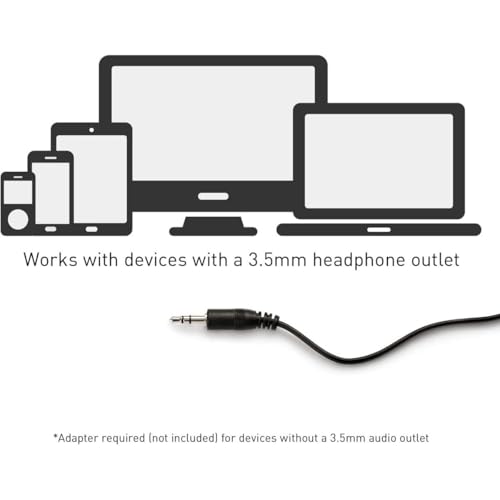
Start with the fact the product name does not make obvious: the Panasonic RP-HT161-K is a wired headphone. There is no Bluetooth, no battery, no charging port, no codec and no app. It connects with a 6.6 foot cable ending in a 3.5mm plug, and the listing also states there is no microphone. It sits in the over-ear section of this catalog alongside wireless models, so it is worth being clear about that before anything else, because everything that usually decides a headphone purchase here does not apply to this one.
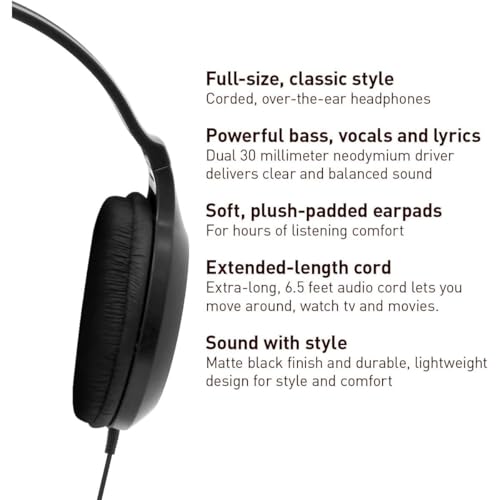
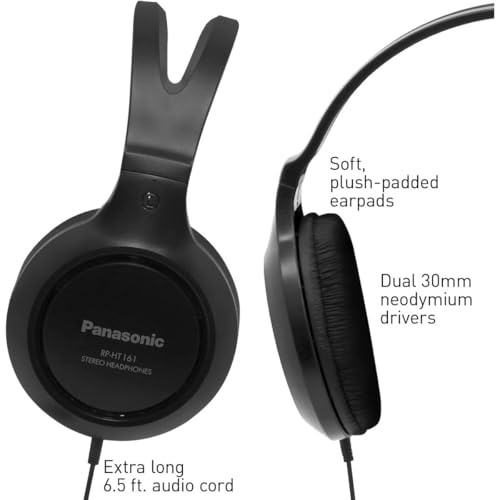
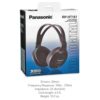
What Panasonic does publish is short: dual 30mm neodymium drivers, a stated power handling of up to 1000 milliwatts, padded ear pads that surround the ear, an adjustable headband, a matte black finish, and the XBS extra bass system named in the product title. The imported specification block contains five fields in total, and that is the entire technical picture.
Who this suits
This is a desk, console and second-headphone product. It is the pair you leave plugged into a laptop, a keyboard, an amplifier, a TV or a seat-back screen on a plane, where a cable is not an inconvenience and a battery would be an annoyance. A 6.6 foot cable is long enough to sit back from a desk, which is longer than most portable headphones ship with and one of the more genuinely useful numbers on this page.
It also suits anyone who wants headphones that will simply keep working. There is no battery to degrade, no firmware to stop being supported, and no pairing to fail. Against that, it is not portable in the way a wireless model is, and it will not connect to a modern phone without an adapter, since most current phones have no 3.5mm jack. Check what your phone actually has before buying.
It is not a workout or outdoor headphone. No IP rating is published and there is no water resistance field in the record, so there is no stated protection against sweat or rain. And a cable running from your head to your pocket is its own problem while moving.
The connection, and what it does and does not guarantee
Because this is an analog connection, none of the usual wireless caveats apply. There is no codec to negotiate, no Bluetooth version to check, no multipoint, no latency to worry about and no compression happening between the source and the driver. That is a real advantage for video and for gaming, where wireless latency is the most common complaint.
What an analog connection does not do is guarantee quality. The sound depends entirely on the headphone amplifier inside whatever you plug into. A laptop headphone jack, a phone dongle and a dedicated amplifier are three different things, and the headphone will sound different on each. Nothing about a 3.5mm plug makes an audio signal high resolution or lossless, and this listing sensibly makes no such claim.
The 1000 milliwatt figure is not an instruction
Panasonic states the drivers “can handle up to 1000mW of power input.” That is a power handling limit, describing what the drivers tolerate before damage, not a recommended operating level and not a measure of how loud you should run them. It is a durability specification. The listing does not publish impedance or sensitivity, which are the two numbers that would actually tell you how easily a phone or a laptop can drive these to a normal listening level, so the 1000 milliwatt figure cannot be turned into anything practical.
There is no battery section, and that is the point
This is the one product in this part of the catalog with nothing to say about runtime. There is no bud figure, no case total, no quoted playtime measured at 60 percent volume and no fast charge claim. It plays for as long as the thing it is plugged into keeps playing.
That is worth weighing seriously against a wireless model. A quoted 40 or 60 hour battery on a Bluetooth headphone is a best case that shrinks with age, and every lithium cell loses capacity over the years. The JBL Tune 510BT, for example, quotes 40 hours but has no analog input at all, so when its battery eventually fails the headphone is finished. This one has no such failure point.
Fit, isolation and what “passive noise cancellation” means here
The ear pads are described as plush and padded and as surrounding the ears, on a smooth adjustable headband. That is an over-ear or circumaural design, which seals around the ear rather than pressing on it, and it is more comfortable over long sessions than an on-ear design for most people. The listing publishes no weight, no clamping force, no headband adjustment range and no pad material, so there is little else to evaluate.
The specification field reads “Noise Control = Passive Noise Cancellation.” That phrase means the pads block sound and nothing more. There is no active cancellation circuit, no microphones and no electronics of any kind in this headphone. Passive isolation from a closed over-ear cup is real and it helps with mid and high frequency noise, but it does very little against constant low frequency sound such as an aircraft cabin or a bus engine. If cabin drone is the problem you are solving, this is not the product, and something like the Soundcore Life Q20 or the Sony WH-CH720N is the shape of answer you want.
The absence of a microphone matters more than it sounds. This headphone cannot take a call and cannot be used for a video meeting. The product title states “No Mic” and the listing gives no in-line control of any kind, so volume and playback are handled entirely on the source device.
What the listing does not publish
Missing from the record: impedance, sensitivity, frequency response, weight, folded dimensions, cable material, whether the cable is detachable, warranty terms, and the customer rating and sales rank that most products in this catalog carry. For a product this simple, the omission of impedance and sensitivity is the significant one, because those are the specifications that tell you whether it will play loudly enough from a laptop.
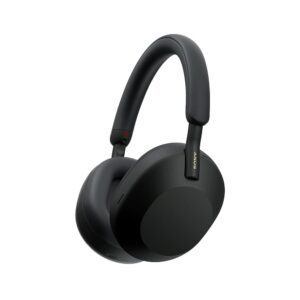
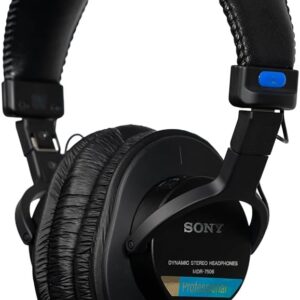
Two comparisons are worth making. The Sony MDR-7506 is the other wired over-ear in this catalog and comes from the professional monitoring side of the market, so it is the natural step up for anyone who wants a cable but also wants a published specification. The Botesty Sound lris is another wired over-ear option with a microphone, which is the feature this Panasonic lacks. Wider comparison across the over-ear shape sits in the wireless headphones section of the catalog.
A note on volume, which applies more here than on most products. A wired headphone with no active cancellation gives you no help against background noise, so a noisy train or a busy office pushes the volume up. There is no volume limiter on this product and none could exist, since there are no electronics in it: the level is entirely set by the source device. If this is going to a younger listener, the limit has to be set on the phone, tablet or computer, and checked that it cannot be switched off in settings.
Who should buy it
Buy the RP-HT161-K if you want a simple, cabled over-ear headphone for a desk, a console or a television, you value a long cord, and you have a 3.5mm jack to plug it into. Skip it if you need wireless, a microphone, active noise cancellation, or a published impedance and sensitivity, and do not buy it expecting anything the wireless models in this catalog offer, because it is a different kind of product entirely.