


Description
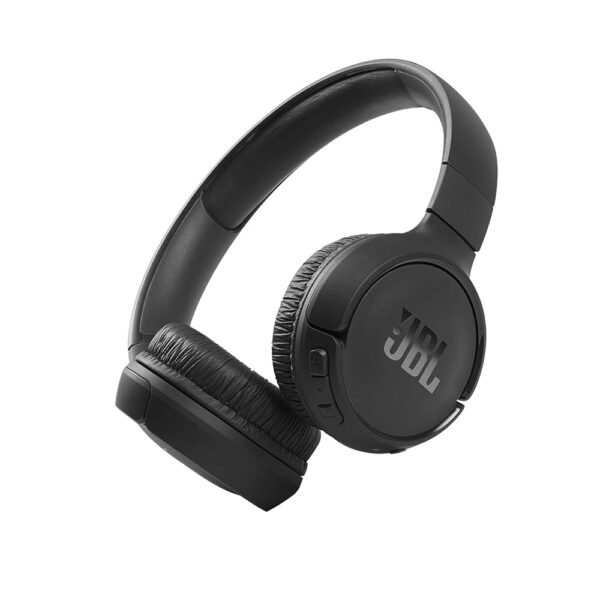
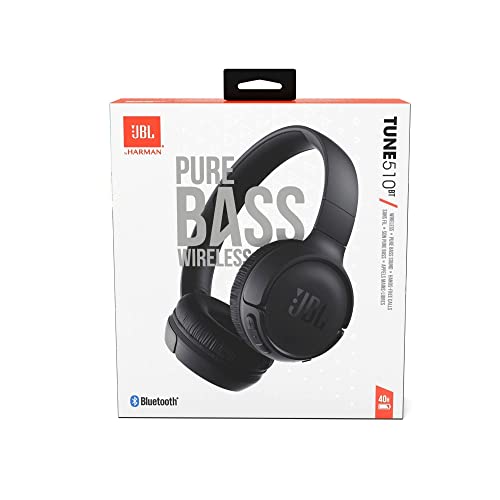
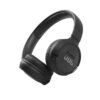
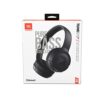
The JBL Tune 510BT, model number JBLT510BTBLKAM, is a lightweight on-ear Bluetooth headphone built to a simple brief: long battery, low weight, folds flat, works with a phone. JBL quotes up to 40 hours of playback, Bluetooth 5.0, device switching between two paired sources, and a microphone on the ear cup for calls. Amazon shows a 4.5 star average across 70,338 ratings, with the Tune 510BT ranked 40th in Electronics overall and 1st in On-Ear Headphones in the captured listing data. That is one of the highest sales positions in this catalog, which tells you about volume and price positioning rather than about sound.
Who this headphone is for
This is a commuter and student headphone. It weighs 160 grams, folds, charges over USB-C, and runs for a working week of ordinary listening before it needs a cable. If you want a headphone to live in a bag, survive being pulled out on a bus, and not become another thing you have to remember to charge every night, that is the case the Tune 510BT makes and it makes it well.
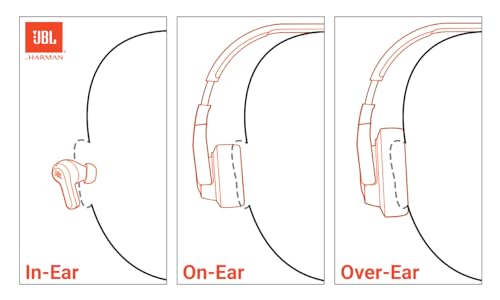
It is not a home listening headphone or a monitoring headphone. It is an on-ear design, so the pads sit on your ear rather than around it, and there is no analog input. The included components list is headphones, a USB-C charging cable, a warranty card and a quick start guide. No 3.5mm cable is in the box and no jack is listed, so when the battery is flat, the headphone is silent. Anyone who wants a wired fallback should look at a model that publishes one, and the Beats Solo3 is one on-ear alternative that ships a 3.5mm cable in the box.
Connection: what Bluetooth 5.0 and device switching really give you
JBL lists Bluetooth 5.0 with a 10 meter range. The specification block also lists “Bluetooth Version = 5” in a separate field, which is the same claim written less precisely. Bluetooth 5.0 is a connection generation. It affects link stability, power draw and range headroom. It does not by itself change how music sounds, and no listing should be read as suggesting it does.
The genuinely useful connection feature here is device switching. JBL states the headphones “can even switch between two devices so that you don’t miss a call.” That is multipoint, and it is a feature many headphones at this level leave out. If you work from a laptop and want the headphone to hand over to a phone call without repairing, that is worth more day to day than most of the audio marketing on the page.
No codec is named anywhere
The listing does not mention AAC, aptX, aptX Adaptive or LDAC. It names no codec at all. SBC is the baseline every Bluetooth audio device supports, and in the absence of a published codec that is the only assumption you can safely make. Any high resolution framing attached to this product would be unsupported by the specification, and it is worth remembering that a codec only does anything when the phone and the headphone both support it. Buyers with an iPhone in particular should note that Apple devices do not support aptX or LDAC, so those codecs would be irrelevant even if they were listed.
The battery claim, and how honest it is
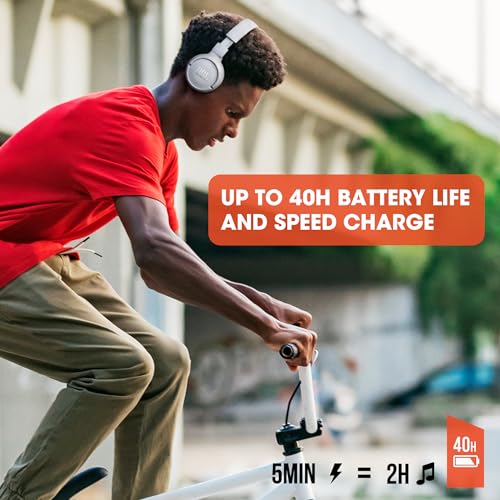
JBL quotes up to 40 hours of wireless playback, a full recharge in about 2 hours over USB-C, and a speed charge that returns 2 hours of music from a 5 minute top up. As a single headphone with no charging case, 40 hours is the whole figure; there is no bud runtime and case total to separate here.
Forty hours is credible for this product class because little is drawing power in the background. A quoted playtime is a best case measured at a moderate volume, and JBL does not state the volume level or test signal used, so expect the number to fall if you listen loud.
Fit, controls, and a contradiction worth naming
The Tune 510BT has an adjustable headband and, in JBL’s own words, is “designed to fit nearly any head size comfortably.” The listing then includes a note that is unusually candid for a product page: “If headset is too tight we suggest placing them over a ball or something of similar size/shape. Leave undisturbed for at least 24 hours. Repeat if necessary.” That is a manufacturer telling you the clamping force may be too high out of the box and giving you a stretching procedure. Take it as useful information rather than a red flag, but do take it seriously: on-ear pads concentrate pressure on a small area of ear cartilage, and clamp is the main comfort variable in this shape.
Controls are buttons on the ear cup, per the feature bullets, with a multifunction button that triggers Siri or Google Assistant on the paired phone. The specification field, meanwhile, says “Control Method = Touch, Voice” and “Control Type = Voice Control.” The bullets describe physical buttons and the specification block describes touch controls. Those are not the same thing and we are not going to guess which one shipped. Confirm the control type before buying if it matters to you.
The noise cancellation contradiction
There is a larger disagreement inside this record. The specification field reads “Noise Control = Active Noise Cancellation.” Nothing else on the page supports that. The product description does not mention noise cancellation. None of the seven feature bullets mentions noise cancellation. The product title does not mention it. JBL’s own marketing for this model is built entirely around Pure Bass sound and battery life, and an ANC circuit would normally be the headline feature rather than a stray field. We are naming the contradiction rather than resolving it. If active cancellation is why you are considering this headphone, do not buy it on the strength of one specification field that the rest of the listing contradicts. A model that publishes cancellation consistently, such as the Sony WH-CH720N, is the safer route to that feature.
On water resistance, no IP rating is published. There is no water resistance field in the record at all. That means no stated protection against rain or gym sweat, and we will not infer a rating that was never printed. Treat it as an indoor and fair weather headphone.
What is missing from the listing
Published and useful: 32 ohm impedance, a 20 Hz to 20 kHz frequency range, a dynamic driver, 160 grams, USB-C, and the multipoint claim. Not published: driver diameter, sensitivity, microphone count, whether there is a companion app, folded dimensions, or a battery capacity. One field reads “Frequency Response = 20 KHz,” which is a single number where a range belongs and is contradicted by the proper range given elsewhere in the same record. Another reads “Cable Feature = Without Cable,” which is accurate for audio but sits awkwardly beside an included USB-C charging cable.
For comparison shopping, the Beats Solo 4 is the closest premium on-ear equivalent with a longer 50 hour rating and a wired USB-C path, while the Panasonic RP-HT161-K is the budget over-ear option for anyone who has decided that on-ear pressure is not for them. Wider comparisons across the shape sit in the wireless headphones section.
A note on younger listeners, because this model is often bought for them. JBL lists the age range as adult and publishes no volume limiter of any kind, and a headphone with no stated cap cannot be described as safe for a child’s hearing. On-ear designs also isolate poorly, which pushes listeners to raise the volume on a noisy bus. If this is going to a young listener, set a volume limit on the phone itself and check that it cannot be turned off.
Who should buy it
Buy the Tune 510BT if you want a light, folding, long-running on-ear headphone with USB-C charging and genuine two-device switching, and you accept a headphone with no wired input. Skip it if you need active noise cancellation, since the listing contradicts itself on whether it exists, or if you need a water rating, a named codec, or a wired fallback for a dead battery.