





Description
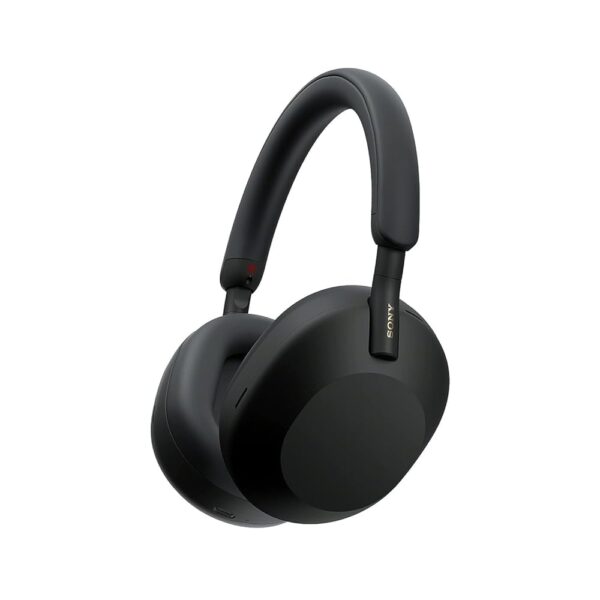
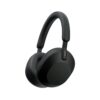
The Sony WH-1000XM5, model WH1000XM5/B in black, is the flagship of Sony’s over-ear noise cancelling line and became available on May 12, 2022. Sony quotes 30 hours of playback, eight microphones controlled by dual processors, four beamforming microphones for calls, touch controls and Bluetooth 5.2. The listing shows a 4.3 star average across 16,204 ratings, ranked 696th in Electronics and 35th in Over-Ear Headphones in the captured data.
That rating deserves a note before anything else. In this same catalog the previous generation, the Sony WH-1000XM4, shows a 4.6 star average across 59,017 ratings and a higher sales rank at 313th in Electronics. The newer model is not the better reviewed one on the numbers this listing publishes. That does not settle which sounds better, but anyone choosing between the two on reputation should know the older model is the one carrying the stronger score.
Who this is aimed at
The XM5 is a frequent flyer and open plan office headphone. Everything in the design points that way: a leather, plastic and metal build at 8.82 ounces or roughly 250 grams, a carrying case, an Auto NC Optimizer named in the product title, and a call microphone array aimed at taking meetings from noisy places. Sony’s own use case field says “Calling,” which undersells a product built for long listening.
It is not a sports headphone. There is no water resistance field in this record and no IP rating of any kind is published, so there is no stated protection against rain or sweat and we will not infer one. It is also a closed, actively cancelling design, which makes it the wrong choice for cycling or running near traffic. Cancellation is specifically effective at removing low frequency engine noise, which is the cue that tells you a vehicle is behind you.
Connection: strong hardware, an unpublished codec, and one odd number
Bluetooth 5.2 is listed with a 10 meter range. No codec is named anywhere in this listing. There is no mention of SBC, AAC, aptX or LDAC. That matters because the description reaches repeatedly for words like “superior sound quality” and addresses itself to “audiophiles,” and none of that language is supported by a published transmission specification. Whatever a headphone’s drivers can do, what arrives over Bluetooth is decided by the codec both ends negotiate, and this page does not tell you which codecs are available. If high resolution wireless listening is your reason for buying, confirm codec support on Sony’s own documentation first.
The record also does not mention multipoint pairing to two devices at once, wear detection or a companion app feature list. Where a listing is silent on a feature, treat it as absent rather than assume it exists. That is worth stating clearly, because multipoint is published on the Bose QuietComfort listing and on the XM4 listing in this catalog, and it is not published here.
The 200 millisecond latency figure
One field reads “Audio Latency = 200 Milliseconds.” It is unusual for a listing to publish latency at all, and 200 milliseconds is a long delay: enough to be visible as lip sync error on video if it is accurate. No test method, no source device and no codec are named alongside it, and no low latency mode is described anywhere in the listing. We are flagging the number rather than resolving it. If you intend to use this headphone for video or gaming, that is the figure to check before buying.
Battery: 30 hours, condition unstated
Sony quotes up to 30 hours of playback on a single charge and 3 hours of playback from a 3 minute charge, over the included USB-C cable. As a single headphone with no charging case, 30 hours is the whole figure and there is no case total to separate out.
The condition is missing. The listing does not say whether 30 hours is measured with cancellation on or off, and gives no volume level. On a cancelling headphone that split routinely costs a meaningful share of the runtime, and other manufacturers in this catalog do publish both numbers. Take 30 hours as a best case.
One field contradicts the product outright: “Carrying Case Battery Average Life = 30 Hours.” The included components list is headphones, a 1.2 meter headphone cable, a carrying case and a roughly 20 centimeter USB-A to USB-C cable. There is no battery in that case, and the field has simply been filled with the headphone’s own runtime. A second field, “Cable Feature = Without Cable,” sits beside an included components list containing two cables. And “Theme = Video Game” is inherited from an unrelated product category.
Fit, cancellation and what it can actually do
The XM5 uses soft fit leather cushions on a plastic and metal frame, with an impedance of 48 ohms over the included analog cable. Sony describes the design as lightweight, and at roughly 250 grams that is fair for the category. Over-ear cups seal around the ear rather than pressing on it, so a good part of the isolation is passive and happens before the electronics contribute anything. The included 1.2 meter cable means the headphone still works when the battery is flat or when you are handed an airplane seat jack.
On cancellation, the hardware description is the most substantial part of this listing: eight microphones controlled by two processors, with the Integrated Processor V1 named, plus an Auto NC Optimizer. That is a genuine specification rather than an adjective. What it cannot do is change physics. Active cancellation works well against constant low frequency noise such as aircraft cabin drone, train and bus engines and air conditioning, and much less well against speech, keyboard noise and sudden sounds. No headphone makes an environment silent, and the listing’s claim of “unparalleled noise cancellation” carries no measurement and no test standard, so it should be read as brand language.
The same applies to the calls claim. Four beamforming microphones with advanced signal processing is a real specification; the sentence promising to “guarantee clear and uninterrupted conversations” is not something any headphone can deliver, since call quality also depends on the network and the room.
What is not published, and where else to look
Missing from this record: codec support, audio frequency response (the frequency range field lists 2.4 GHz, which is the radio band rather than an audio measurement), driver diameter, sensitivity, cancellation attenuation in decibels, multipoint, wear detection, and folded dimensions. The customer rating is published and, as noted, is lower than the previous generation’s.
For alternatives, the Bose QuietComfort Ultra is the direct cross-brand flagship comparison, and the Sony WH-CH720N is the lighter option within Sony’s own range for anyone who cares more about weight than about processor count. Wider comparison sits in the wireless headphones section.
A note on listening level. The real hearing benefit of a strong cancelling headphone is that it removes the background noise which otherwise pushes people to raise the volume on a plane or a train. Use it that way: turn the cancellation on, then turn the music down, rather than treating the quiet as room to push into.
Who should buy it
Buy the WH-1000XM5 if you want Sony’s most capable cancellation hardware, a light over-ear build, a wired fallback in the box and quick charging that returns 3 hours from 3 minutes. Skip it if you need a published codec, a water rating, a battery figure split by cancellation mode, or confirmed multipoint, and look closely at the previous generation first, because on this catalog’s own numbers it is the better rated of the two.