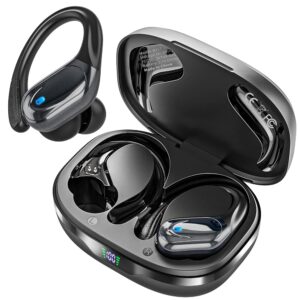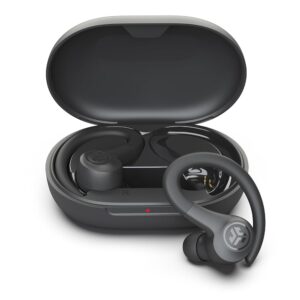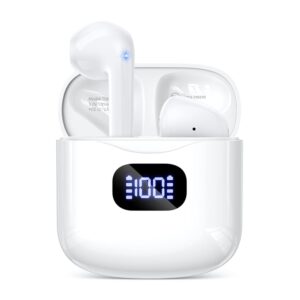



Description
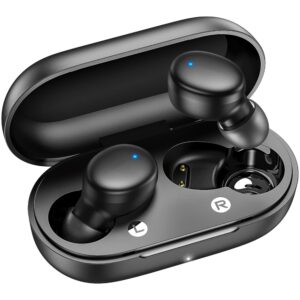
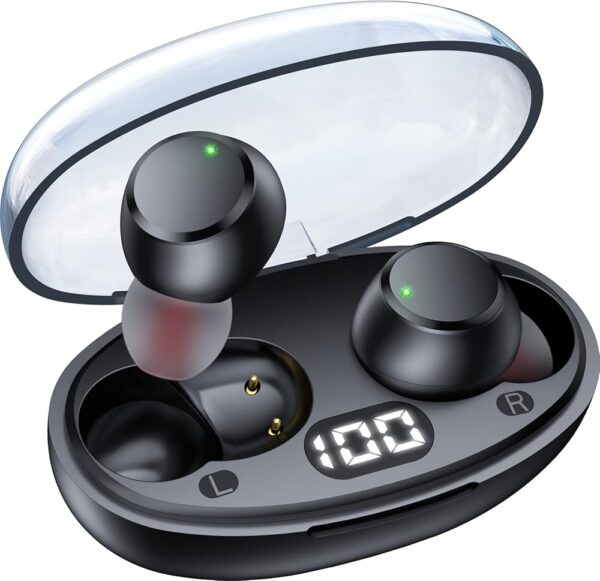
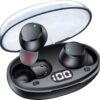
The ZINGBIRD T62 is a miniature sealed earbud built around a very small charging case, with a 13mm driver, three ear tip sizes, a transparent case front showing a battery display and a stated bud weight of 3.3 grams each. It rates 4.7 out of 5 across 442 ratings, one of the higher scores in this catalog, and sits 253rd in earbud and in ear headphones. It also carries two water ratings that disagree with each other and a battery figure that appears in two incompatible forms, so those come first.
IPX8 or IPX7, and the specification says neither
The product title claims IPX8 waterproof. The second feature bullet claims IPX7 water resistance for durability against sweat and rain. The specification field reads Water Resistant with no code at all. Three statements, three different levels of claim.
The two codes are not interchangeable. IPX7 means immersion in one meter of fresh water for thirty minutes. IPX8 means immersion beyond one meter, at a depth and duration the manufacturer must specify, and no depth or duration is specified anywhere here. Without that figure an IPX8 claim is incomplete by definition, because the standard requires the manufacturer to state the conditions.
Where a listing publishes conflicting ratings we take the lower, so treat this as IPX7 at best, and note that the bullet’s own description, sweat and rain, is more modest still. The usual limits apply either way. The X in both codes means no dust rating was tested or published. The rating covers the earbuds and not the charging case. No IP rating anywhere covers seawater, chlorinated pool water or pressurized water. And seals degrade with age, heat and debris accumulating around the acoustic mesh, so the rating describes a new unit rather than a permanent property.
Battery: 5 hours per bud, and a 35 hour field with no explanation
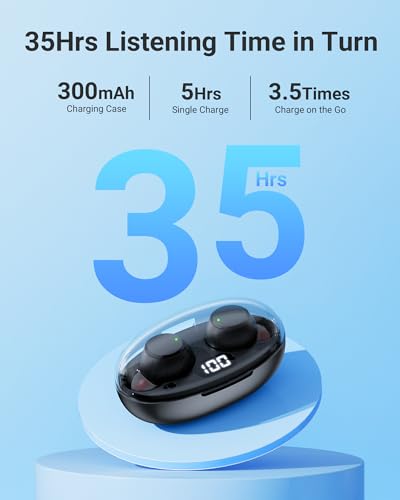
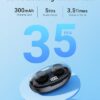
The playback bullet is unusually specific about the hardware: each earbud carries a 30 milliamp hour battery providing up to 5 hours of playback. A 30 milliamp hour cell is genuinely tiny, and it is the direct consequence of the design goal here, which is a bud weighing 3.3 grams inside a case half the size of a normal one. Physics does not offer a way around that. Small case, small buds, small cells, short runtime.
Five hours is therefore the honest bud figure, and it is short. The specification block separately lists Battery Life as 35 Hours, with no explanation anywhere in the bullets of where that number comes from. It is presumably the combined total including case recharges, which would imply roughly six additional charges, but the listing never states a case capacity, never states a total, and never connects the two figures. No charging time is published for the buds or the case, and no fast charge claim is made.
The bullet then offers a workaround that is more interesting than it first appears: by alternating between the earbuds and keeping one in the case, you can listen all day. Running one bud at a time in mono while the other charges genuinely does extend usable listening, and it is a sensible answer to a 5 hour runtime. It also means accepting mono audio and, importantly, leaving one ear unsealed, which some listeners will prefer anyway.
Fit, size and what the small case costs
Three pairs of soft ear tips are supplied in small, medium and large, stated directly rather than left out. That matters because this is a sealed design and the tip produces the bass from the 13mm driver by sealing the ear canal. A tip that leaks makes any earbud sound thin regardless of driver diameter, and three sizes is the standard set.
The case is the selling point. ZINGBIRD describes it as half the size of other earbud cases, with a transparent front allowing the remaining charge to be read without opening it. For anyone who carries earbuds in a trouser pocket rather than a bag, that is a real daily difference. The tradeoff is the 30 milliamp hour cells and the 5 hour runtime, and a buyer should understand that they are choosing one over the other rather than getting both.
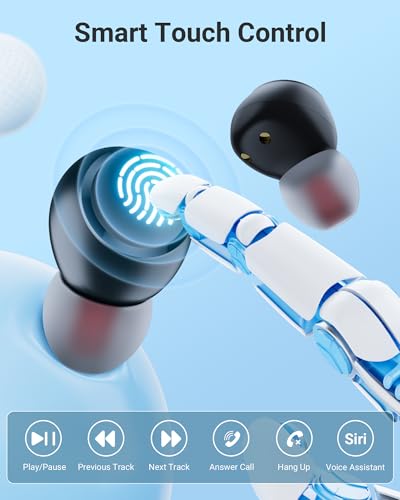
Controls are touch based on both buds and the Control Type field confirms volume adjustment, along with track changes, voice assistant, call handling and low battery alerts. Impedance is listed at 32 Ohm.
Connection: Bluetooth 5.4 with no codec and no latency figure
Bluetooth version is listed as 5.4 in both the bullets and the specification block, which agree. The bullet describes it as syncing audio and video without latency. That is not a specification, and no millisecond figure is published anywhere. Standard Bluetooth audio always carries measurable latency, typically well over 100 milliseconds without a dedicated low latency mode, so a claim of no latency should be read as marketing rather than measurement.
No Bluetooth codec is named. SBC is the universal baseline and the only thing that can be assumed. AAC, aptX and LDAC do not appear, so no high resolution or lossless description can be supported. The Noise Control field reads Sound Isolation, meaning passive blocking from the sealed tip and no active cancellation. Multipoint is not claimed, no companion app is mentioned, no equalizer is available as a result, and no wear detection is claimed. Pairing is automatic on removing the buds from the case, with the device appearing as T62.
Because this is a sealed design with no ambient or transparency mode described, it is not appropriate for road cycling or road running, despite the title marketing it for sports and running. Sealing the ear canal removes a meaningful part of your ability to hear a vehicle behind you. Treadmill and gym use are where it belongs, and for road use an open ear design from our open ear headphones category is the correct product.
The classification error, and the fields that are not data
The Form Factor field reads On Ear. It is not an on ear headphone. On ear describes a full size headphone with a pad resting on the outside of the ear, which is a completely different product class from a 3.3 gram bud that sits inside the ear canal. Anyone filtering for on ear headphones will be shown this by mistake.
Frequency Response is listed as 20000 Hz, a single value rather than a response, while Frequency Range separately reads 20-20000 with no units attached. Item weight appears twice as 0.67 ounces, which is the packaged figure rather than the 3.3 gram bud weight quoted in the bullets. The Compatible Devices field lists music production equipment, car audio systems, televisions and gaming consoles among others, which is keyword text rather than a tested compatibility statement, and in particular the gaming console entry should not be read as a low latency claim.
For cross shopping, ZINGBIRD’s own X15 is the sibling model worth comparing on published figures. If runtime matters more than case size, the TAGRY X88 publishes 10 hours from the buds and the Kicoeon J59 publishes 6. For a compact bud from a manufacturer with a documented support path, the TOZO T10 is the long standing budget reference, and more options sit in our earbud headphones section.
Who should buy it, who should not
Buy it if pocket size is the priority. A case half the usual size with a transparent battery window and 3.3 gram buds is a genuinely different daily experience from a normal pair, and three ear tip sizes are supplied and stated. The customer rating of 4.7 out of 5 across 442 ratings is among the highest here, which suggests the compromise suits the people who chose it.
Do not buy it if you need long sessions, because 5 hours from a 30 milliamp hour cell is the direct cost of the small case and there is no way around it. Do not treat the IPX8 title claim as reliable, since the bullet says IPX7 and the specification field gives no code at all. Do not expect active cancellation, an app, an equalizer, multipoint, a named codec or a real latency figure. And ignore the On Ear classification, because it is simply wrong.