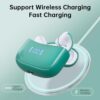

Description
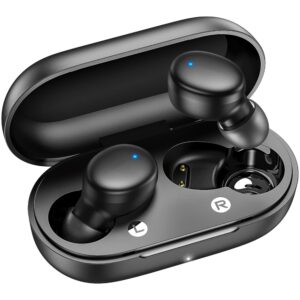
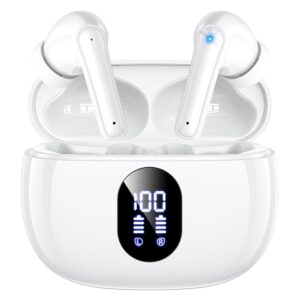
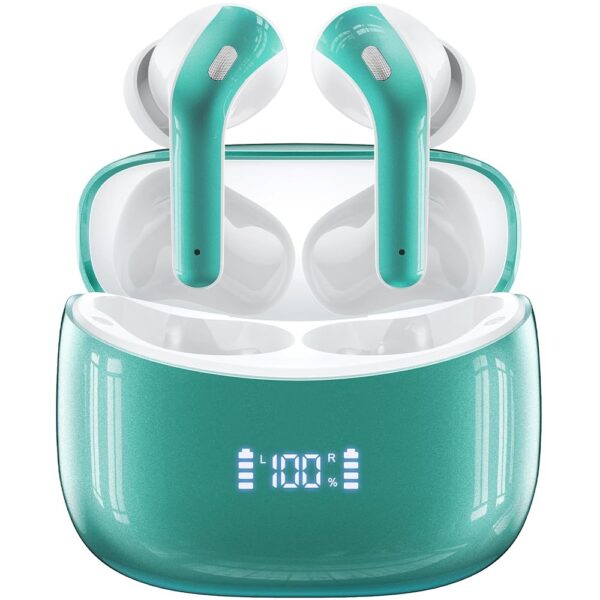
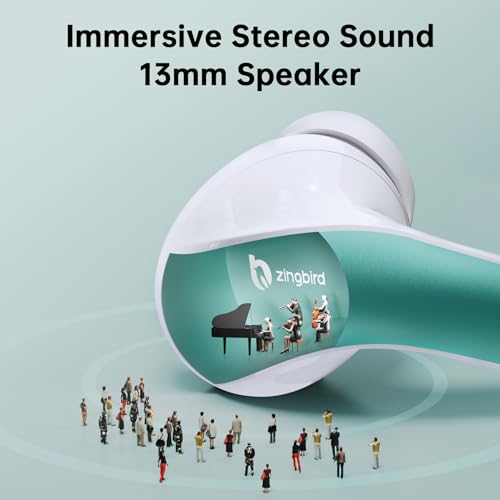
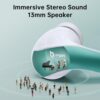
The Zingbird X15 is a budget sealed earbud with a genuinely uncommon driver specification for the money: dual 14.2mm composite dynamic drivers described as low distortion, paired with Bluetooth 5.4, environmental noise cancellation on the microphones, three ear tip sizes, an LED charge display and a quoted 60 hours of playtime. The listing went live on October 22, 2024, and at the point this data was captured it carried 341 ratings averaging 4.6 out of 5, ranked 14,023rd in Electronics and 1,371st in Earbud and In-Ear Headphones. A 4.6 average is high, though 341 ratings is a modest base to draw it from. This is a new unit, not a renewed or refurbished one.
Who this suits
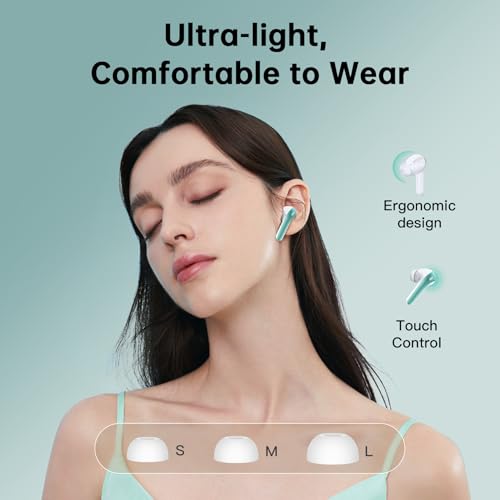
This is an everyday earbud for commuting, desk work and light exercise. Touch controls handle track skipping, playback and calls, the case reports charge level for itself and both buds, and the whole package is light, with each bud quoted at 0.008 pounds, which is about 3.6 grams.
One line in the specification deserves attention before anything else. The age range field reads “Adult,Kid”, which means this listing is being surfaced to people shopping for children. No volume limit is published anywhere on the page, and no limiting feature of any kind is described. A sealed earbud with no volume ceiling, given to a child in a noisy room, will be turned up until the music wins against the noise, and that is the pattern that causes hearing damage over time. We are not going to describe this product as safe for a child’s hearing, because nothing in the listing supports that. If you are buying for a child, choose a set that publishes a decibel limit and states whether the limit can be switched off, since a limit a child can disable is not a limit.
Connection: Bluetooth 5.4 and a decoder with no name
Zingbird states Bluetooth 5.4 and claims a reliable range up to 15 meters, while the specification table records the range as “1E+1 Meters”, which is scientific notation for 10. Those two figures do not agree and neither will survive a wall. Bluetooth 5.4 governs connection stability, power draw and LE Audio groundwork, and it does not improve sound quality on its own.
The high resolution decoder is not a codec
The feature copy pairs the 14.2mm drivers with “a high-resolution decoder” and no codec is named anywhere on the page. That phrasing is doing a lot of work for nothing. Any Bluetooth earbud contains a decoder, and what determines whether high resolution audio reaches it is the codec negotiated with your phone. SBC is the universal baseline and is what you should assume you are getting. AAC, the codec that matters on iPhones, is not stated. aptX, aptX HD, aptX Adaptive and LDAC are the codecs that carry higher bitrates, none of them is stated, and every one of them requires the phone and the earbuds to support it. Without a codec name, the high resolution language is unsupported by the published specification.
The noise handling is described as ENC, which is call side processing that cleans up what your caller hears. The specification table lists noise control as sound isolation, meaning the ear tip does all the blocking for you, and no active noise cancellation is claimed anywhere. That is consistent, which is more than most listings in this catalog manage.
Battery: sixty hours with no bud figure
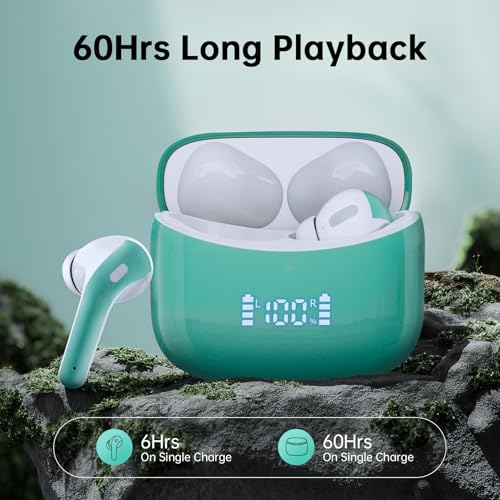
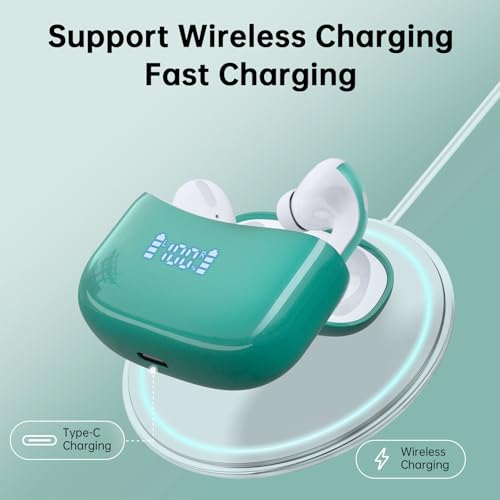
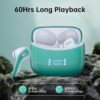
The 60 hour headline is the total with the charging case, and the specification table repeats 60 in the Battery Life field, where the bud runtime should sit. No per bud runtime is published anywhere on this page, which is the number that governs your day. The case charging time is given as one hour, which is fast, and the listing describes dual charging options, though the description is truncated and only the cable path is legible.
The case capacity field is filled in as “6E+1 Hours”, which is 60 expressed in scientific notation and placed in a field that is supposed to hold milliamp hours. That is not a capacity, it is the playtime figure in the wrong row with the wrong unit. There is also a weight contradiction: the feature copy quotes the case at 0.07 pounds, roughly 32 grams, while the specification table records the case weight as 0.07 ounces, which is about 2 grams and is not possible for a case containing a battery. Ask for the bud runtime before ordering, and treat the rest of the battery data on this page as unreliable.
Fit, seal and a water rating that appears three different ways
Three sizes of soft ear tip are supplied, which is the working minimum on a sealed design and the specification that decides whether the two 14.2mm drivers deliver any bass at all. The claim that the fit suits “99% of ear shapes” is a number with no method behind it. Impedance is 32 ohms, which is not actionable on a wireless product. The specification table lists the form factor as “On Ear”, which is wrong for an in ear design, and stuffs the entire keyword title into the headphone jack field.
The water rating is published three different ways on the same page, and none of them agrees with the others. The listing title says “IP7 Waterproof”. IP7 is not a valid IP code: the standard requires two digits, or an X in place of one, so IPX7 or IP67 would be codes and IP7 is not. The feature copy then claims IPX7 and describes a waterproof mesh with an internal nano coating offering protection against sweat and moisture. The specification table simply says “Waterproof” with no code at all. We are naming all three rather than picking one. Treat this as unrated until the seller publishes a valid code, plan around sweat and rain at most, and do not submerge these. No IP rating covers seawater, chlorinated pools or pressurized water in any case, and seals degrade with age and heat.
What to compare it against
Within the brand, the Zingbird T62, a different housing from the same seller is worth reading alongside this to see whether the disclosure is any better. If a valid, published water rating is what you want at this price, the TOZO T6, which publishes a real code, six tip sizes and a bud runtime answers all three of this listing’s weak points, and the TOZO T10, the other long serving budget model in that range is the alternative. If you want a named codec and a companion app, the Soundcore P40i, which publishes its codec support explicitly is the step up. Our wider coverage sits under wireless earbuds and earbud headphones.
Who should buy it and who should not
Buy the X15 if you want unusually large dual drivers at a low price, you value a charge display on the case, and you are content with SBC audio and no app. Do not buy it if you need the bud runtime published before committing, if you need a valid IP code, or if the high resolution language is what attracted you. And do not buy it for a child on the assumption that it limits volume, because it publishes no limit at all.