


Description
The listener this neckband is built for
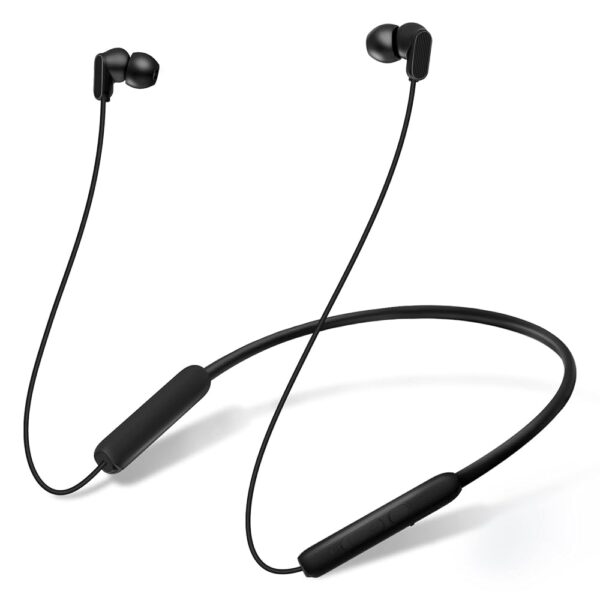
The TONEMAC N18 is a neckband earphone, a shape that has quietly become a minority format while true wireless earbuds took over the shelves. Two buds are tethered to a flexible collar that rests on the back of the neck, and the buds are magnetic so they clip together when they are not in the ears. That one design decision defines the entire product. You cannot drop a single bud down a storm drain, you do not need to carry a charging case, and the battery lives in the collar rather than inside the buds.
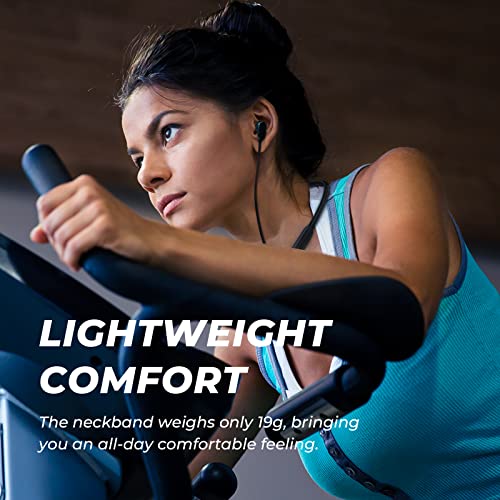
TONEMAC positions the N18 for running, gym sessions and general exercise, and the listing repeats that framing in nearly every bullet. The buyer served best here is someone who wants one charge to cover a full training day, who is tired of hunting for a lost bud, and who does not need a companion app or a long codec list. Anyone who wants a case that refills the buds several times over, or app based equalization, is looking at the wrong format. The collar is always there, and on some necks it catches on collars and hoods.
Connection: what the listing establishes and what it contradicts
The published data disagrees with itself here, and that is worth stating plainly rather than picking a side. The product title and the marketing bullets both say Bluetooth 5.2. The structured specification field on the same listing says Bluetooth Version 5.3. Both cannot be correct. If the exact version matters to you, treat it as unconfirmed and ask the seller before buying. In practice the difference between those two revisions is small, but a listing that cannot keep its own headline specification consistent is a listing to read carefully everywhere else.
More important is what is missing. No Bluetooth audio codec is named anywhere in the title, the bullets or the specification table. That means the only codec you can safely assume is SBC, the baseline that every Bluetooth audio device supports. There is no published evidence of AAC, which is what Apple devices lean on, and no evidence of aptX or LDAC, both of which only function when the phone and the earphones support the same codec. The bullets describe Bluetooth 5.2 as restoring musical detail “to the greatest extent,” which is marketing language rather than a specification. A radio version does not encode audio. The codec does.
Why the version number gets oversold
A newer Bluetooth revision changes connection stability, power draw and the availability of features such as LE Audio. It does not by itself make music sound better, extend range in a straight line, or add noise cancellation. There is no mention of multipoint pairing to two devices at once, no transparency mode and no wear detection, so assume none of those exist.
Battery: one figure, and for once no case arithmetic
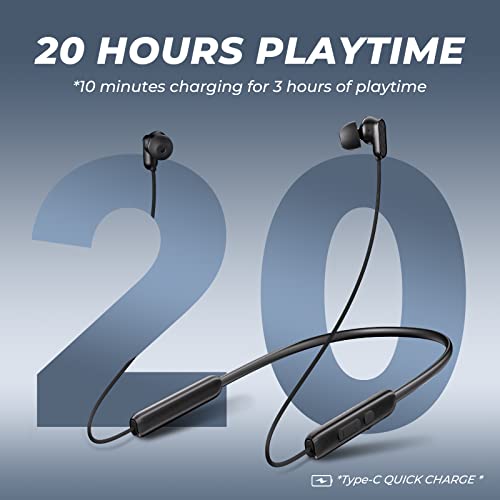
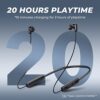
TONEMAC rates the N18 at 20 hours of playtime on a single charge, and adds that a ten minute USB-C top up returns roughly three hours. Because there is no charging case, that 20 hours is the whole story. This is the one area where the neckband format is genuinely more honest than true wireless marketing: there is no combined figure hiding a four hour bud runtime behind a case that carries the rest. When the collar is empty, you plug it in.
Two cautions. First, quoted playtimes are best case numbers measured at moderate volume, and the listing does not state the test volume, so real use will land lower. Second, the specification table lists Charging Time as 20 hours, which is the same number as the battery life and is almost certainly a data entry error rather than a real charging figure. The bullets contradict it with the ten minute quick charge claim. Do not plan around the 20 hour charging figure. If you want to compare that runtime against a true wireless set where the case does the heavy lifting, the arithmetic on something like the TOZO T6 wireless earbuds and their quoted 50 hour combined total works very differently, because the buds themselves last only a fraction of that.
Fit, seal, controls and what IPX7 actually covers
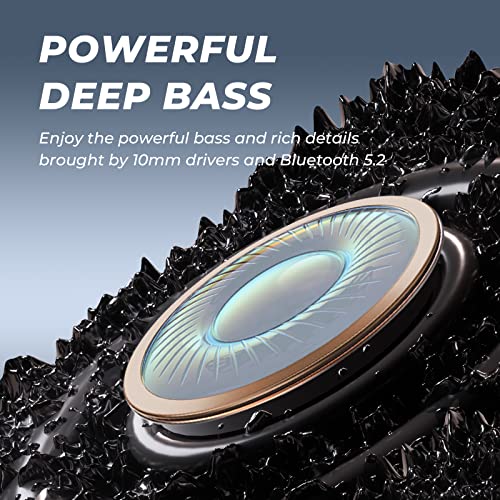
The N18 is a sealed in-ear design driven by 10mm bio-diaphragm drivers, with ergonomic housings and a collar made from composite fiber and memory silicone. Seal is the single biggest variable in how any sealed earphone sounds. A poor seal thins out bass no matter what the driver measures, which is why the number of included ear tip sizes is a real specification rather than a footnote. This listing does not publish how many tip sizes are in the box. That is a gap worth resolving before purchase, particularly for smaller ear canals.
The water rating is IPX7 according to the title and the bullets, while the specification table says only “Waterproof” with no code attached. IPX7 is an immersion rating, tested in fresh water at roughly one meter for half an hour. It is not a seawater rating, it does not cover high pressure water such as a shower jet or a hose, and IP protection degrades as seals age and as the port cover is opened and closed.
Controls are described three different ways in the same data set: Touch Control in one field, Remote in another, and Media Control in a third. Touch panels and an inline button remote behave very differently with wet fingers during a workout, so this is not a trivial inconsistency. Because the buds seal the ear canal, the N18 reduces your awareness of traffic, and it should not be treated as suitable for road cycling or for running on open roads. If awareness matters more than isolation, the site’s headphones that sit outside the ear canal are the honest alternative to a sealed sports bud.
What the listing does not support, and where to look instead
The specification table lists Noise Control as Active Noise Cancellation. Nothing in the bullets supports that. What the bullets actually describe is ENC, an algorithm applied to the microphone path so that the person on the other end of a call hears less background noise. That does nothing for what you hear during music playback. The claim that it suppresses 90 percent of environmental noise and reduces ambient noise by up to 35dB is attributed to TONEMAC, with no measurement standard or test conditions named. Treat the ANC label in the specification table as unsupported until the brand publishes a figure for playback noise reduction.
Amazon lists the N18 as ranked 913th in Electronics and 148th in earbud and in-ear headphones, with a 4.3 star average across roughly 4,128 ratings, which tells you the format still has a following. For readers who want the same neck tethered convenience from another brand, the Cuzabe CBH11 neckband earphones sit in the same category. If the gym is the main use case and a case is acceptable, the JLab JBuds Air Sport with their hook fit and the Soundcore Sport X20 with published noise cancelling hardware are the closer comparisons. Everything in that shape lives in our earbud headphone reviews.
Buy it, or skip it
Buy the N18 if the neckband shape is the point: one battery, nothing to lose, an immersion grade water rating, and a price bracket where nobody is promising a codec anyway. Skip it if you need confirmed active noise cancellation for playback, if you want a named high quality codec, if you want multipoint or an app, or if you need certainty about the Bluetooth version and the ear tip selection before you commit. The listing is strong on shape and battery and vague on almost everything an audio buyer would want pinned down.
![SAMSUNG Galaxy Buds 3 Pro AI True Wireless Bluetooth Earbuds, Noise Cancelling, Sound Optimization, Redesigned Comfort Fit, Silver [US Version, Amazon Exclusive, 2Yr Warranty]](https://wirelessemporium.com/wp-content/uploads/2025/04/samsung-galaxy-buds-3-pro-ai-true-wireless-bluetooth-earbuds-noise-300x300.jpg "SAMSUNG Galaxy Buds 3 Pro AI True Wireless Bluetooth Earbuds, Noise Cancelling, Sound Optimization, Redesigned Comfort Fit, Silver [US Version, Amazon Exclusive, 2Yr Warranty]")