Description
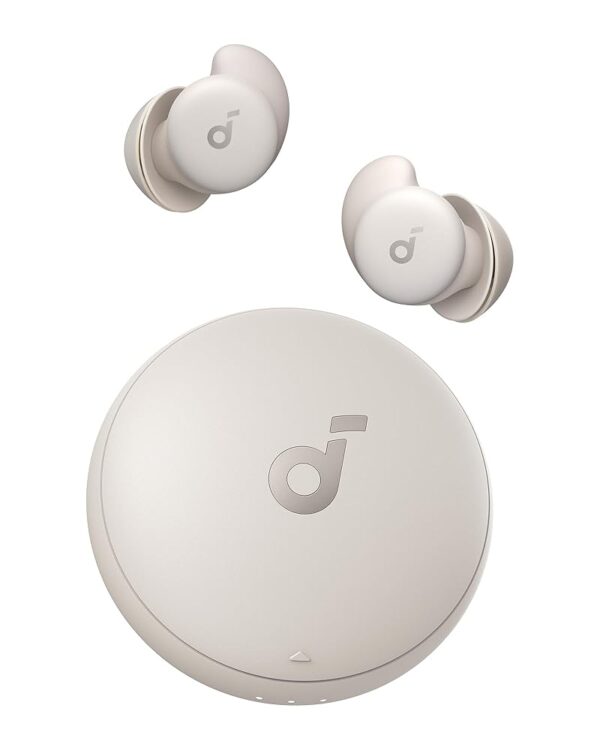
The Soundcore Sleep A20 is not a music earbud with a sleep feature bolted on. It is a purpose built sleeping earbud, and almost every specification on the listing follows from that: a tiny profile designed to survive being pressed into a pillow, a fit kit with seven tips and three wings, two entirely separate battery modes, and an explicit statement that it has no active noise cancelling. Judging it against ordinary earbuds gets the wrong answer.
Who this is for, and what it does not do
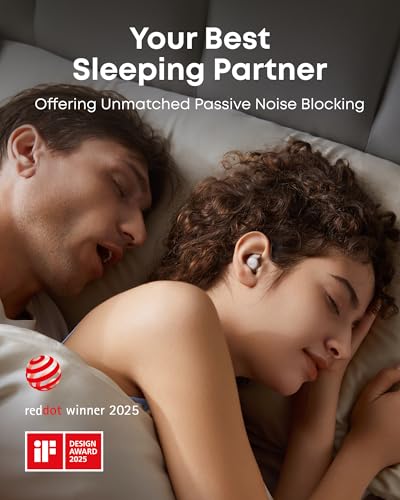
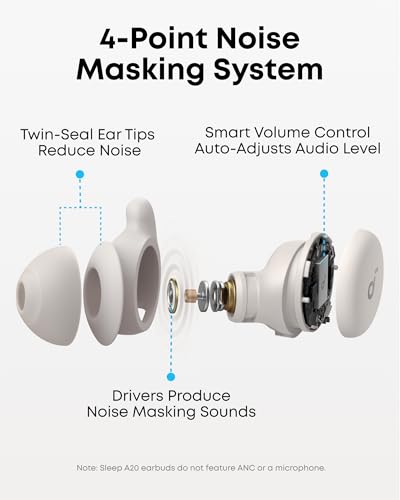
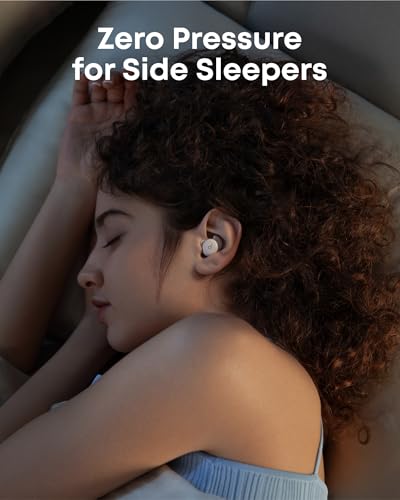
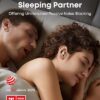
Anker aims this squarely at people who cannot sleep through snoring, traffic or a partner’s alarm, and at side sleepers in particular. The first bullet is unusually direct: Sleep A20 does not feature active noise cancelling. The attribute table agrees, listing Noise Control as Sound Isolation. Everything blocking sound here is physical.
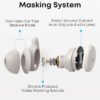
That physical approach is what Anker calls a four point noise masking system with twin seal ear tips claimed to deliver three times stronger passive blocking. Attribute the three times figure to Anker, because no baseline, test standard or frequency range is named for it. What passive blocking actually does is well understood and it is genuinely different from active cancellation: a good seal attenuates across a wide frequency range including speech and snoring, whereas active cancellation works mostly on constant low frequency drone and handles voices poorly. For sleeping, where the disturbance is usually a person rather than an engine, the passive approach is the more appropriate one, and the absence of cancellation is a design decision rather than a shortfall.
What it will not do is make a room silent. No earbud does, and Anker does not claim it. Masking works by covering the disturbance with quieter sound, which is a different mechanism from removing it.
The fit kit, which is the real specification
The contents list is the most important part of this listing: three breathable ear tips, four sealed ear tips, three ear wings and the case. Seven tips across two types plus three wing sizes is a larger fit kit than anything else in this catalog, and on a sleeping earbud it is the specification that determines whether the product works for you.
The reason is that fit has to satisfy two conditions at once. It has to seal well enough to block a snore, and it has to sit flush enough that lying on it does not press the bud into your ear canal. Anker’s Air Wing and 3D ergonomic shaping address the second, and the sealed versus breathable tip choice lets you trade isolation against comfort and heat. Expect to spend a week working through combinations rather than settling on the first.
One practical caution belongs here, and it is not on the listing. Wearing sealed earbuds for seven or eight hours every night keeps the ear canal occluded for far longer than daytime use, which can trap moisture and push earwax inward. Clean the tips regularly, replace them when they harden, and stop if you develop irritation. That is general ear care rather than a fault in this product, but it applies to every sleeping earbud and no listing mentions it.
Battery, published in two modes and both of them useful
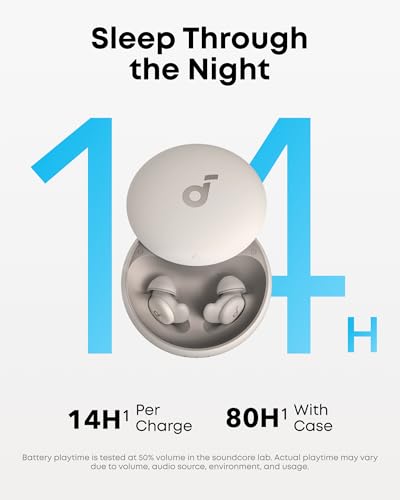
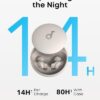
This is the clearest battery specification in the entire batch. Anker publishes Sleep mode at up to 14 hours per charge and 80 hours from the case, and Bluetooth mode at 10 hours per charge and 55 hours with the case.
The two modes exist because they do different work. In Sleep mode the buds play audio stored on the buds themselves with the radio idle, which is why the runtime is longer, and it is the mode you use overnight. In Bluetooth mode you are streaming from a phone, which costs power. Publishing both, with bud and case figures for each, is exactly what a buyer needs and almost nobody in this catalog does it. Fourteen hours covers any night with margin; 80 hours from the case is roughly a week of nightly use before the case needs charging, which is what Anker claims.
The attribute table publishes no battery life field at all, so the bullets are the only source. It also lists Number of USB 2 Ports as 1 and Batteries as three CR5 cells, both of which are inherited nonsense.
Connection, the app, and the brainwave claim
Bluetooth 5.3 is specified. No audio codec is named, so SBC is the only transport that can be assumed, and for spoken audio, white noise and sleep content that is entirely sufficient. Codec quality is close to irrelevant for this use case, which is worth saying plainly rather than treating a missing codec list as a fault.
The compatible devices field lists iPhone, iPad and Computer, with no Android device named. The soundcore app exists on Android, so this is most likely an incomplete field rather than a real limitation, but an Android owner should confirm it before buying since the app carries the sleep tracking, the alarm and the audio library.
Anker’s AI Brainwave Audio uses binaural beats which the listing says induce brainwaves that promote relaxation and help you fall asleep faster. That is Anker’s claim and it is not supported by any evidence cited on the listing. Binaural beats are a widely sold relaxation technique whose effect on sleep onset is not established, and nothing here is a medical treatment. The same applies to the sleep analytics: the MEMS sensors track movement and produce reports in the app, which is a consumer wellness feature and not a diagnostic tool. If you suspect a sleep disorder, that is a matter for a clinician rather than an earbud. Anker does not claim otherwise and neither does this review.
Water, duplicates and alternatives
The attribute table says Water Resistance Level: Waterproof and publishes no IP code anywhere. For a sleeping earbud that is a low stakes omission, but the word waterproof with no code behind it is still not a specification. The correct statement is that no ingress protection rating is published. Assume nothing beyond incidental moisture.
This catalog carries a second Sleep A20 listing under a different ASIN, reviewed as the Soundcore Sleep A20 sleep earbuds. Both carry model number A6611, so treat them as the same hardware. The main alternative format is a headband, which spreads the pressure across the whole head instead of concentrating it in the ear, as the MUSICOZY headband sleep headphones do. Within Anker’s range the Soundcore Space A40 is the general purpose cancelling earbud if daytime use is the real requirement. The full group is in our wireless earbud reviews and the wider in ear set in our earbud headphone reviews.
The listing showed 4.1 out of 5 from only 54 ratings, ranked 617th in Electronics, 84th in sleep and snoring aids and 107th in earbud and in ear headphones, first available in March 2025. Fifty four ratings is a small base, so the average carries limited weight, and it is the lowest in this batch.
Who should buy it and who should not
Buy the Sleep A20 if a snoring partner or a noisy street is costing you sleep, if you are a side sleeper who has found ordinary earbuds unwearable in bed, and if a seven tip fit kit sounds like the right way to solve that. The two mode battery specification and the plain admission that there is no active cancelling make this one of the most honest listings in the catalog.
Do not buy it as a music earbud, because the shape and the tuning are built for masking rather than listening. Do not buy it for the brainwave audio, because no evidence is cited for it. And do not treat the sleep reports as medical information.