



Description
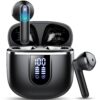
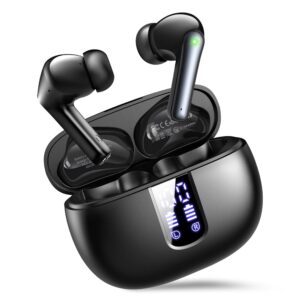
The Cillso H97 is a semi in ear true wireless set with a dual LED charge display, four call microphones and one detail that separates it from most of the budget listings around it: it actually names its audio codecs. That single line of honesty makes the rest of the specification easier to read, and it also makes the places where the listing contradicts itself easier to spot.
The listener this suits
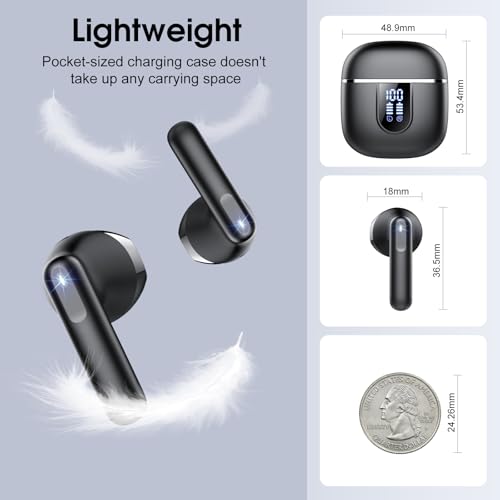
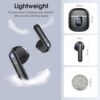
Cillso positions the H97 as a daily carry set for commuting, calls and light exercise. The recommended uses run to cycling, running, calling, snowboarding, skateboarding, exercising and gaming, which is the standard everything list and should not be read as a claim about any one of them. The useful signal is the physical description: a semi in ear shape at roughly 3.5 grams per bud with a 32 gram case, meant to sit in the outer ear rather than being driven deep into the canal.
Semi in ear is a real design choice with real consequences. It is more comfortable for long sessions and less prone to the plugged up feeling that deep sealing tips produce, but it gives up passive isolation and makes the bass response depend heavily on how the shell happens to sit in your ear. Anyone who wants isolation on a train is better served by a properly sealing design, and anyone who wants full situational awareness by a genuinely open set such as the Eigsupia X18 open ear headphones. The H97 sits between the two.
Connection, codecs and what the percentages actually mean
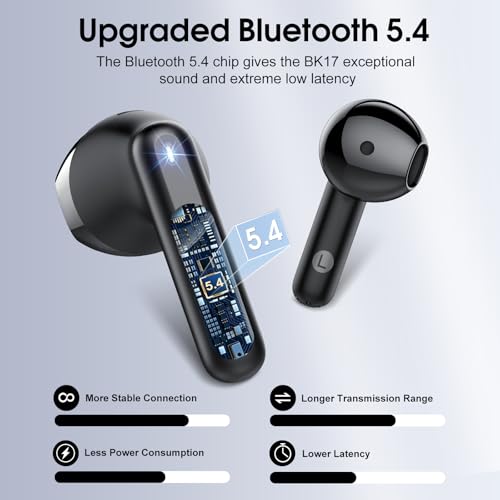
Cillso specifies a Bluetooth 5.4 chip with a high sensitivity antenna and a 15 meter range, plus Hall sensors so the buds wake when the case opens. The version claim comes with three numbers attached: 30 percent lower power consumption, 35 percent greater signal stability and 45 percent stronger anti interference performance compared with Bluetooth 5.3. Those are Cillso figures with no test method named, so treat them as marketing. What a newer Bluetooth version genuinely changes is connection robustness, power draw and audio profile support, not sound quality.
AAC and SBC, and what that means for your phone
The H97 lists AAC and SBC encoding. This is the one codec statement in the group of budget sets around it and it is worth reading carefully. SBC is the baseline every Bluetooth audio device supports, so it always works. AAC is the codec that matters mainly on Apple devices, where iPhones default to it and generally sound better with it than with SBC. On Android the picture is muddier, because AAC handling varies by phone and some Android implementations run AAC poorly.
What is not on the list matters just as much. There is no aptX, no aptX Adaptive, no aptX HD and no LDAC, so there is no path to a high resolution or lossless wireless transport here regardless of what your phone supports. Any high resolution expectation needs both a codec that carries it and a source device that carries it, and neither condition is met. The listing describes the sound as immersive and does not claim high resolution, which is the correct restraint. Multipoint, wear detection and transparency mode are all absent from the listing, and there is no companion app, so assume all four are absent from the product.
Battery, and three figures that need separating
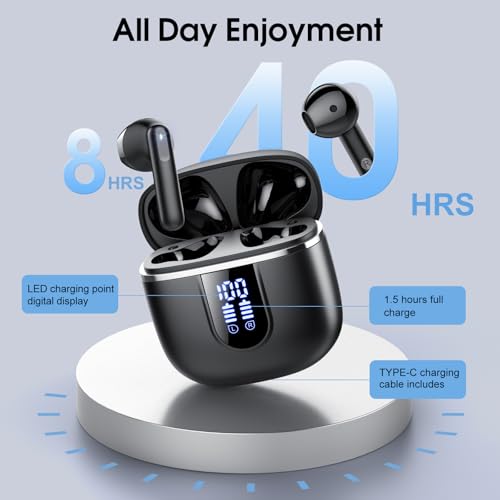
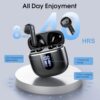
Cillso publishes 8 hours from a single charge of the buds and an additional 32 hours from the case, for a combined 40 hours. The attribute table then muddies it: the Battery Life field reads 40 Hours, which is the combined number filed under the field that normally holds bud runtime, while a separate Carrying Case Battery Average Life field correctly reads 32 Hours. Read the bullets, not the table. Bud runtime is 8 hours.
The case battery is given as 300 milliamp hours, which is small for a claimed 32 hours of reserve, and that is worth flagging rather than resolving because it depends on a bud cell size Cillso does not publish. Charging time is also given twice and differently: the bullets say the case fills in 1.5 hours, the attribute table says 2 Hours, and both cannot be right. A quoted playtime assumes moderate volume with no extra processing, and the ENC microphones run only on calls, so call time is shorter and no talk figure is published.
Fit, controls and the water code that is not a code
The semi in ear shell is the fit story, and the listing has a gap here. The Included Components field reads simply Black, which is a color filed under a contents list, so there is no published accessory list at all and no ear tip count. On a semi in ear design tip sizes matter less than on a deep sealing one, but they still decide whether the advertised bass shows up, and a buyer cannot see from this listing whether any spare tips are in the box.
Controls are high precision touch sensors on both buds, covering play and pause, volume, track skip, calls and the voice assistant. Compatibility is given as Android 4.4 and above or iOS 8.0 and above, which in practice means anything currently in use.
On water, Cillso writes IP7 in the product title and in a bullet, described as an IP7 nano coating. IP7 is not a valid ingress protection code, because a valid code requires two digit positions. The intended claim was most likely IPX7, immersion to one meter in fresh water, but that is an inference and not something the listing states. The attribute table adds only Water Resistance Level: Waterproof, with no code. Because no valid code is published, the defensible reading is that sweat and rain are covered and immersion is unproven. No IP rating covers seawater, hot water or high pressure water, and seals degrade with age. Anyone who needs an immersion rating in writing should compare against listings that state a real code, such as the HUIFU T12 with its stated IPX7 claim.
What the listing does not publish, and the import damage in the table
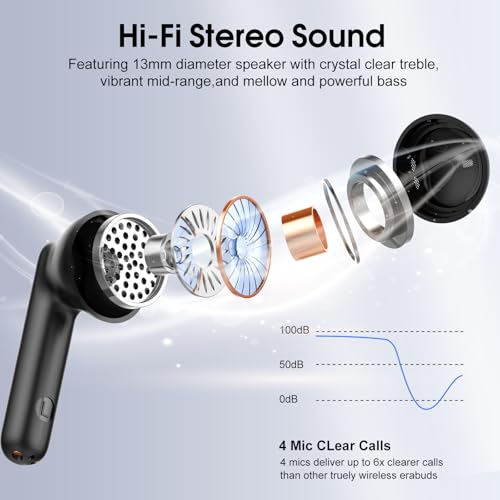
Several attribute fields cannot be taken at face value. Frequency Response is given as 20 KHz, a single number where a response is a range, so it is unusable. Sensitivity reads 110 dB with no reference level. Item Weight appears as 2 Grams and again as 0.071 ounces, both contradicting the bullet figure of 3.5 grams per bud. Product Dimensions read 0.39 by 0.39 by 0.39 inches, a perfect cube that describes nothing real. The Batteries field says two A batteries are required, which is inherited nonsense for sealed lithium cells. The attributes worth keeping are the Audio Driver Size of 14.2 millimeters, which matches the copy, and an impedance of 32 ohms.
Missing entirely are talk time, bud cell capacity, any latency figure and any warranty statement. Amazon showed 4.3 out of 5 from 361 ratings when the listing was captured, ranked 1,508th in Electronics and 233rd in earbud and in ear headphones. For buyers weighing the alternatives, the QXQ J55 with a similar 40 hour claim and the TRAUSI i27 Bluetooth 5.4 earbuds sit in the same bracket, and the full comparison set is in our wireless earbud reviews.
Who should buy it and who should not
Buy the H97 if a semi in ear shape suits your ears, if you use an Apple device and want AAC stated in writing, and if 8 hours per charge with a visible battery percentage covers your day.
Skip it if you need isolation, because a semi in ear shell does not seal and no active noise cancellation is offered. Skip it if you need a verified immersion rating, because the published code is malformed. And treat the attribute table with suspicion, because it contradicts the bullets on weight, on charging time and on which battery figure belongs in which field.
![SAMSUNG Galaxy Buds 3 Pro AI True Wireless Bluetooth Earbuds, Noise Cancelling, Sound Optimization, Redesigned Comfort Fit, Silver [US Version, Amazon Exclusive, 2Yr Warranty]](https://wirelessemporium.com/wp-content/uploads/2025/04/samsung-galaxy-buds-3-pro-ai-true-wireless-bluetooth-earbuds-noise-300x300.jpg "SAMSUNG Galaxy Buds 3 Pro AI True Wireless Bluetooth Earbuds, Noise Cancelling, Sound Optimization, Redesigned Comfort Fit, Silver [US Version, Amazon Exclusive, 2Yr Warranty]")