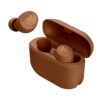
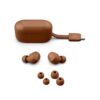
Description
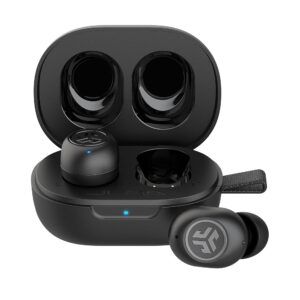
The JLab Go Air Tones Plus is a small true wireless earbud sold under model code EBGTONEPCA50WEB, positioned as a pocketable everyday pair rather than a technical flagship. The published specification is short, and the parts that are published do not always agree. The listing quotes one playtime figure in the product name and a different one in the feature bullets, and it never names a single Bluetooth codec.
The listener this pair is built for
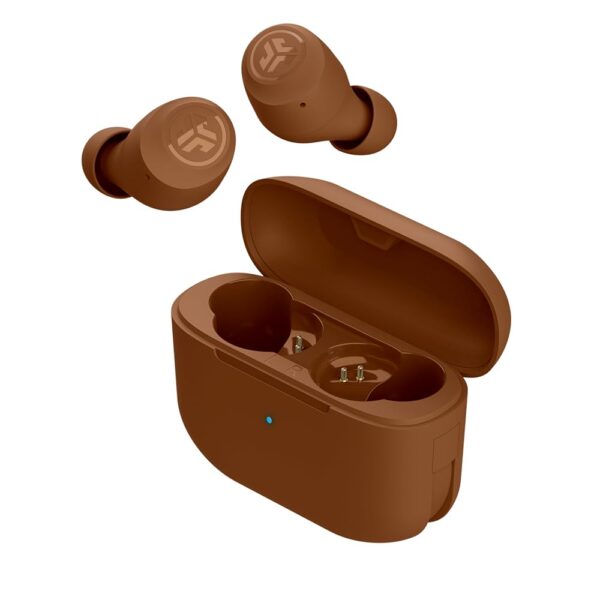
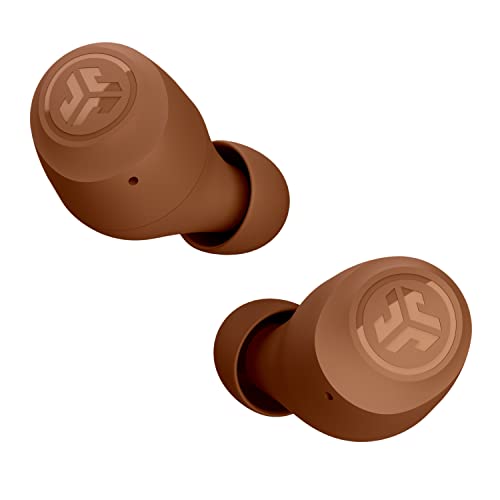
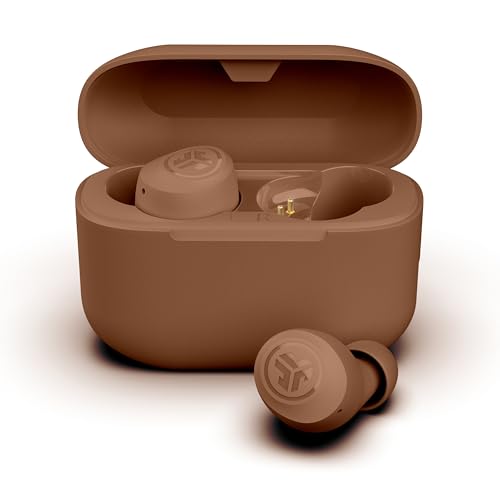
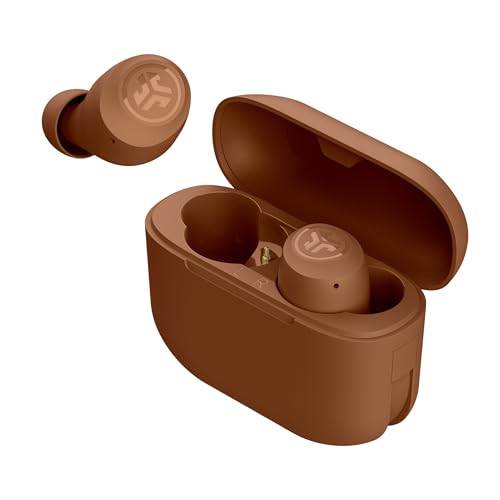
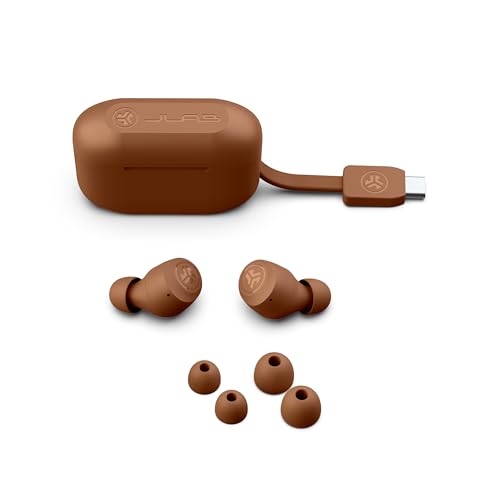
JLab describes the Go Air Tones Plus as its smallest bud yet, 15 percent smaller and 40 percent lighter than the earlier Go Air, with a case it compares to a credit card. The listed age range is adult and teen. That describes a commuter or gym user who wants a pair that disappears into a jacket pocket. It is not aimed at someone who wants active noise cancellation, because there is none. The noise control field reads sound isolation, meaning the only noise reduction on offer is the physical block of a silicone tip in your ear canal.
Sound isolation depends entirely on how well the tip seals, so two people can get very different results from the same pair. If you want electronic cancellation of engine and cabin drone, this is the wrong product and something like the Sony WF-C700N with active noise cancellation is a closer match to that requirement. If you mostly listen in a quiet office or at home, the isolation approach costs you nothing.
How it connects, and what that connection actually delivers
The listing gives Bluetooth 5.1 and a range figure that the import recorded as 1E plus 1 meters, which is scientific notation for 10 meters. That is the standard Bluetooth class 2 figure and it is a line of sight number, not a through walls number. Bluetooth 5.1 is an entirely current baseline for connection stability and power draw, but it is worth being blunt about what a version number does and does not tell you: the version governs the radio layer, not the sound. A 5.1 chip does not make music better than a 5.0 chip, and a 5.3 chip would not either.
The codec question the listing never answers
JLab names no codec anywhere in the specification, the bullets or the description. That means the only thing you can safely assume is SBC, which every Bluetooth audio device supports as the mandatory baseline. There is no published claim of AAC, which is the codec that matters most on iPhones, and no published claim of aptX or LDAC, which are the two families usually invoked when a brand wants to talk about high resolution wireless audio. Because none is stated, this review will not describe the Go Air Tones Plus as a high resolution or lossless product. Codecs work only when both the phone and the earbuds support the same one, and here there is nothing to check against.
JLab does state Google Fast Pair, which speeds up the first pairing on Android and lets you locate a missing bud through Google’s Find My Device. The listing also advertises Dual Connect, meaning either bud can be used on its own. What the listing does not mention at any point is Bluetooth multipoint, so if you need one pair holding a laptop and a phone at the same time, treat that as absent until JLab says otherwise. A pair that does publish multipoint, and states it plainly, is the Sony WF-C510, which lists two device switching outright.
Battery: three different numbers for the same product
The product name says 32 plus hours of Bluetooth playtime. The feature bullet says 9 plus hours in each earbud and 26 plus extra hours from the charging case, totaling 35 plus hours. The structured specification records battery life as 35 hours and carrying case battery average life as 26 hours. So the same page quotes both 32 and 35 as the headline. JLab has not reconciled that, and we are not going to pick one for you.
What is consistent across all three sources is the split, and the split is the number that actually governs your day. Roughly 9 hours comes from the buds themselves. The remaining 26 hours lives in the case and is only available if you carry the case with you. If you leave the case at home, your ceiling is 9 hours, not 32 or 35. Quoted playtimes are also best case figures measured at moderate volume, so a session at higher volume will land under the quoted number. Charging time is given as 2 hours, and no fast charge claim is published.
Fit, controls and what the water rating is worth
Three ear tip sizes are included. Tip choice is not cosmetic: a poor seal drains perceived bass and makes any in ear model sound thin, so if the stock tips do not seal, the pair will sound worse than it is capable of. Controls are touch based, with the JLab app offering EQ presets described as JLab Signature, Balanced and Bass Boost, plus control over the Be Aware setting.
Be Aware is JLab’s transparency mode: it passes ambient sound through so you can hear what is around you. That helps on a sidewalk, but a closed bud with a transparency mode is not an open ear design, and if road awareness is the priority a product built for it such as the Soundcore V30i open ear set is the better category.
On water resistance, the specification says only water resistant. No IP code is published anywhere on the listing. IPX4 and IPX7 are very different promises, and without a code you cannot tell which you are getting. This review will not call the Go Air Tones Plus waterproof or rated for anything, because JLab has not stated a rating. Treat it as unrated. Even where a code exists, no consumer IP rating covers seawater or pressurized water, and seals degrade as the product ages.
What the listing leaves out, and what else to consider
Beyond the missing codec and IP code, the specification omits driver size entirely. It records the driver type as dynamic and the frequency range as 20 Hz to 20,000 Hz, the default range printed on almost every consumer earbud, which carries close to zero information. There is no wear detection claim, no multipoint claim and no microphone count. The weight fields are broken too: one reads 0.3 grams and another 0.011 ounces, and neither is a believable weight for earbuds with batteries in them. The first feature bullet is corrupted in the source data as well, arriving as an unrendered escape sequence.
The listing does publish sales position, which is a genuine signal of demand rather than quality: JLab records it as ranked 1,078th in Electronics and 171st in earbud and in ear headphones, with a 4.4 star average across 461 ratings. If you want a cheaper JLab with a similar philosophy, the Go Air Pop covers the same ground, and the JBuds Mini trades size for case capacity. For a broader look at what else sits at this size and price bracket, our earbud headphones section and the wider true wireless earbud listings both cover models with published codec support, which this one lacks.
Who should buy it, and who should skip it
Buy the Go Air Tones Plus if you want a very small, very light pair for casual listening, you are on Android and value Google Fast Pair, and you can live with sound isolation instead of active cancellation. Skip it if you need a published water rating for training, if you need multipoint for a work laptop, or if codec support matters to you, because JLab publishes none. Anyone shopping on the 32 hour figure in the product name should note that the same page also says 35, and that only about 9 of those hours are in the buds.