

Description
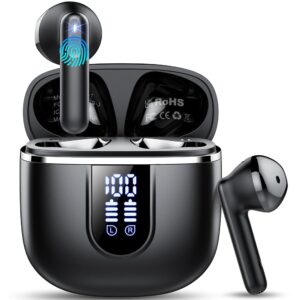
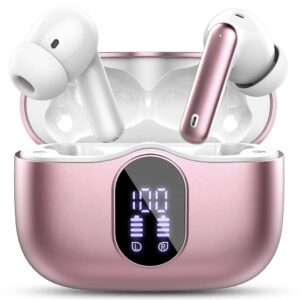
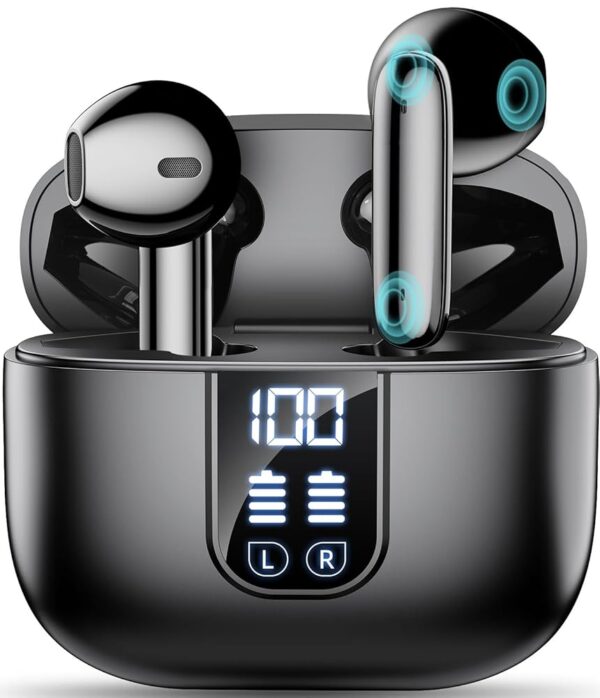
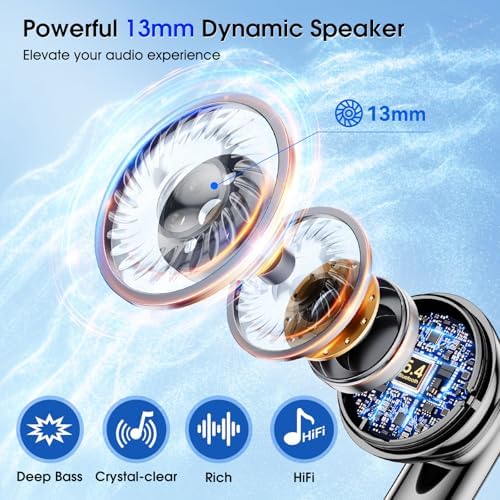
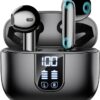
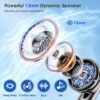
The EXZHIG J11 is a semi in ear earbud, and that shape decides most of what follows. Rather than sealing the ear canal with a silicone tip, a semi in ear bud rests at the entrance of the canal in the way Apple’s EarPods and standard AirPods do. EXZHIG pairs that shape with six microphones running environmental noise cancellation, Bluetooth 5.4, 13mm dynamic drivers, an LED charge display, USB-C charging and a quoted 5 hours from the buds with 35 hours in total. The listing went live on January 2, 2025, and at the point this data was captured it carried 245 ratings averaging 5.0 out of 5, ranked 2,936th in Electronics and 409th in Earbud and In-Ear Headphones. A flat 5.0 average across 245 ratings is statistically unusual on any consumer product, and it is worth reading the reviews themselves rather than taking the number at face value. This is a new unit, not a renewed or refurbished one.
What semi in ear changes
The shape is the specification here. Because nothing seals the canal, a semi in ear bud is more comfortable over long sessions, creates no pressure sensation, and leaves you far more aware of your surroundings than a sealed tip does. It also gives up bass extension, because there is no sealed cavity to pressurize, and it gives up isolation entirely, because ambient noise arrives unfiltered. On a quiet train that is a fair trade. In a loud gym or on a busy street it is not, and the practical consequence is that people raise the volume to compete with the noise.
That matters because of a claim the listing makes directly. The feature copy says the semi in ear design protects your hearing by reducing pressure on the ears and allowing loose wear. Reducing physical pressure is not hearing protection. A design with less isolation tends to be used at higher volume, not lower, and no volume limit of any kind is published anywhere on this listing. We are not going to present this product as protecting anyone’s hearing, because nothing in the specification supports it. If you want a limit, buy a set that publishes a decibel ceiling and states whether it can be switched off.
On awareness, the honest position is in between. A semi in ear bud leaves more ambient sound available than a sealed tip does, so it is less dangerous on a road than a cancelling earbud would be. It is still not an open ear or bone conduction design, it still covers the canal entrance, and it is not a substitute for a product built for road use. The listing recommends cycling among its uses and we would not.
Connection: Bluetooth 5.4 with no codec published
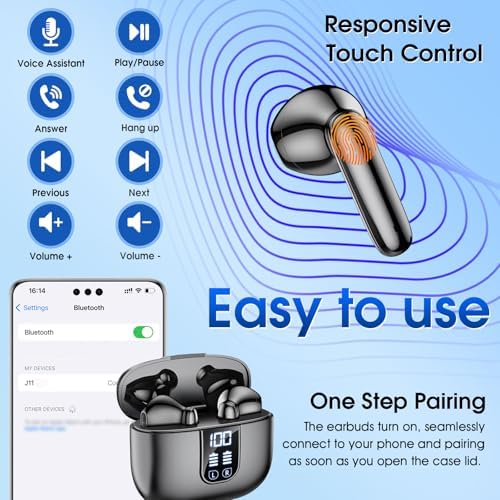
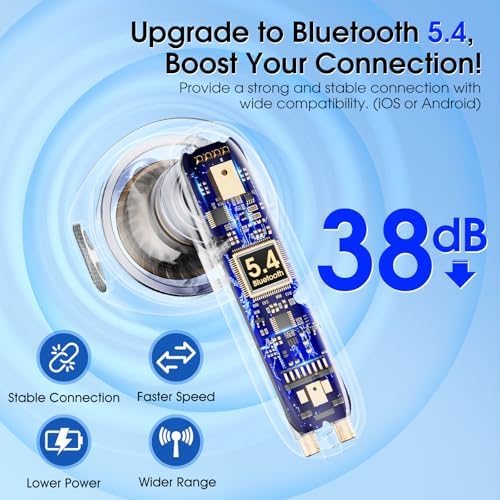
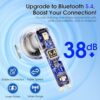
EXZHIG states Bluetooth 5.4 with a 10 meter range and automatic reconnection when the case opens, and lists Android, iOS, PCs and televisions among compatible sources. Bluetooth 5.4 governs connection stability and power draw and does not improve sound quality on its own. No codec is named anywhere on the page, so SBC is what you should assume. AAC, which matters on iPhones, is not stated, and neither aptX nor LDAC is stated, both of which require the phone and the earbuds to support them before they do anything. The listing claims “superior immersive HiFi stereo sound” and “immersive 3D sound”, and with no codec published and no spatial processing described, neither claim is supported by the specification.
The six microphones run ENC, which is call side processing that improves what the person you are speaking to hears, including wind noise reduction. The specification table lists noise control as sound isolation, so there is no active noise cancellation, and on a semi in ear design there is very little passive isolation either.
Battery: five hours in the bud, thirty five with the case
The listing separates the figures properly: 5 hours of playback from a single charge, extended to 35 hours with the case, charging over USB-C in 1.5 hours. The specification table then drops the 35 hour total into the Battery Life field where the bud runtime belongs, and separately records the case average life as 30 hours, which is the case contribution rather than the total. Read the bullets, not the table.
Five hours is short by current standards and is the main practical limitation of the small housing. The published case capacity of 400 milliamp hours is consistent with roughly six pair recharges of a small bud cell, which supports the 35 hour figure better than most claims in this catalog do. Quoted playtimes assume moderate volume on a new cell, and on a design with no isolation, real world volume tends to run higher than the test condition.
Fit, controls and the IPX7 claim
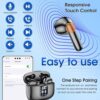
Each bud is quoted at 3.4 grams, which is genuinely light, and the case at 60 grams with dimensions of 5.6 by 4.9 by 2.7 centimeters. Because this is a semi in ear design, no ear tips are supplied and none are needed, which also means there is no way to correct a poor fit. Semi in ear buds either suit your ear geometry or they do not, and if they do not they will work loose during movement. Controls are touch based.
IPX7 is the water claim, which formally means thirty minutes in one meter of fresh water. That is a strong rating and it is stated as a code rather than as an adjective, which is more than most listings here manage. The standard limits still apply: no IP rating covers seawater, chlorinated pools or pressurized water such as a shower jet, the rating does not extend to the charging case unless stated, and seals degrade with age and heat.
The specification table carries a striking amount of import damage. It lists a Lightning headphone jack on a true wireless product, sensitivity as 38 dB with no reference condition, a frequency range of “20-2000”, a frequency response of 20000 Hz, a detachable cable on a set with no cable, three LR44 button cells as the battery type, and an ear placement and form factor of “On Ear” on a product that is neither. Amazon’s own ranking places it 68th in On-Ear Headphones, so the miscategorization is not confined to this page. None of it changes the product, and all of it should lower your confidence in any individual field.
What to compare it against
The reference points for this shape are Apple’s. Our write ups of the AirPods 3rd generation, the design most semi in ear earbuds are modeled on and the AirPods 4, which add cancellation to an unsealed shape show what the format costs and what it can do. If you decide a seal is what you actually want, the TOZO T10, a long serving sealed budget set with a published water code is the cheap alternative and the Soundcore K20i, an entry level set with app support adds an equalizer. Our wider coverage sits under wireless earbuds and earbud headphones.
Who should buy it and who should not
Buy the J11 if sealed tips are uncomfortable for you, if you want to stay aware of a room while you listen, and if 5 hours between charges fits your day. Do not buy it for bass, because an unsealed design cannot deliver it. Do not buy it expecting noise cancellation of any kind, do not treat the hearing protection language as meaningful, and do not rely on the 5.0 rating average without reading the reviews behind it.