
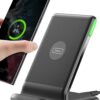


Description
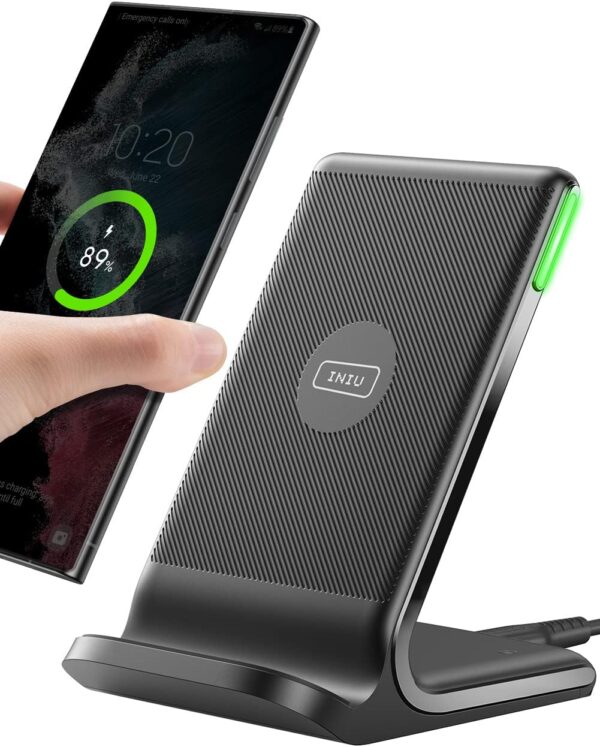
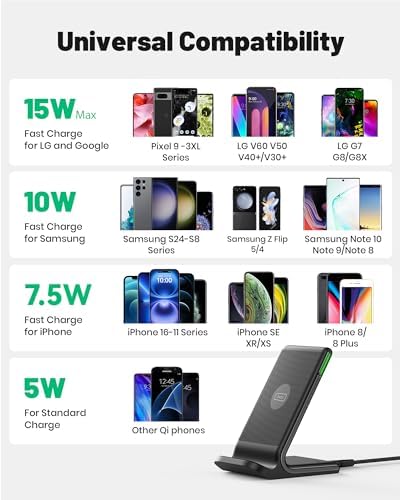
The INIU wireless charging station is a Qi-certified upright stand with dual charging coils, an ambient-light-sensing LED and a headline claim of 15W. The most important thing on the page is not that number, though. It is the compatibility bullet three lines below it, which says the 15W figure applies to LG phones, while Samsung Galaxy phones get 10W, iPhones get 7.5W and everything else gets 5W. Most buyers will not receive the speed printed in the product title. That is where this review starts.
Who this suits
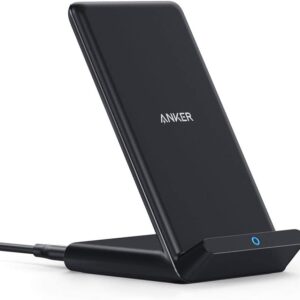
This is a desk and bedside stand rather than a flat pad, and the difference matters more than it sounds. The upright orientation with dual coils means the phone can sit in portrait or landscape while charging, so notifications, video calls and clock displays stay readable. If you want somewhere to park a phone during a working day and glance at it, that is the case this product makes well.
It is less suited to anyone who wants to keep using the phone continuously, since picking it up interrupts charging, and less suited to anyone whose priority is the fastest possible refill. Wireless charging is slower and less efficient than a cable by design: energy is lost as heat in the transfer, which is why chargers of this type run warm and why INIU includes a temperature feature.
The speed claim, unpacked properly
INIU describes “next-gen 15W fast charging” and says it saves “up to 45 minutes of charging time.” Neither claim is qualified in that bullet. The qualification is in a different bullet: four charging modes, 15W for LG, 10W for Samsung Galaxy, 7.5W for iPhone and 5W standard for other devices.
Read that as the real specification. An iPhone owner buying this is buying a 7.5W charger. A Samsung owner is buying a 10W charger. The 15W headline applies to a phone brand that is no longer manufacturing new handsets, which makes it close to a theoretical maximum rather than a figure most buyers will see. The “up to 45 minutes saved” claim names no comparison charger, no phone and no battery size, so it cannot be checked at all.
Qi and AirFuel are not the same thing
The product title says “Qi-Certified.” A feature bullet says the charging is “powered by INIU’s AirFuel technology.” Qi and AirFuel are two different wireless power standards from two different industry bodies, and a Qi certification is what actually determines whether a phone will charge on the pad. We are naming the contradiction rather than resolving it. Treat the Qi certification as the meaningful claim, since that is the one that describes interoperability with the phones listed, and treat the AirFuel reference as unexplained.
Power in: the part the listing does not supply
The included components are a welcome guide, a USB-C cable and the charging stand. There is no wall adapter in the box. That is normal for this product category now, but it is the single most consequential omission, because the output speed of any wireless charger is limited by what you plug it into. A 15W or even a 10W wireless output needs a wall adapter capable of supplying enough power, and a spare 5W phone charger from a drawer will not deliver it.
The specification block compounds the confusion by listing “Input Voltage = 5 Volts.” A 5 volt input is the older, slower standard, and it sits awkwardly beside a 15W output claim, since wireless charging loses a meaningful share of the input power as heat before it reaches the phone. The listing does not state the required adapter wattage, does not state whether a Quick Charge or Power Delivery adapter is needed, and does not state the input current. Anyone buying this should plan on also buying an adapter, and should check INIU’s own documentation for what that adapter needs to be.
Design, safety features and what is published
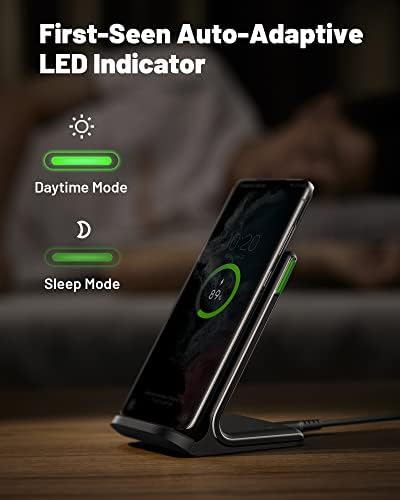
Two features here are genuinely useful and are stated plainly. The first is the self-adaptive LED indicator, which adjusts its brightness according to ambient light. A charging light that dims itself at night is a small thing that matters a great deal on a bedside table, and it is a common complaint about chargers that do not have it.
The second is NTC TempGuard, described as protecting the device battery from overheating. An NTC thermistor is a temperature sensor, so this is a real mechanism rather than a marketing name. Heat is the main way wireless charging shortens battery life over time, so temperature management is worth having, though the listing publishes no temperature threshold and no behavior description for what happens when the limit is reached.
The dual coil arrangement is what allows both portrait and landscape placement, and it also widens the tolerance for putting the phone down slightly off-center, which is the most common cause of a phone failing to charge overnight.
INIU also states an “industry-leading 3-year warranty” with lifetime technical support. Three years is a long warranty for an accessory and is worth something; the claim to be industry-leading is an unverifiable superlative and should be read as copy. Similarly, “INIU uses only the highest-grade materials” names no material and no certification, despite the same sentence referring to “stringent safety certifications” without listing one.
What is not published
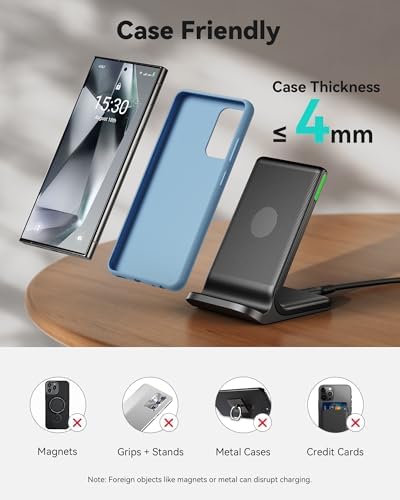
Missing from the record: the required input wattage, whether the charger works through a phone case and at what case thickness, dimensions, weight, the exact Qi version supported, cable length, whether there is any foreign object detection, and the customer rating and sales rank that most products in this catalog carry. Case compatibility is a notable gap: almost every competing charger states a maximum case thickness, and this one does not, which leaves buyers with thick or magnetic cases guessing.
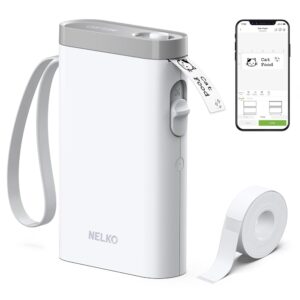
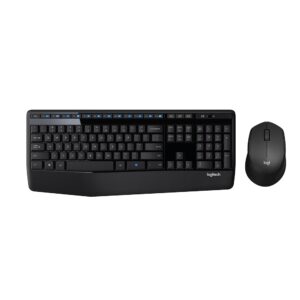
For comparison in the same part of this catalog, the Anker 313 charging stand is the direct alternative and does state a case thickness limit of 5mm along with an explicit warning about metal and magnetic attachments, though it ships with an older Micro USB cable. The Logitech M185 mouse and the Nelko P21 label maker are other desk accessories here, and the Logitech M720 Triathlon sits alongside them. The full accessory selection is in this section of the catalog.
Who should buy it
Buy this INIU stand if you want an upright dual-coil charger for a desk or a bedside table, you value a light that dims itself in the dark, and you already own a capable wall adapter. Skip it if you are buying for the 15W number, because unless you are charging an LG phone you will not get it, and note that no adapter is included, no case thickness limit is published, and the listing names two competing wireless power standards without explaining which one applies.