
Description
What a clip-on open ear design is for
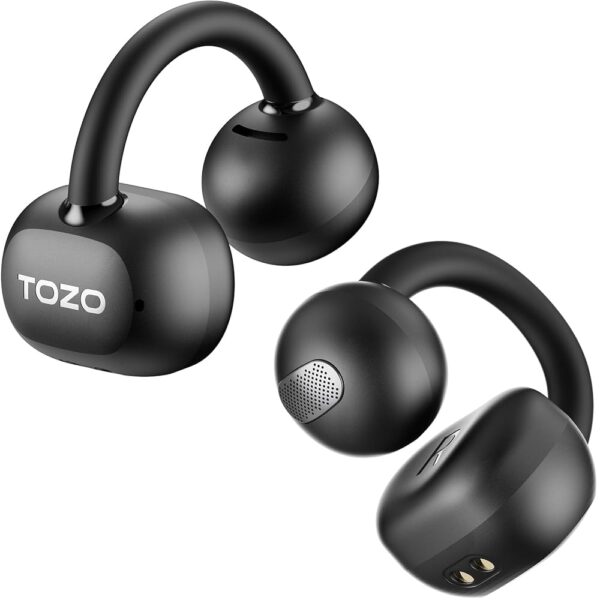
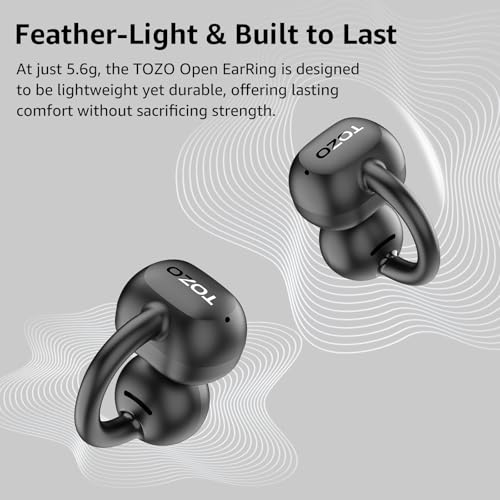
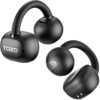
The TOZO OpenEarRing, model T13064, does not go into the ear canal at all. Each side clips over the outer ear like a cuff, with the driver sitting just outside the canal entrance and a counterweight behind the ear holding it in place. TOZO quotes 5.1 grams per side. Nothing seals, nothing pushes in, and nothing blocks the outside world.
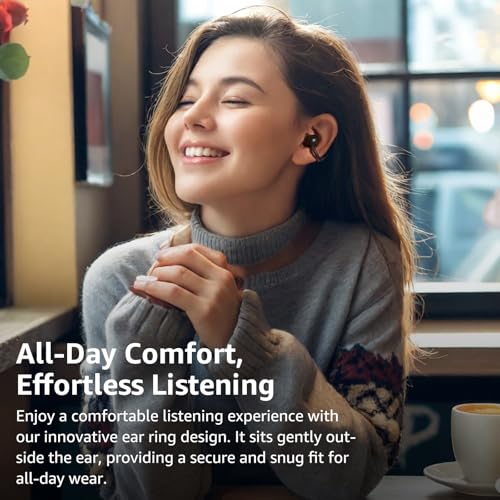
That last point is the whole argument for the format. Because the canal stays open, you hear traffic, footsteps, a training partner and announcements at normal volume while music plays. For running on roads, for cycling where local rules allow it, for walking in a city and for anyone who finds silicone tips uncomfortable after twenty minutes, an open ear clip solves a problem that no sealed earbud can. The tradeoffs come in the same paragraph: bass is thinner than a sealed bud because there is no seal to load the ear, the sound leaks to people nearby, and in genuinely loud places the natural response is to raise the volume until the music wins, which is exactly the listening habit worth avoiding.
Connection, latency and the codec question
TOZO lists Bluetooth 5.4 with a 20 meter range and publishes an audio latency figure of 60 milliseconds. Publishing a latency number at all is unusual in this catalog and it is useful: 60 milliseconds is low enough that video stays in sync for most viewers, though competitive gaming would want lower. The Bluetooth version itself governs connection stability and power behavior rather than sound quality.
No Bluetooth audio codec is named anywhere on the listing. That means SBC, the baseline every Bluetooth device supports, is all you can assume. There is no published evidence of AAC, which is what Apple devices use, and none of aptX or LDAC, both of which require the phone and the earbuds to support the same codec. Nothing here supports a high resolution description of the audio, and TOZO does not make one.
The specification numbers that do not hold up
Frequency Response is recorded as “20 KHz,” which is a single number rather than a response range and is not a usable figure. A separate field gives Frequency Range as 20Hz to 20,000Hz with the square brackets left in from whatever system exported it. Sensitivity is listed at 85dB and impedance at 32 ohms, both plausible for a small dynamic driver. Two fields are simply inherited from other product categories: “Number of USB 2 Ports” and a “Theme” list running from Animal to Motorcycling. The battery is described as lithium metal, which is not the chemistry used in rechargeable earbuds.
Battery: the bullet is right, the specification table is not
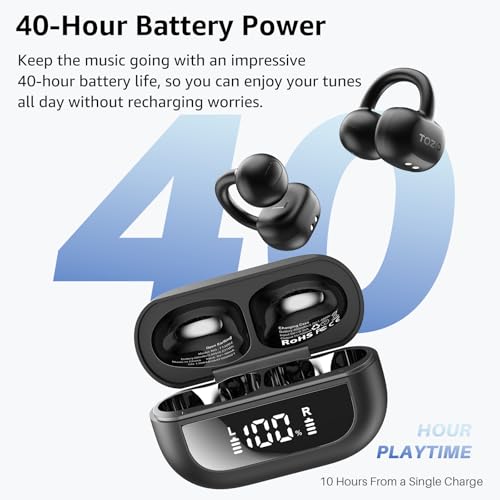
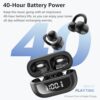
TOZO’s marketing bullet gives the split cleanly: 10 hours of playback from the earbuds on a single charge, plus a further 30 hours held in the charging case, for a 40 hour total. That is the figure to work from, and the 10 hour number is the one that matters day to day.
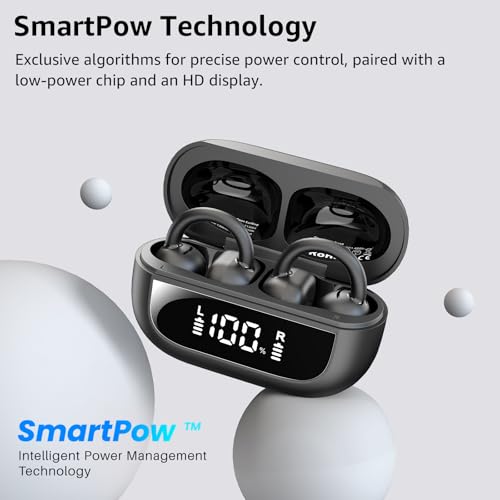
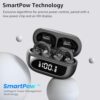
The structured specification table then contradicts it twice. Battery Life is recorded as 24 hours, and Charging Time is also recorded as 24 hours. Neither matches the bullet, and a 24 hour charging time for a small earbud is not credible. A separate field puts case charging at 1.8 hours, which is realistic. Treat the bullet’s 10 hours and 40 hours as the working numbers and treat the specification table as unreliable on this page. As always, quoted playtime is a best case figure measured at moderate volume, and open ear designs push listeners toward higher volume outdoors, so expect less. The case carries a digital display showing remaining charge, which removes the usual guesswork.
Fit, controls and the IPX5 problem
There are no ear tips to size because there is no ear tip. The clip fits over the ear ridge and TOZO uses a skin friendly silicone over a high resilience core, which sidesteps the whole seal question that dominates sealed earbud reviews. What replaces it is a different fit question: clip-on designs vary in how they sit on ears of different thickness, and people who wear glasses or hearing aids should check for competition around the same piece of ear.
Controls are described inconsistently. One bullet says simple button controls operated with a press. The specification fields say Touch Control, with the control method listed as app and touch. Buttons and capacitive touch behave very differently when your hands are wet or cold, so this is worth confirming. The TOZO app is published as a real feature here, offering custom EQ modes, which is more than most listings in this bracket provide.
Now the water rating, which the listing gets wrong in its own copy. The bullet is headed “IPX5 WATERPROOF.” IPX5 is not waterproof. It is a rating for low pressure water jets, which covers sweat and rain and a rinse under a tap, and it does not cover immersion. Do not submerge these. The specification field then compounds it by recording the water resistance level as “Waterproof” with no code. No IP rating covers seawater or high pressure water in any case, and the protection degrades as the seals and port covers age. If immersion protection is what you need, the open ear category has products rated IPX7 or better, and this is not one of them.
The contradictions worth knowing before you buy
The specification table lists Noise Control as “Sound Isolation.” An open ear clip provides no isolation by design. That field is wrong, and it matters, because a buyer scanning specification tables could reasonably conclude these block outside sound when the entire point of the product is that they do not. There is no active noise cancellation here and none is claimed in the copy.
TOZO’s third bullet also states the design brings safety and convenience when driving. Open ear headphones do preserve awareness far better than sealed earbuds, but headset use behind the wheel is regulated differently from state to state and no product specification overrides local law. The recommended uses field additionally lists motorcycling and sleeping, neither of which is a sensible application for a rigid ear clip. Read those lists as import noise rather than guidance.
Amazon lists the OpenEarRing as ranked 523rd in Electronics and 7th among open ear headphones, with a 4.5 star average across roughly 2,708 ratings. Within the same format, the TOZO OpenEgo is the closest sibling, and the Soundcore V30i open ear headphones and the Shokz OpenFit with its published fit hardware are the obvious cross shopping options. If you decide the open ear tradeoff is not for you, TOZO’s own sealed alternative in the Crystal Pods with hybrid noise cancellation goes the other way entirely. Everything in this shape sits in our open ear headphone reviews, with sealed comparisons in our true wireless earbud reviews.
Buy it, or skip it
Buy the OpenEarRing if awareness matters more than isolation: road running, city walking, shared offices, long wear without canal pressure, a 10 hour charge, a case display and real app based EQ. Skip it if you want deep bass, if you need to block out a plane cabin or an open plan office, if you need immersion protection rather than IPX5, or if you were relying on the specification table, which on this listing contradicts the marketing copy on battery, on controls and on whether the product isolates at all.