
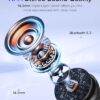
Description
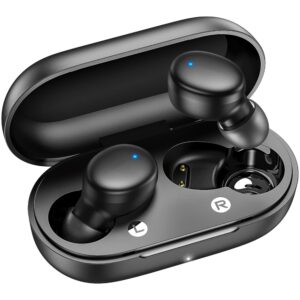
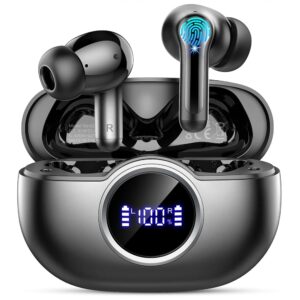
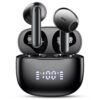
The YISAMT J50 is a compact true wireless set with 14.3 mm drivers, a case carrying a three part LED battery display and a quoted 42 hours of total playback. The most consequential detail in the listing is buried in the last feature bullet: YISAMT describes the fit as semi in ear. That single word changes what a buyer should expect from bass, from isolation and from the water rating, and it sits in direct conflict with two other fields in the same record.
Semi in ear is a different product from in ear
A semi in ear design rests in the outer bowl of the ear without pushing a tip into the canal. The AirPods most people picture work this way. It is more comfortable for long wear, it distributes pressure rather than concentrating it, and it lets ambient sound through because nothing seals. What it cannot do is deliver the low frequency weight of a sealing design, because bass depends on pressurizing a closed canal, and it cannot isolate.
The listing does not agree with itself on this. Bullet five says semi in ear and describes dispersing ear canal pressure. The Earpiece Shape field says over-ear. The Ear Placement and Form Factor fields both say In Ear. The included components field lists an eartip with no count, which would be unusual on a true semi in ear design since those rarely take tips at all. The structured Noise Control field says Sound Isolation, which is what a sealing tip provides and not what a semi in ear fit provides. We are naming the contradiction rather than resolving it, because it determines whether these will sound thin or full and whether they will stay in during exercise. Confirm the fit type with the seller before ordering.
If a semi in ear fit is genuinely what you want, there are well documented examples: the Apple AirPods 3 review covers the format done conventionally, and the Sony LinkBuds review covers a ring shaped variant that leaves the canal open on purpose.
Who this suits
Assuming the semi in ear description is accurate, this is a long wear product for offices, walking and calls rather than for the gym or for noisy transit. It will not block engine drone, and no active cancellation is published. It will let you hear a doorbell, a colleague or an announcement, which is an advantage in some contexts and a liability in others.
An open or semi open fit does improve awareness relative to a sealed bud, but it does not make a listener aware. Volume still masks traffic, so a cyclist playing music loudly through these can miss a horn as easily as someone wearing sealed buds at a moderate level. Anyone whose priority is genuinely hearing the road should look at the purpose built designs in the open ear headphone category rather than relying on an ambiguous fit description.
Connection: Bluetooth 5.3 with no codec on record
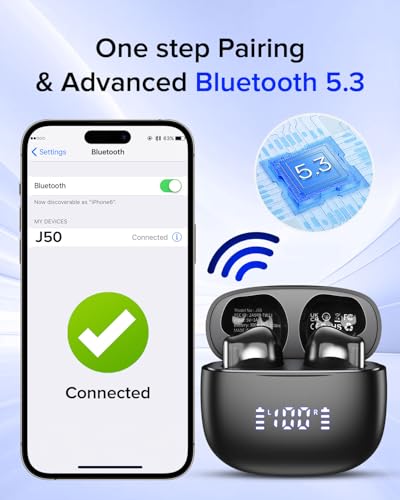
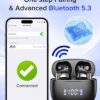
YISAMT publishes Bluetooth 5.3 and describes faster transmission, stronger interference resistance, longer range and low latency. Bluetooth 5.3 does improve connection maintenance and power draw over earlier versions and lays groundwork for LE Audio. It does not improve sound quality on its own, and no latency figure in milliseconds appears anywhere, so the low latency claim is unquantified.
High fidelity without a codec named
The title says Hi-Fi Stereo and the second bullet promises high fidelity stereo with a high resolution call experience. No codec is named in this listing. Without one, SBC is the only codec a buyer can count on, since every Bluetooth audio device supports it, and SBC does not carry high resolution audio. A high fidelity claim over Bluetooth requires a specific codec such as aptX Adaptive or LDAC and requires the phone to support the same codec independently. On this specification the claim is unsupported. Buyers who want codec support stated openly should compare the EarFun Air Pro 3 review. Multipoint pairing, wear detection and app support are all absent from this listing.
Battery: eight hours in the ear, forty two with the case
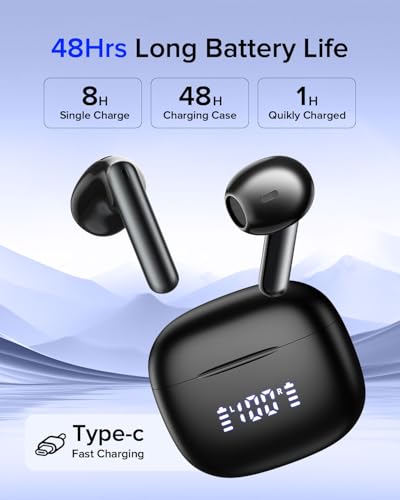
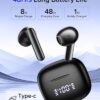
The numbers here are clean, which is worth crediting. The structured Battery Life field records 8 hours, correctly as bud runtime, and the title gives 42 hours as the total including case recharges. Eight hours is what a single session gets; 42 hours describes the package away from a charger with the case starting full.
Both should be read as best case ratings measured at moderate volume, and there is no cancellation circuitry here to drain the reserve further. Charging time is recorded as 1 hour, which is quick. The case carries a three part LED readout, with left and right light bars showing each bud and a central numeric display showing the case, which is more informative than the usual three dot indicator. The included components list mentions a wireless charging case, though no wireless charging is described in the bullets, so confirm whether Qi charging is actually supported.
Fit, controls and the IPX7 claim
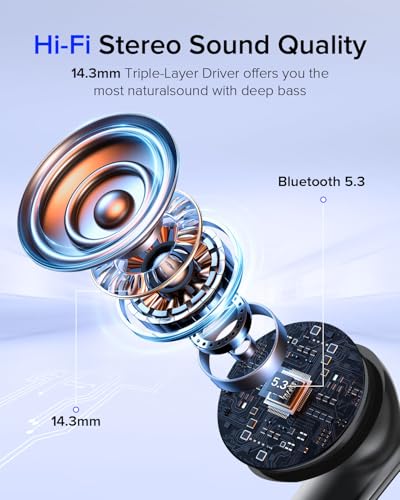
The driver is quoted at 14.3 mm with a composite diaphragm, which is large for an earbud of this size. On a sealing design that would suggest real bass capability; on a semi in ear design much of it will be lost to the open ear, which is precisely why the fit question matters. Frequency range is the standard 20 Hz to 20,000 Hz span, which conveys nothing about tuning, and no impedance or sensitivity figure is published.
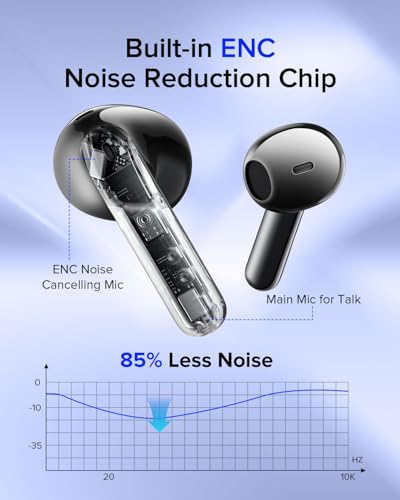
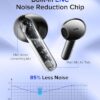
Controls are touch based, and YISAMT makes a specific claim worth noting: that the touch design reduces the probability of accidental activation. Most touch panels do the opposite, so if that holds it is a real advantage, but no mechanism is described. The documented gestures cover track skip and play and pause. The four microphone ENC system processes the outbound call signal so the caller hears the speaker clearly, and does nothing for what the wearer hears.
The water rating is IPX7 in both the title and the fifth bullet, while the structured Water Resistance Level field says only Waterproof with no code. The bullet also attributes the protection to an ultra light nano coating, which is a moisture resistant treatment applied to internal components rather than a sealed enclosure, and that is a weaker mechanism than a true IPX7 gasket seal implies. A buyer intending immersion should get the rating and the mechanism confirmed in writing. Even a genuine IPX7 covers fresh water under laboratory conditions only, never seawater, chlorinated pools or high pressure spray, and it degrades with age.
Where else to look
The listing publishes a 4.7 out of 5 average across 287 ratings and an Amazon rank of 25,731st in Electronics, figures we attribute rather than verify. Buyers who want a comfortable long wear bud whose fit type is stated unambiguously should compare the options in the earbud headphone listings, and those who want a sealing design with a published tip count and a matching noise control field should look at the Soundcore Life P2 Mini review.
Who should buy it and who should not
Buy the YISAMT J50 if you want a comfortable long wear bud for an office or a walk, if 8 hours per charge suits you, and if the informative case display appeals. Skip it if you need isolation or bass weight, because a semi in ear fit cannot deliver either, and skip it if you need a verified immersion rating. Before ordering, ask the seller two questions: whether the fit is semi in ear or sealing in ear, and whether the case supports wireless charging.