
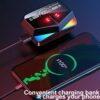
Description
Before anything else, note the brand name. The listing spells it “UItrapods Pro”, and the first character is a capital letter I, not a lowercase L. There is no company called Ultrapods behind this in any meaningful sense: the manufacturer field reads “limin”, the item model number is RE-M28-C3, and the Model Name field reads “6IG-00001”, which is a part number format inherited from an entirely different product line. Amazon lists it as ASIN B0DYNPJZGK, first available in February 2025, with a 2.5 star average across 8 ratings and a rank of 3,867th in Earbud and In-Ear Headphones. Eight ratings is too small a sample to mean much, but 2.5 stars is the lowest band Amazon commonly shows, and it deserves stating plainly rather than burying.
The listener this is pitched at
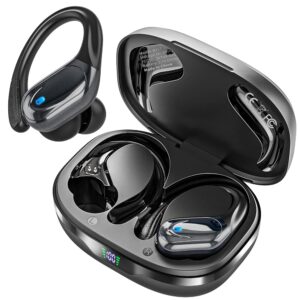
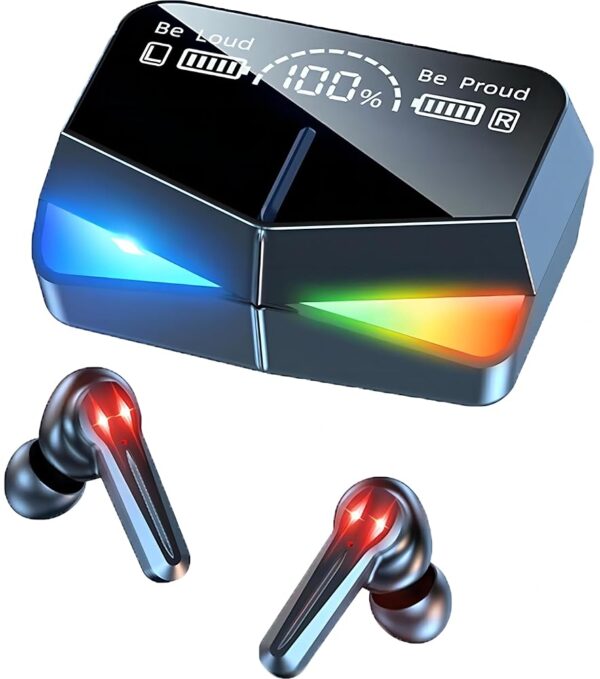
Every part of the copy points at mobile gaming. The buds carry LED lighting, the case is finished in reflective material and doubles as a mirror, and the description repeatedly talks about game modes, positional audio and hearing footsteps. The buyer is someone playing shooters or racing games on a phone or tablet who wants a visual look to match, and who values latency over fidelity.
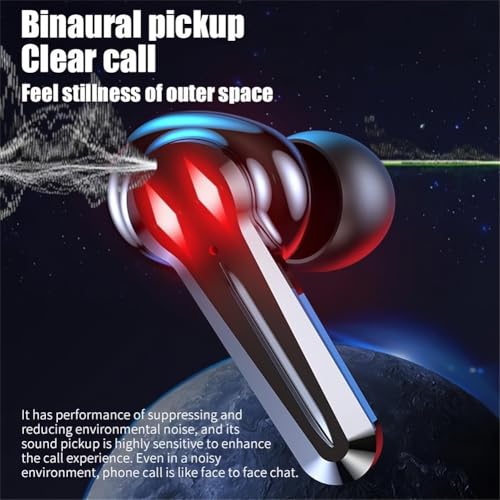
It is not aimed at a commuter, a runner or anyone taking work calls. There is no noise cancellation claim, no transparency mode, no wear detection and no companion app anywhere in the specification. If the gaming angle is what draws you, the GPods RGB lighting earbuds chase the same look, and the JBL Quantum TWS gaming earbuds approach it from a brand that publishes a low latency mode specification.
Connection, latency and the codec question
The listing states Bluetooth 5.3 and quotes 65 milliseconds of latency in game mode. Sixty five milliseconds is a plausible figure for a dedicated low latency mode and is low enough that most players will not notice audio lag on casual titles. It is worth saying that no measurement method is given for that number, and latency depends on the phone as much as the buds.
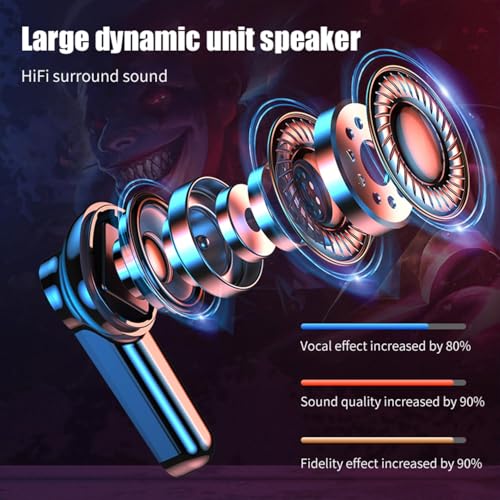
The larger problem is the audio claim. The description says the set provides “dual-mode dual-decoded high-resolution audio”. No codec is named anywhere in the listing. Not SBC, not AAC, not aptX, not aptX Adaptive, not LDAC. A high resolution claim is meaningless without a codec, because the codec is what carries the extra data, and both the phone and the earbuds have to support the same one. On the published specification this claim is unsupported, and the safe assumption is SBC, the baseline every Bluetooth device speaks.
What Bluetooth 5.3 actually changes
Version 5.3 improves connection stability, reduces power draw and adds the groundwork for LE Audio. It does not raise audio quality on its own, and it is not a range specification. The listing also describes an independent dual host arrangement, meaning either bud connects on its own rather than one relaying to the other. That is genuinely useful, and it is the reason single bud use works here. Multipoint pairing to two source devices at once is not mentioned, so do not assume it exists.
Battery: two numbers, and the one that matters
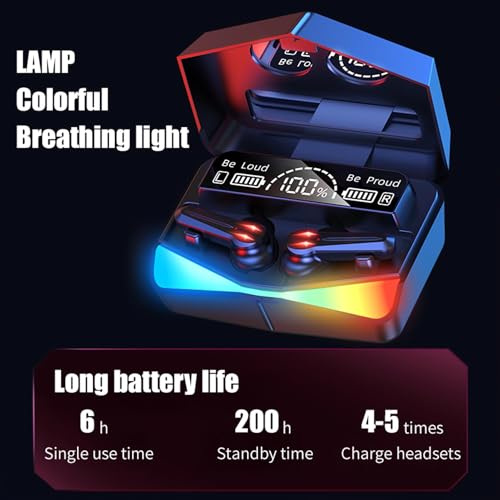
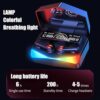
This listing is better than most on battery because it gives both figures. The buds are rated at 4 to 5 hours of listening on a single charge and 4 hours of talk time. The case brings the total to a stated 24 to 30 hours. The number to plan around is the 4 to 5 hour bud figure, because that is how long you can play before returning them to the case. The 24 to 30 hour figure describes how long the whole system runs between wall charges.
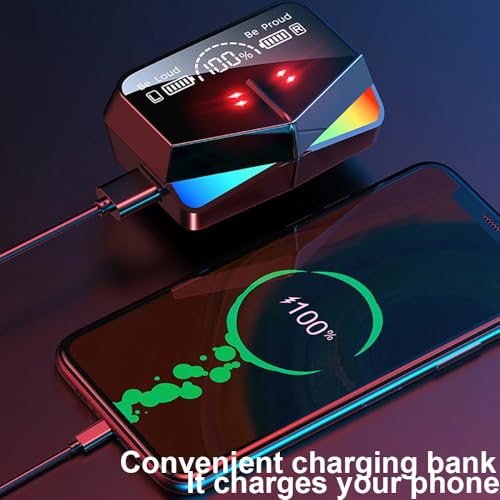
Both are best case figures, measured at moderate volume. LED lighting on the buds is an active drain, and the listing does not say whether the quoted playtime assumes the lights on or off. That is a real gap given that lighting is the headline feature. The case also supports reverse charging and carries a separate LED display for left bud, right bud and case charge, which is a convenience the price tier does not always include. For a set that publishes its runtime without a lighting variable attached, the TOZO G1 gaming earbuds are the cleaner comparison.
Fit, controls and the water rating
The listing states IPX7. That is an immersion rating, covering submersion in fresh water to one meter for thirty minutes under laboratory conditions, and it is a stronger claim than the IPX4 splash rating most earbuds at this price carry. It does not cover seawater, pool chemicals or pressurized water, and IP seals degrade with age and heat. The copy pairs the IPX7 claim with a list of activities including cycling, and that recommendation should be rejected. These are sealed in ear buds with no transparency mode, so they remove your awareness of traffic. Do not ride a bike or run on a road in them.
Contact surfaces are soft silicone and the controls are touch based, which the copy calls multi function without saying what the gestures are. The number of ear tip sizes in the box is not published, and tips are the single specification that decides whether an in ear set sounds full or thin, because bass disappears without a seal. Included components are listed only as “Cable”. Assume one fitted pair of tips and plan to buy replacements if the fit is wrong.
The gaps in the listing, and what to compare against
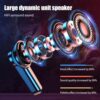
Beyond the missing codec, there is no driver size given in millimeters. The copy says the driver area is “1.9 times larger than the normal driving area”, which is a comparison against an undefined baseline and carries no information. There is no frequency response, no impedance, no microphone count and no ANC specification. The package weight is 3.2 ounces, which is the shipping weight, not the weight of a bud. The Model Name field reading “6IG-00001” is import noise and should be ignored entirely.
There is also a naming problem worth flagging for anyone searching. A second listing on this site carries the same “UItrapods Pro” brand string under a different model, RAZ-M19-A3, so confirm the model number on the box matches what you ordered. If you want a set from a manufacturer with a published tuning philosophy rather than a marketing description, the Moondrop Space Travel true wireless earphones sit in a similar price band. The wider shortlist lives in the true wireless earbuds section.
Who should buy this, and who should not
Buy it if the LED lighting and the mirrored case are the point, you play mobile games and want a stated low latency mode, and you accept 4 to 5 hours of bud runtime. The IPX7 rating and the reverse charging case are real features at this price.
Do not buy it if you want confirmed audio quality, because the high resolution claim is not backed by a named codec. Do not buy it for cycling, road running or anything requiring traffic awareness. And weigh the 2.5 star average from 8 ratings carefully: it is a small sample, but it is a poor one, and nothing in the specification explains it away. Before ordering, confirm the ear tip count, whether the quoted playtime assumes the LEDs are on, and which model number you are receiving.