

Description
Who this one is for
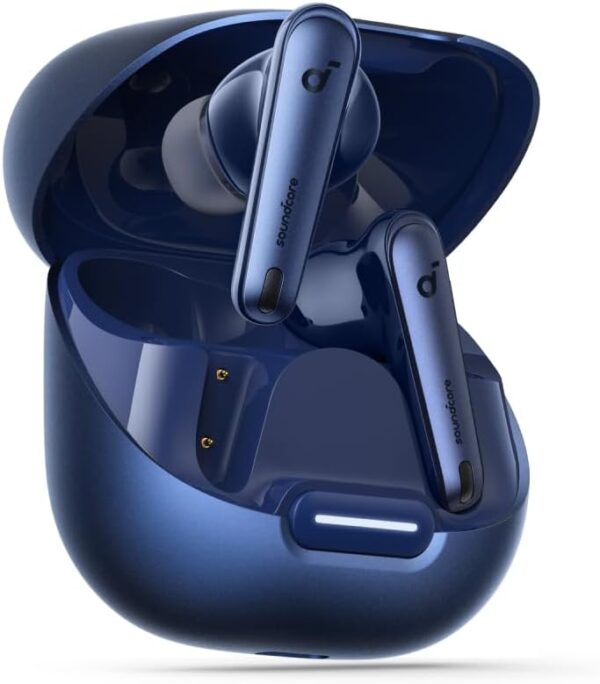
The Soundcore Liberty 4 NC is Anker’s mid range noise cancelling earbud, and it is the most completely specified product in this part of the catalog by a wide margin. It suits a commuter or a frequent traveler who wants meaningful cancellation on a train or a plane, an Android owner who can actually use the higher quality codec on offer, and anyone who wants to shape the sound through an app rather than accept the factory tuning. It is a weaker fit for gym use than its marketing suggests, for reasons covered in the water rating section below.
The published rating is 4.2 out of 5 across 17,013 ratings, and the listing places it 361st in the earbud and in-ear headphone category. It first appeared in June 2023 under model code A3947. One catalog note before going further: a second listing for the same A3947 model exists under a different product code, and our write up of the other Liberty 4 NC listing is worth reading alongside this one, because duplicate listings for the same hardware do not always carry identical published figures.
Connection, and the one product here that names its codec
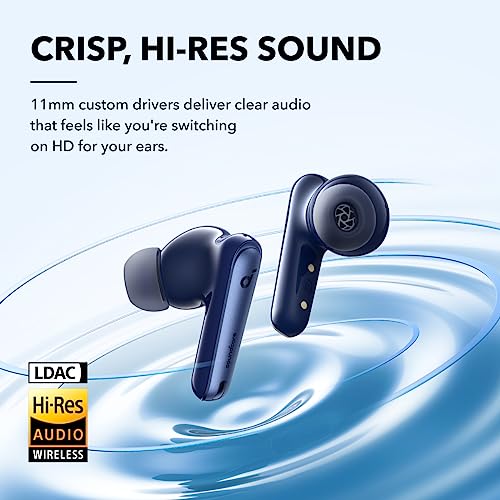
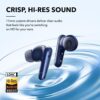
The specification gives Bluetooth 5.3, and unlike almost everything else at this level Anker actually names the codec: LDAC. That single fact changes what can honestly be said about the audio. LDAC is a high bitrate codec developed by Sony, and Anker’s claim that it transfers three times more data than regular Bluetooth is a comparison against SBC, the baseline every Bluetooth device supports.
The condition attached to that claim matters as much as the claim itself. LDAC only works if the source device supports it too. Most Android phones running Android 8 or later include LDAC, so an Android owner can generally use it. Apple devices do not support LDAC at all, so on an iPhone or iPad these earbuds will fall back to AAC or SBC and the high resolution part of the specification simply does not apply. If you are an iPhone owner, buy these for the cancellation and the app, not for the codec. Even on a supporting Android phone, LDAC’s highest bitrate needs a strong link to sustain, and the connection will step down in congested radio environments.
Multipoint and wear detection, both confirmed
Anker states multipoint connection explicitly, so the earbuds can hold two devices at once and switch between them. It also states auto play and pause on wear, meaning the buds detect when they are removed. Both features are named rather than assumed, which is more than most listings in this catalog manage, and both are the sort of thing that genuinely changes daily use.
Noise cancellation, and what the 98.5 percent figure means
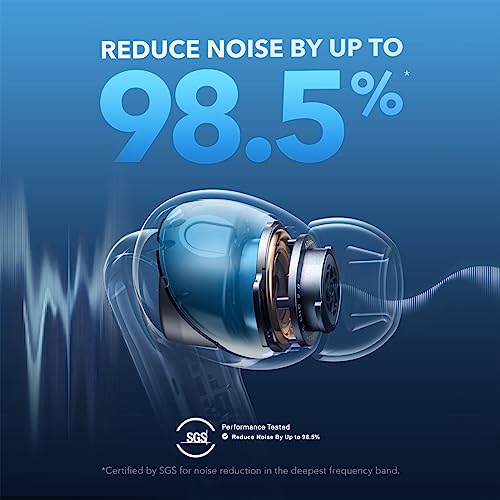
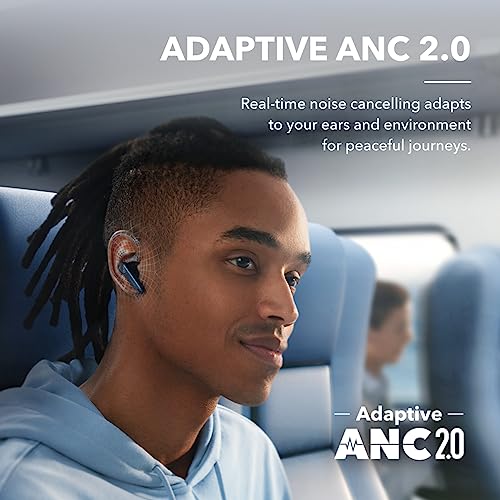
Noise Control reads Active Noise Cancellation, and Anker describes Adaptive ANC 2.0, which uses an in-ear sensor to adjust cancellation to your ear canal and to the surrounding environment in real time. The headline claim is up to 98.5 percent noise reduction. That figure is Anker’s own, no measurement standard is named alongside it, and no test conditions are given, so treat it as a marketing number rather than a specification.
What is true of all active cancellation is worth stating instead. ANC works well on constant low frequency sound, which means engine drone, cabin noise, air conditioning and road rumble. It works poorly on speech, sudden noises and higher frequencies, so an office conversation or a crying child will still come through. No earbud makes an environment silent, and any product marketed as though it does is overselling. The 6 microphone array with beamforming handles the call side, which is a separate system from the cancellation.
Battery, and a specification field that matches nothing
Anker’s bullets give the clearest battery breakdown of any listing in this group, and they give it twice, once for each mode. With cancellation off, 10 hours from the buds and up to 50 hours with the case. With cancellation on, 8 hours from the buds and up to 40 hours with the case. That is exactly the disclosure a buyer needs, because ANC costs runtime and most listings hide it.
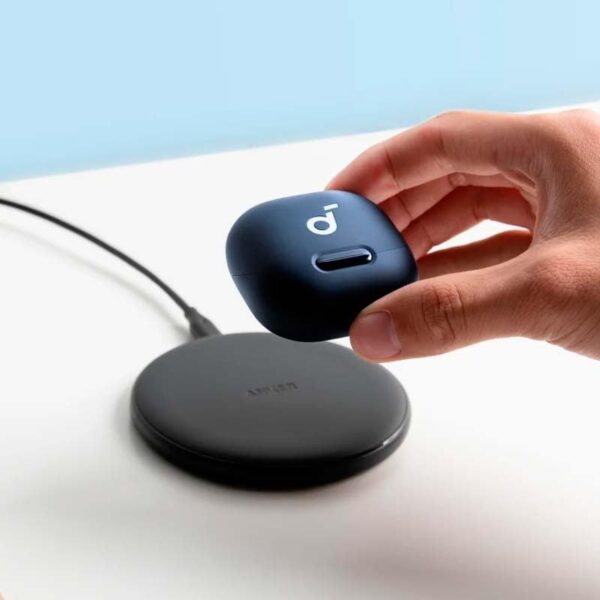
The Battery Life field in the specification table, meanwhile, says 30 hours. That number corresponds to nothing in the bullets, in either mode, with or without the case. It should be ignored. The number to plan around is 8 hours with cancellation running, which is what most buyers of an ANC earbud will actually be doing. The case supports wireless charging as well as USB-C.
Fit, seal, controls and a water rating that is not what the field says
Four ear tip sizes ship in the box, XS, S, M and L, with M pre-installed. That is a genuinely useful count and it is published clearly in the included components field. Seal matters here more than usual, because a poor seal costs both bass and cancellation performance: the in-ear sensor is calibrating against a leak it cannot fix. The driver is an 11mm dynamic unit, impedance is 10 ohms, and the weight figures of 0.1 pounds and 1.6 ounces agree with each other.
The water rating needs correcting. The Water Resistance Level field says Waterproof. The feature bullet says IPX4 water resistance, and describes it accurately as protection against a sudden downpour or an accidental spill. IPX4 is splash resistance from any direction. It covers sweat and rain. It does not cover immersion, it does not cover a rinse under a tap, and it is not waterproof. The specification field is simply wrong, and anyone buying these for heavy gym use on the strength of that word should know the actual rating is the modest one. The X in IPX4 also means no dust testing was performed.
Sound customization runs through the Soundcore app, which offers HearID 2.0 for building a personal profile plus a fully adjustable equalizer and 22 presets. One range figure should be discounted: Bluetooth Range reads 100 meters, which is not a plausible real world figure for an earbud and does not match the 10 to 15 meters quoted across comparable products.
What else to consider
If you want more from the same family, the Soundcore Liberty 4 Pro sits above this model and the Soundcore Space A40 approaches the same brief differently. For the reference points at the top of the cancellation market, the Bose QuietComfort Ultra Earbuds and the Sony WF-1000XM5, which also carries LDAC are the comparisons worth making before committing. Browse the wider true wireless earbud section for the rest of the field.
Who should buy it, who should not
Buy it if you are on Android and want LDAC, if you commute or fly and want real cancellation with a published battery cost, and if multipoint and app based tuning matter to you. Skip it if you are on an iPhone and were buying specifically for the high resolution claim, because LDAC will not engage. Skip it if you need more than splash resistance, because IPX4 is the honest rating regardless of what the specification field says, and skip it if you expected the 98.5 percent figure to mean silence, because no cancellation system delivers that.
![SAMSUNG Galaxy Buds 3 Pro AI True Wireless Bluetooth Earbuds, Noise Cancelling, Sound Optimization, Redesigned Comfort Fit, Silver [US Version, Amazon Exclusive, 2Yr Warranty]](https://wirelessemporium.com/wp-content/uploads/2025/04/samsung-galaxy-buds-3-pro-ai-true-wireless-bluetooth-earbuds-noise-300x300.jpg "SAMSUNG Galaxy Buds 3 Pro AI True Wireless Bluetooth Earbuds, Noise Cancelling, Sound Optimization, Redesigned Comfort Fit, Silver [US Version, Amazon Exclusive, 2Yr Warranty]")