


Description
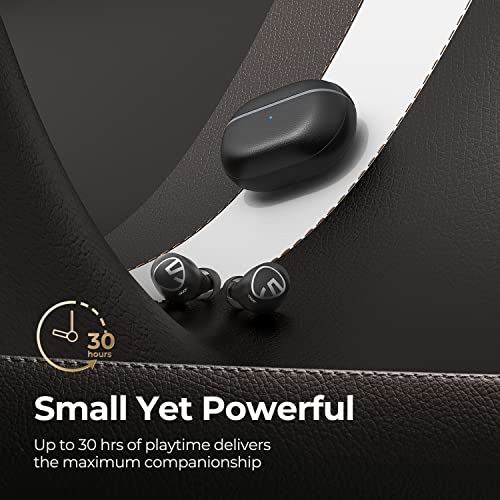
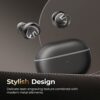
The SoundPEATS Free2 Classic has been on sale since April 21, 2021, which in this category makes it an antique, and it is the rare budget earbud with enough history behind it to be judged on more than launch copy. At the point this data was captured the listing carried 2,638 ratings averaging 4.3 out of 5, ranked 3,899th in Electronics and 532nd in Earbud and In-Ear Headphones. The specification is modest and mostly honest: a 6mm dynamic driver in each bud, Bluetooth 5.1, 8 hours from a single bud charge, roughly 30 hours once the case is counted, USB-C charging, touch controls, and a single or twin earbud mode. This is a new unit rather than a renewed or refurbished one.
The listener this suits
This is a commuter and desk earbud for someone who wants the basics done competently and does not want to pay for noise cancellation. The specification table is explicit that noise control here is sound isolation, meaning passive blocking from the tip alone, and there is no active noise cancellation anywhere on this product. That is a legitimate design choice at this price rather than an omission to be apologized for, but it sets expectations. On a train or a plane, engine drone will come through, and the only tool you have against it is a good seal.
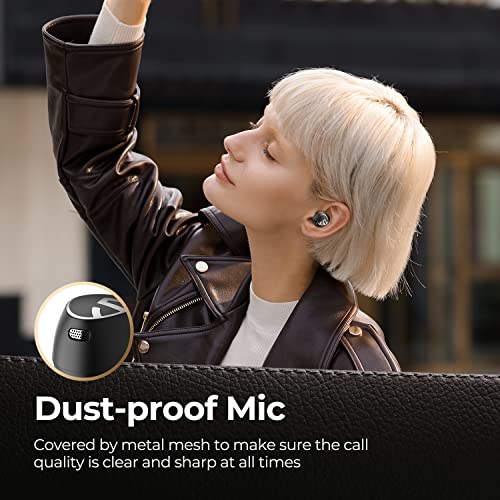
The single and twin mode deserves more attention than it usually gets. Being able to use one bud alone is genuinely useful for calls, for a workday where you need one ear on the room, and for stretching total listening time across two buds. It also means a set of these can serve as a basic office headset, which is where the dust proof metal mesh over the microphone earns its place.
Connection: Bluetooth 5.1 and the codec silence
SoundPEATS states Bluetooth 5.1 here, and being clear about what that means matters more than the number looking dated. Bluetooth 5.1 handles pairing, connection stability and power. It does not set audio quality. A 5.1 radio and a 5.3 radio carrying the same codec at the same bitrate deliver the same audio. What has moved on since 5.1 is LE Audio support and some multipoint behavior, and neither is claimed here.
What is not published
No codec is named anywhere on this listing. SBC is the universal baseline and is what you should assume you are getting. AAC is not stated, which matters if you are on an iPhone, and aptX and LDAC are not stated either. Both of those require the phone and the earbuds to support them before they change anything, and most iPhones support neither. Multipoint pairing is not mentioned, so plan on one device at a time. There is no companion app described, no equalizer, no wear detection, no transparency mode and no firmware update path in the feature copy, although the listing’s own support notes do reference firmware updates, which is a contradiction we are naming rather than resolving. The specification table also lists “Frequency Response = 20 KHz” as a single value, which is not a response at all, while a separate field gives the full 20Hz to 20KHz range. Read the range, ignore the stray number.
Battery: eight hours in the bud, thirty in total
This listing is unusually clear about the distinction most sellers blur. SoundPEATS quotes 8 hours of listening from a single bud charge, and says the case holds about 2.8 further recharges, which is how the headline 30 hour figure is built. The specification table then muddies its own work by listing “Battery Life = 30 Hours”, which is the case total rather than the bud runtime, and by giving three different charge times: 1.5 hours in one field, 2 hours for the case in another, and “about 1 to 2 hours” in the feature copy. Those are close enough not to matter in practice, but they show how little quality control sits behind these specification tables.
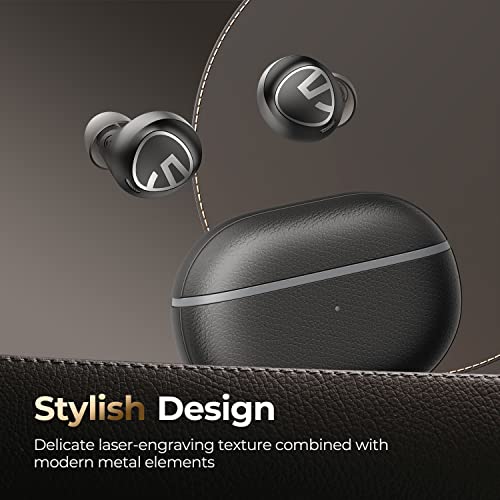
Eight hours per bud is the number that governs your day, and like every quoted playtime it assumes moderate volume. There is no active noise cancellation here to drain the cell, which is one reason the figure is achievable. The case is quoted at 37.5 grams in a leather effect finish and charges over USB-C, which by 2021 standards was not universal and is now the expectation.
Fit, seal, controls and the water rating
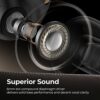
Each bud is quoted at 0.14 ounces, roughly 4 grams, and three sizes of soft silicone tip are supplied. Three sizes is the specification that matters most on a sealed earbud, because seal decides perceived bass. The 6mm driver here is small by current standards, where 10mm to 13mm is common, and a small driver with a poor seal will sound thin in a way no equalizer can rescue. Work through all three tip sizes before forming a view, and consider aftermarket foam tips if none of them holds.
Controls are touch based on both buds, covering volume, track skip, calls and the voice assistant, which is a fuller control set than many budget earbuds offer. The specification table confuses itself again by listing “Headphones Jack = USB-C”, which describes the charging port rather than any audio jack, and “Cable Feature = Detachable” on a product that has no cable at all.
The water rating is IPX5 according to the feature copy, while the specification table says only “Water Resistant” with no code. IPX5 covers a low pressure water jet, which in practice means sweat and rain. It is not an immersion rating, these should not be swum in or submerged, and no IP rating covers seawater or pressurized water. Ratings also degrade with age, and this is a design that has been on sale for years, so a unit bought today has newer seals than one bought in 2021 but the same tolerance for abuse.
One safety note is worth surfacing because SoundPEATS put it on the listing themselves: their published guidance says that if the earbuds become hot during use you should stop using them immediately and contact the seller. That is standard lithium cell advice, and it is more than most sellers in this catalog bother to publish, but it is worth reading rather than skipping.
What to compare it against
If you like the SoundPEATS approach but want a larger driver and a longer case total, our write up of the SoundPEATS Q30 HD, an earlier neckband style set from the same brand covers the other end of their range. Among budget rivals, the TOZO T10, which pairs a similar price with a published immersion rating is the usual alternative, and the Soundcore Life A1, which adds an app and an equalizer at a similar level is worth a look if tuning control matters. For a smaller, lighter case, the JLab JBuds Mini, built around portability rather than runtime takes the opposite approach. The rest of our sealed in ear coverage is under earbud headphones, and the wider format sits under wireless earbuds.
Who should buy it and who should not
Buy the Free2 Classic if you want a long serving, well reviewed budget set with a genuinely useful 8 hour bud runtime, single earbud mode and USB-C, and you do not need noise cancellation. Do not buy it if you need active noise cancellation for a commute, if you need AAC or a higher bitrate codec confirmed in writing, if you want an app and an equalizer, or if a 6mm driver with three tip sizes does not seal in your ear, because nothing downstream will fix that.