

Description
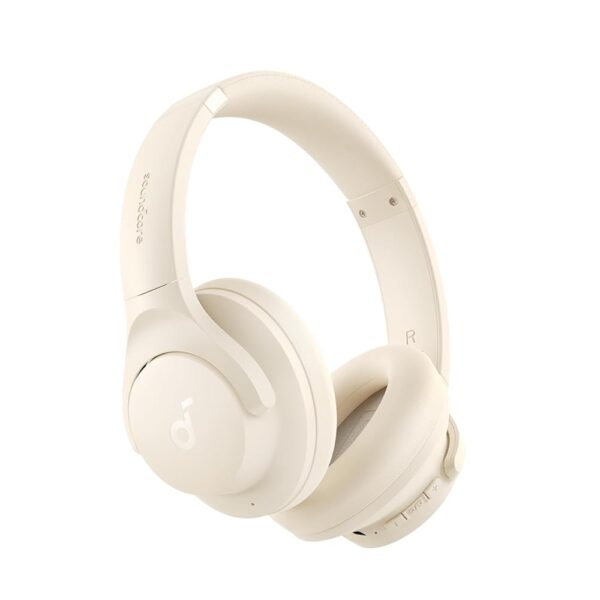
The Soundcore Q20i, model A3004 from Anker, is an over-ear hybrid noise cancelling Bluetooth headphone in white, available since June 15, 2023. It carries a 4.6 star average across 22,914 ratings and is ranked 422nd in Electronics and 23rd in Over-Ear Headphones in the captured listing data, which is one of the stronger positions in this catalog. On features it is unusually well equipped for its class: transparency mode, dual device connection, an app with 22 equalizer presets, and a battery split the manufacturer actually publishes.
The listener this is built for
Anker names commuting, traveling and working as the intended uses, and the feature set matches all three. The three-mode switch between cancellation, normal and transparency is the core interaction, and it is the reason this suits someone moving between a train, a desk and a street rather than staying in one environment. The build is fabric rather than leather, with over-ear cups and a listed weight of 0.54 pounds, or 8.6 ounces, which is roughly 244 grams.
It is not a gym headphone. The record states “Water Resistance Level = Not Water Resistant” plainly, with no IP code, so there is no protection against sweat or rain and Anker does not pretend otherwise.
One point deserves care. Anker’s transparency bullet suggests using the mode when “crossing the road.” Transparency does pass ambient sound through and is the correct setting if you are wearing the headphone outdoors, but this is still a closed over-ear design covering both ears, and a transparency mode is not the same as having your ears uncovered. Treat it as a tool for hearing an announcement or a conversation, not as a licence to wear a cancelling headphone in traffic.
Connection: dual device switching is stated, the codec is not
Bluetooth 5.0 is listed with a 10 meter range, and Anker states the headphone connects to two devices simultaneously with automatic switching between them: “whether you’re working on your laptop, or need to take a phone call, audio from your Bluetooth headphones will automatically play from the device you need to hear from.” That is multipoint, described properly, and it is one of the most useful features on this page.
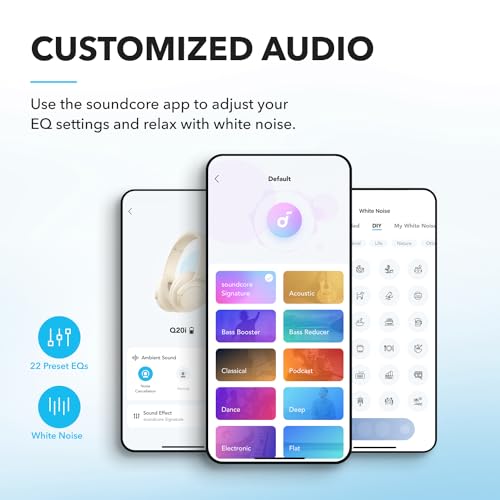
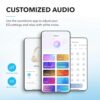
The app is the other. Anker lists a customizable equalizer with 22 presets or manual adjustment, mode switching between cancellation, normal and transparency, and a white noise function. An app that actually changes the sound is worth more than most of the audio adjectives on a listing, though it does mean the product is partly dependent on software support continuing.
The Hi-Res claim here is correctly scoped
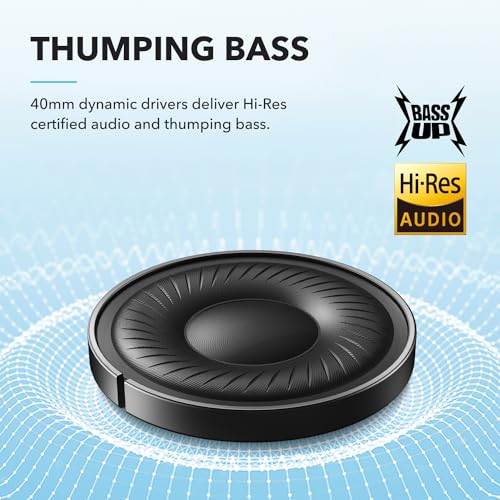
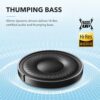
This is worth noting because so few listings get it right. The product title carries “Hi-Res Audio,” but the feature bullet states the actual condition: “Compatible with Hi-Res certified audio via the AUX cable for more detail.” The claim is attached to the analog wired connection, not to Bluetooth. That is the honest framing, and it means what you would expect: over Bluetooth there is no high resolution path being claimed here.
Over the wireless link, no codec is named anywhere in the record. There is no mention of SBC, AAC, aptX or LDAC, so SBC is the only baseline you can assume. And there is a complication with the wired route as well: the included components field lists only “soundcore Q20i headphone.” No AUX cable and no charging cable appear in that list, even though the Hi-Res claim depends on an AUX cable existing. Confirm what is actually in the box before you rely on the wired path.
Battery: three different numbers in one record
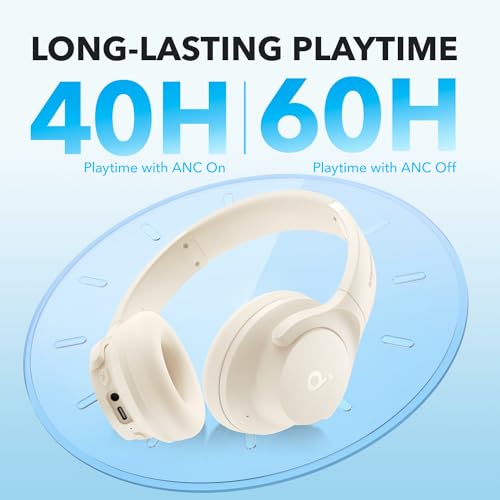
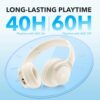
Anker’s bullet gives the split most listings avoid: 40 hours with cancellation on, 60 hours in normal mode, with a fast charge of 5 minutes returning an extra 4 hours of playtime and a full charge quoted at 2 hours. That is a clear and useful disclosure.
The specification block then says “Battery Life = 45 Hours,” which matches neither figure. Three numbers now exist in one record for one product. We are naming the contradiction rather than picking a winner. If cancellation is going to be on most of the time, plan around the lowest of the three and treat 40 hours as the working figure.
Two further battery-related fields describe hardware this product does not have. “Carrying Case Battery Charging Time = 5 Minutes,” “Carrying Case Weight = 0.1 Pounds” and “Carrying Case Color = White” all describe a charging case, which belongs to true wireless earbuds rather than to a headband headphone, and no case appears in the included components list at all. Read them as import artifacts.
Fit, cancellation and the fields that are broken
The Q20i is an over-ear design in breathable fabric with an impedance of 16 ohms, easy for any phone to drive over a cable. Over-ear cups seal around the ear rather than pressing on it, which is why this shape isolates low frequency noise better than an on-ear design before any electronics are involved. Beyond the fabric material and the weight, the listing publishes nothing about cushion thickness, clamping force or headband adjustment, so there is little else to evaluate on fit.
On cancellation, Anker describes a hybrid arrangement of two internal and two external microphones and claims they “effectively reduce up to 90% of” external noise such as planes and car engines. That is Anker’s own figure, expressed as a percentage rather than a decibel measurement, with no independent test standard named, so it cannot be compared with any competitor’s number. The examples Anker gives, planes and car engines, are the accurate part: cancellation works on constant low frequency sound and much less well on speech. No headphone makes a room silent.
Several specification fields do not survive scrutiny. “Audio Driver Size = 4E+1 Millimeters” is 40 millimeters written in scientific notation, an import artifact rather than something anyone typed deliberately. “Frequency Range = [IMPLIED] 20 Hz – 20,000 Hz” carries a literal placeholder token, which means the figure was never actually published and was filled in by whatever generated the record. “Theme = Helmets” and “Number of Power Levels = 20” are inherited from unrelated categories. And “Cable Feature = Without Cable” sits beside a bullet that depends on an AUX cable.
What is missing, and where else to look
Not published: any Bluetooth codec, sensitivity, cushion material detail, cancellation attenuation in decibels, charging port type, microphone count for calls as opposed to for cancellation, or wear detection. The “BassUp technology” and “thumping beats” language is brand copy rather than measurement.
Within the same range, the older Soundcore Life Q20 publishes the same 60 and 40 hour battery split but no transparency mode, no multipoint and no app, so the Q20i is the meaningful upgrade rather than a rebadge. The Soundcore A3035 sits above both. Outside the brand, the JLab JBuds Lux ANC is the closest competitor on feature count and the Sony WH-CH720N is the mainstream-brand alternative. Wider options are in the wireless headphones section.
A note on volume. Cancellation genuinely helps hearing safety, because it removes the background noise that otherwise makes people raise the volume on a train. Use it that way: switch cancellation on, then bring the level down. The app’s equalizer also makes it easy to add bass rather than volume when something sounds thin, which is the better fix.
Who should buy it
Buy the Q20i if you want cancellation, a transparency mode, two-device switching and a real equalizer app in one over-ear headphone, and you can live with a fabric build and no water rating. Skip it if you need a named codec, a battery figure the listing does not contradict three ways, or certainty about what ships in the box, because the included components list here does not mention a single cable.