
![Samsung Galaxy Buds Pro 2 [2022] (SM-R510NZAALTA) - (Gray)](https://wirelessemporium.com/wp-content/uploads/2025/04/samsung-galaxy-buds-pro-2-2022-sm-r510nzaalta-gray-600x600.jpg "Samsung Galaxy Buds Pro 2 [2022] (SM-R510NZAALTA) - (Gray)")
![Samsung Galaxy Buds Pro 2 [2022] (SM-R510NZAALTA) - (Gray)](https://wirelessemporium.com/wp-content/uploads/2025/04/samsung-galaxy-buds-pro-2-2022-sm-r510nzaalta-gray-100x100.jpg "Samsung Galaxy Buds Pro 2 [2022] (SM-R510NZAALTA) - (Gray)")
Description
A flagship product on a listing with almost no specification
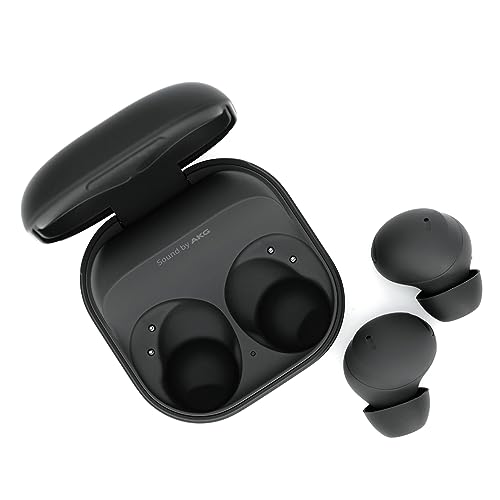
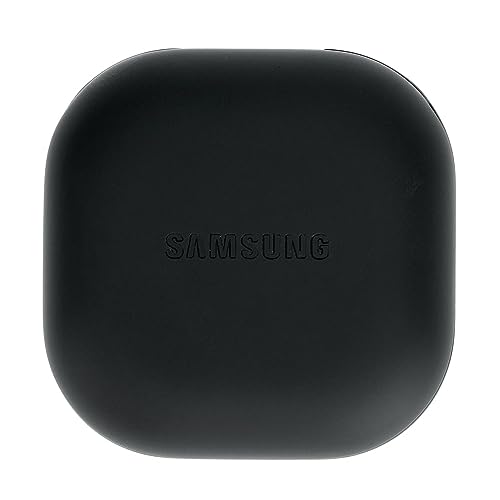
The Samsung Galaxy Buds2 Pro is a sealed in-ear true wireless earbud with active noise cancellation, aimed at Galaxy phone owners and sold as the top of Samsung’s earbud range. Amazon first carried this particular listing in August 2022, and it has gathered roughly 7,981 ratings at a 4.4 star average, ranking 989th in Electronics and 158th among earbud and in-ear headphones.
What makes this page worth writing about is what is missing from it. There are no feature bullets at all. There is no battery figure anywhere. There is no Bluetooth version, no codec, no IP rating and no ear tip count. What exists is a block of marketing description and a specification table containing about a dozen usable fields, several of which are wrong. For a flagship product this is one of the thinnest listings in the catalog, and every claim below has to be read against that.
The name itself is confused. The Amazon title says “Galaxy Buds Pro 2,” while Samsung’s own product is the Galaxy Buds2 Pro, and the two names have been used interchangeably across listings for different generations of hardware. The model fields contradict each other too, giving SM-R510NZAALTA in one place and SM-R510R in another. Match the full model code against Samsung’s own documentation before ordering.
The Hi-Fi claim, and why it needs a codec attached
The description promises “Hi-Fi sound quality,” “studio quality sound” and the ability to “feel every note like you’re there.” No Bluetooth audio codec is named anywhere on this listing. That matters more here than on any budget product, because high resolution audio over Bluetooth is entirely a codec question and it is conditional on the phone as much as the earbuds.
SBC is the baseline every Bluetooth device supports and is present by definition. AAC is what Apple devices use. The codecs actually marketed for high resolution transmission are LDAC, the aptX family and, in Samsung’s case, its own proprietary codec, and every one of them requires the source device to support the same codec before it does anything at all. A pair of earbuds cannot deliver high resolution audio to a phone that cannot send it. Most iPhones support neither aptX nor LDAC.
Because no codec is named here, the Hi-Fi claim is unsupported by the published specification, and this review will not repeat it as fact. If high resolution playback is your reason for buying, confirm which codec these support and confirm that your specific phone and its software version support the same one. The claim is also footnoted with asterisks in Samsung’s description text, and the footnotes themselves are not included on the page, so the conditions attached to it are unreadable.
Noise cancellation: what it does and what it cannot do
The specification table records the noise control field as “Active Noise Cancellation,” and the description calls it “Intelligent Active Noise Cancellation” that “quiets even the loudest outside sounds.” No decibel reduction figure is published and no test standard is named, so there is nothing here to verify.
What is worth knowing applies to every cancelling earbud. Active cancellation works well against constant low frequency noise: engine drone, cabin rumble, ventilation, road noise. It works poorly against speech, sudden sounds and anything with sharp transients, which is why an office full of conversation stays audible while a train carriage goes quiet. No earbud makes an environment silent, and a claim to quiet “even the loudest outside sounds” describes a feeling rather than a measurement.
The description also promises “enhanced 360 audio,” which is Samsung’s spatial audio processing. Like the Hi-Fi claim it carries footnote markers whose footnotes are absent, and in practice features of that kind are usually conditional on a Galaxy phone running particular software. Treat anything on this page marked with an asterisk as conditional on hardware the listing does not identify.
No water rating, and no battery figure
The description says the Buds2 Pro offer “moisture resistance that stands up to rain,” and the specification table records the water resistance level as “Water Resistant.” No IP code appears anywhere. Not IPX4, not IPX7, nothing.
A phrase without a code is not a rating. There is no way to tell from this listing whether these survive a hard workout or a downpour, and a flagship product should publish a code. Even where one exists it never covers seawater or high pressure water, and IP protection degrades as seals and port covers age. If water resistance is part of your decision, confirm the code with Samsung directly rather than relying on this page.
The battery gap is just as serious. Nothing on this listing states how long the earbuds run on a charge, how long the case extends that, or how noise cancellation affects either. Those are the three numbers that decide whether a pair of earbuds fits your day, and none of them is here. As a general rule in this category, a cancelling earbud runs meaningfully shorter with cancellation engaged than with it off, and any single headline figure quoted elsewhere will be the combined total including the case rather than a single charge. Get the bud runtime with cancellation on before you buy.
The specification table also claims the product requires “3 A batteries,” which is impossible for sealed rechargeable earbuds, and lists product dimensions of 6 by 4 by 2 inches at 5 ounces, which describes the retail box.
Fit, awareness and the listings that overlap
No ear tip count is published. On a sealed cancelling earbud that omission matters twice over, because seal decides both how much bass you hear and how well the cancellation performs. A leaking seal undermines both at once. Impedance is given as 16 ohms and the earpiece shape as oval, which are the only physical specifications on the page.
Because these seal the canal and actively suppress ambient sound, they are the wrong choice for cycling or road running. Keep the volume moderate with cancellation engaged, because removing the background noise also removes the cue that normally tells you the music has crept too loud.
One practical warning about this catalog: the Galaxy Buds2 Pro appears on several separate listings with different ASINs and slightly different names. Our reviews of the Galaxy Buds2 Pro under the R510NZAAXAR code and the Galaxy Buds2 Pro under a separate seller listing cover the same generation of hardware from different sellers, each with its own published data. If you want the newer generation, the Galaxy Buds 3 Pro is the successor, and the Sony WF-1000XM5 is the obvious cross brand comparison at this level. The wider set sits in our true wireless earbud reviews and our earbud headphone reviews.
Buy it, or skip it
Buy the Buds2 Pro if you own a Galaxy phone, want active noise cancellation from a major brand, and are willing to source the specification from Samsung rather than from this listing. Skip it, or at least buy from a listing with fuller data, if you need the battery runtime, the water rating, the codec or the ear tip selection before committing, because this page publishes none of them and the marketing claims it does make are footnoted to conditions that are not shown.
![SAMSUNG Galaxy Buds 3 Pro AI True Wireless Bluetooth Earbuds, Noise Cancelling, Sound Optimization, Redesigned Comfort Fit, Silver [US Version, Amazon Exclusive, 2Yr Warranty]](https://wirelessemporium.com/wp-content/uploads/2025/04/samsung-galaxy-buds-3-pro-ai-true-wireless-bluetooth-earbuds-noise-300x300.jpg "SAMSUNG Galaxy Buds 3 Pro AI True Wireless Bluetooth Earbuds, Noise Cancelling, Sound Optimization, Redesigned Comfort Fit, Silver [US Version, Amazon Exclusive, 2Yr Warranty]")