

Description
The JBL Tune Buds does the single most useful thing a noise cancelling earbud listing can do, and almost none of them do it: it publishes the battery figure with cancellation switched on as well as the figure without. Forty eight hours as twelve in the buds plus thirty six in the case, or forty hours as ten plus thirty when cancellation is engaged. That is the disclosure the rest of this category owes its buyers. Two other parts of the listing are much weaker, including a microphone count that contradicts itself and a water claim with no code behind it.
Who this pair is for
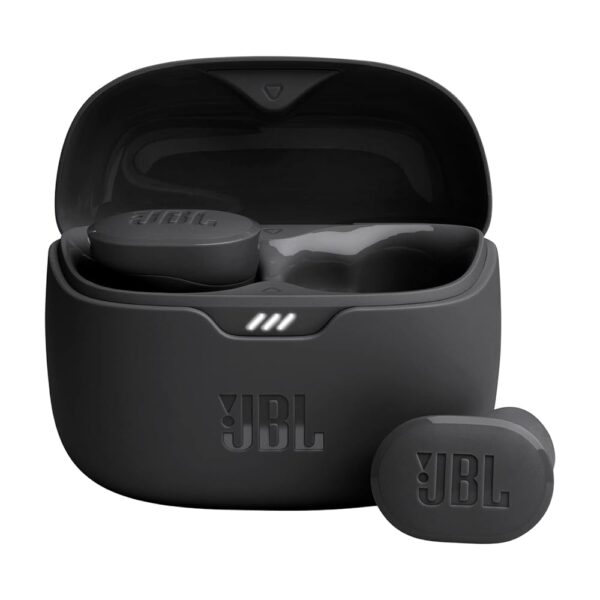
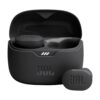
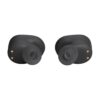
This is JBL’s mid range cancelling earbud, a small stemless bud weighing a stated 5.4 grams with 10 millimeter drivers, three ear tip sizes and JBL’s bass leaning voicing. The intended use is music, and the feature set points at commuting and office work: cancellation for steady background noise, Ambient Aware for letting the world back in, and TalkThru for holding a conversation without removing a bud.
As with every sealing cancelling earbud, it is the wrong tool for road cycling or road running. Ambient Aware helps and JBL words it carefully, saying you feel safer rather than that you are safe, but a microphone reconstruction of your surroundings is not the same as open ears. For outdoor road use an open ear design belongs in the shortlist instead.
Connection: Bluetooth 5.3, and an LE Audio promise
Bluetooth is given as 5.3. The second bullet advertises LE Audio support and describes streaming to multiple listeners at once, then adds a parenthetical footnote: available via an over the air update at a later stage. Read that plainly. LE Audio and broadcast sharing are not features of the product you receive; they are a future firmware commitment. Manufacturers do sometimes deliver on these and sometimes do not, and a promised update should never be part of the reason you buy. Judge the product on what it does in the box.
What is present is independent streaming to each earbud, so either bud can be used alone. Multipoint is not mentioned anywhere on this listing, so if holding a laptop and a phone at once matters to you, verify it rather than assuming.
No codec is named
Not SBC, not AAC, not aptX, not LDAC. SBC is therefore the only safe assumption, and nothing on this page supports a high resolution or lossless description. JBL Pure Bass Sound, which the first bullet leads with, is a voicing description rather than a transmission specification. No latency figure is published either, which is worth noting because JBL does publish one on other models in this catalog and the number is not always flattering.
Battery: both figures, published
The fifth bullet is the reason to take this listing seriously. Forty eight hours of battery life, broken out as twelve hours in the earbuds plus thirty six in the case. Then, separately, ten hours plus thirty hours in the case when noise cancelling is engaged. The structured battery life field records 10 hours, which is the conservative cancellation on figure rather than the flattering one.
That is exactly right, and it is worth spelling out why it matters. Active cancellation runs microphones and processing continuously and always costs runtime. Every other cancelling earbud covered in this catalog publishes only the higher number, leaving you to discover the difference yourself. JBL has quantified it: about two hours off the earbuds and six off the case, or roughly seventeen percent. Speed charging is quoted at 15 minutes for 4 hours of playtime, with a full case charge in about 2 hours over the supplied Type-C cable.
Cancellation, calls and the missing IP code
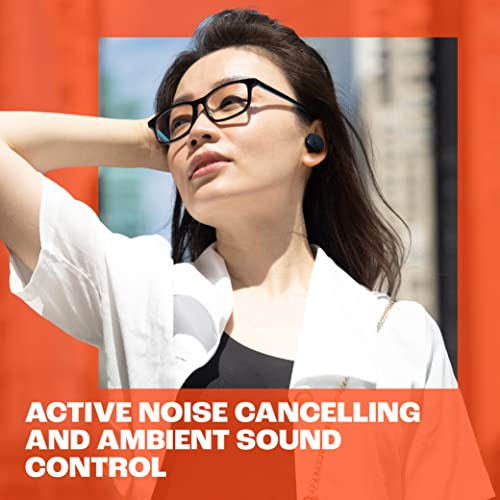
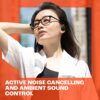
JBL describes active noise cancellation with Ambient Aware and TalkThru, and the copy is comparatively restrained: it says the cancellation lets you minimize distractions rather than claiming silence. No decibel reduction figure and no test standard appear, so there is no number to compare against a competitor. Expect meaningful reduction of constant low frequency noise such as engine, cabin and air conditioning drone, and much less against speech.
The call hardware is described inconsistently. The product name says 4-Mic technology and the fourth bullet, under the heading 4-Mic technology, then says the Tune Buds are equipped with dual microphones. Two microphones and four microphones are different products. JBL has not reconciled it. What is not in dispute is VoiceAware, which lets you choose how much of your own voice is routed back into the earbuds. That solves a genuine annoyance: with a good seal and cancellation running, your own voice sounds muffled and people talk too loudly without noticing. The same feature appears on the JBL Live Pro 2.
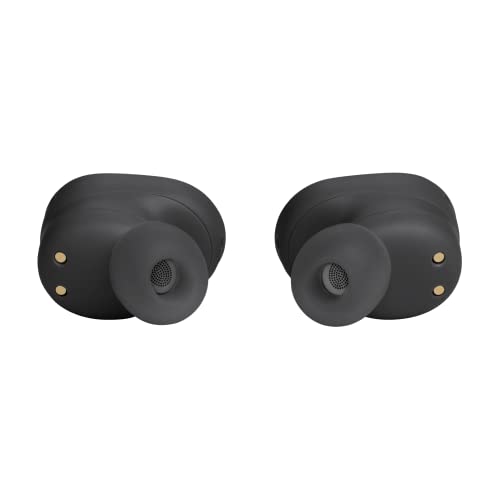
Three ear tip sizes ship in the box, confirmed in the components list. That is the right number, and seal decides both perceived bass and how much work the cancellation has to do.
The water claim is the weak point. The product name says water and dust resistant. No IP code appears anywhere: not in the title, not in the bullets, not in the structured specification, which records only water resistant. A dust claim is unusual and would normally require a solids digit, which makes the absence of a code more conspicuous rather than less. Without a code there is no way to tell whether the protection is splash level or immersion level, and this review will not describe the Tune Buds as waterproof or rated for anything. Ask JBL for the code before training in them, and note that ratings degrade with age and repeated sweat exposure in any case.
Specification notes and what else to weigh
Sensitivity is 101 dB and impedance is 32 ohms, both plausible and both published, which is more than most listings manage. Item weight reads 5.4 grams and 0.19 ounces, which agree with each other and are a credible per earbud figure rather than the usual package weight. The is autographed field reads yes, which is a template artifact and should be ignored. Frequency range is the standard 20 Hz to 20 kHz that appears on nearly every listing.
JBL records the sales position as ranked 968th in Electronics and 154th in earbud and in ear headphones, on a 4.1 star average across 5,836 ratings since May 2023. That is a strong demand position with a middling star average. Within JBL’s range, the JBL Tune Flex offers swappable open and closed tips, the JBL Vibe 100 TWS drops cancellation entirely, and the JBL Live Buds 3 sits above. For a competitor that also publishes its codec and latency, see the EarFun Air Pro 3. All appear in our true wireless earbud listings and the wider earbud headphones section.
Who should buy it, and who should not
Buy the JBL Tune Buds if you want cancellation from a brand with a track record and you value a battery disclosure you can actually plan around, including the cancellation on figure that almost nobody else publishes. Skip it if you need a water rating you can point at, because there is no IP code on the page. Do not buy it for LE Audio, because that is a promised update rather than a shipped feature, and check the microphone count with the seller, since the listing says both two and four.