Description
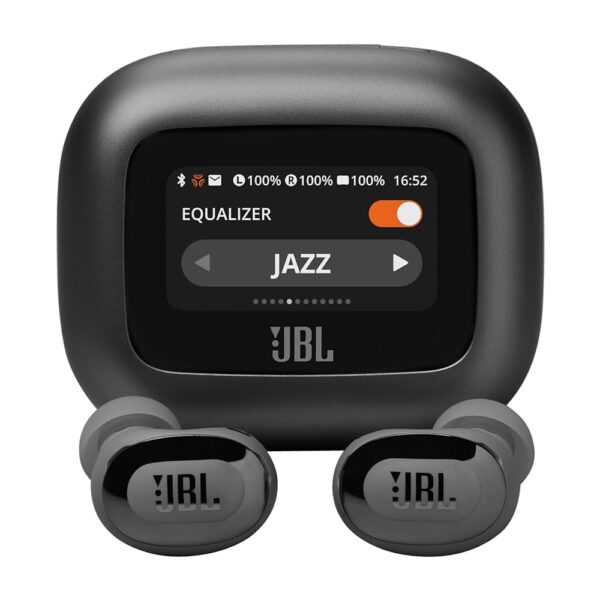
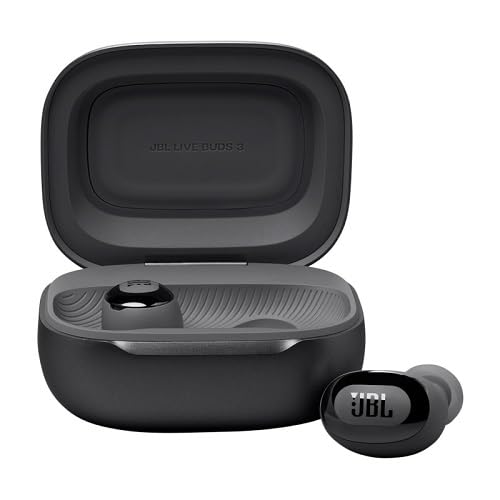
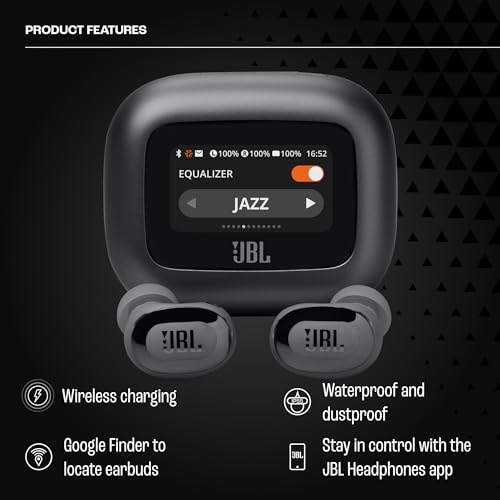
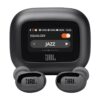
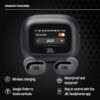
The JBL Live Buds 3 is one of the few products in this part of the catalog from a manufacturer that publishes a real data sheet, and the difference shows immediately. Adaptive noise cancellation with four sensing microphones, six beamforming microphones for calls, multipoint pairing, wireless charging and a charging case with a 1.45 inch touchscreen are all documented rather than implied. It also makes a high resolution audio claim without naming the codec that would deliver it, and its water rating is weaker than its own title suggests.
Who this is for
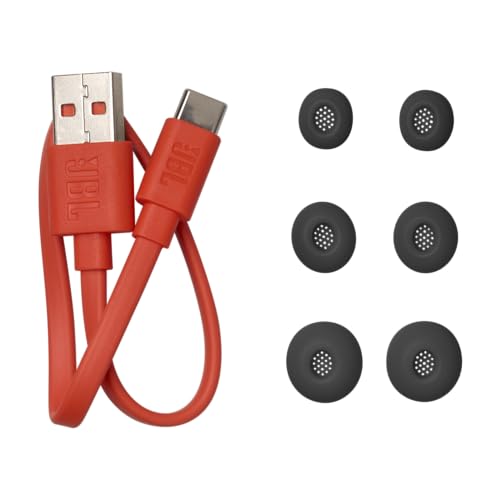
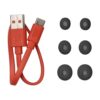
This is a commuter and traveler set. Sealing silicone tips in three sizes, 10 mm dynamic drivers and adaptive cancellation point at trains, planes, offices and coffee shops rather than at the gym, although the ingress rating covers sweat. The distinguishing feature is the case. Most true wireless cases are a battery with a lid; this one carries a touchscreen that adjusts volume, EQ, cancellation level and ambient sound without opening an app on the phone. For anyone whose phone lives in a bag, that is a genuine daily convenience rather than a specification sheet novelty.
The tips seal, so situational awareness drops, and adaptive cancellation actively removes more of it. That combination is the wrong tool for cycling or road running regardless of the beach and bike trail imagery in the marketing copy. JBL does provide ambient sound modes that let the room back in, which helps at a crossing or a checkout, but a transparency mode reconstructs the world through microphones rather than passing it through, and it is not a substitute for an open design. Riders should look at the clip and hook products in the open ear headphone category.
One line in the JBL copy should not be repeated. The final bullet describes drivers tuned to deliver deep bass and refined highs at any volume level. Whatever a driver does at high volume, sustained loud listening damages hearing, and a set with strong cancellation actually makes it easier to keep the level down because the noise floor is lower. Use the cancellation to reduce the volume, not to justify raising it.
Connection: multipoint documented, codec not
Multipoint pairing is explicitly published here, described as switching between a tablet and a phone without missing a call. That is a feature almost nothing else in this section of the catalog documents, and for anyone who works across a laptop and a phone it is the single most useful item on the list. A JBL app provides EQ and control customization, and the case touchscreen duplicates much of it.
The Hi-Res claim
JBL describes the product as Hi-Res Audio Wireless. No codec is named anywhere in this listing: not AAC, not aptX Adaptive, not LDAC. That is a problem, because high resolution over Bluetooth is entirely a codec question. The Hi-Res Audio Wireless certification is normally awarded on the basis of a specific codec, and the phone at the other end has to support that same codec independently for any of it to apply. Most iPhones support neither aptX nor LDAC. On the published specification here the high resolution claim cannot be verified, and a buyer who cares should confirm the exact codec with JBL before ordering. This listing also omits the Bluetooth version entirely, which is unusual for a manufacturer of this size. Buyers who want codec support stated plainly should compare the Sony WF-1000XM5 review.
Battery: ten hours in the ear, forty with the case, cancellation off
JBL publishes this properly and includes the caveat most listings hide. Ten hours of playtime from the buds, plus another 30 from the case for 40 hours total, with an explicit footnote that the figure assumes cancellation is switched off. That footnote is the most honest line in the listing. Active cancellation is a continuous processing load, and running it will pull the real figure down, typically by a meaningful margin.
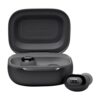
Plan around 10 hours with cancellation off and noticeably less with it on. The case is 620 mAh, takes 2 hours to refill and supports wireless charging as well as USB-C, and a 10 minute charge is quoted as adding 4 hours of playtime. The structured Battery Life field records 40 hours, which places the combined figure in the field meant for bud runtime, and the Charging Time field records the 10 minute quick charge rather than a full charge. Those are data entry issues rather than product problems.
Cancellation, fit and an IP55 rating that is not waterproof
The cancellation is described as adaptive, using four noise sensing microphones that adjust in real time, with user control over how much ambient sound is allowed through. Adaptive systems respond to changing conditions rather than holding one fixed setting, which matters on a train where the noise profile shifts. What no cancellation system does is make an environment silent. It works well on constant low frequency sound such as engine and cabin drone, and poorly on speech and sudden noise. JBL publishes no decibel reduction figure and names no test standard, so the strength of the system cannot be compared numerically against rivals such as those covered in our Bose QuietComfort Ultra Earbuds review.
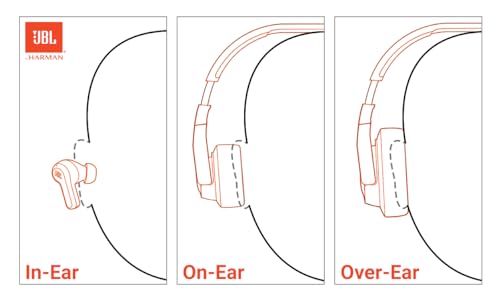
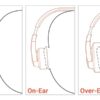
Three tip sizes ship in the box. Tip fit determines the seal, and the seal determines both the bass and how much work the cancellation has to do, so getting it right matters more here than on a set without cancellation. Impedance is 16 Ohm and the frequency range is the standard 20 Hz to 20,000 Hz. Six beamforming microphones handle calls with wind and noise reduction, and a Personal Sound Amplification feature adjusts how much of your own voice you hear during a call.
The water rating is IP55, and the JBL title and bullet both describe the product as waterproof. IP55 is not waterproof. The first digit, 5, means dust protected rather than dust tight. The second digit, 5, means protection against low pressure water jets from any direction. It does not cover immersion at any depth. These will survive rain and heavy sweat; they will not survive a swimming pool, a shower or a sink. That is a reasonable rating for the intended use, but the word waterproof does not belong on it. No IP rating covers seawater or high pressure water, and ratings degrade as seals age.
Data notes and alternatives
Several fields carry scientific notation artifacts from the import: charging time appears as 1E+1 minutes, Bluetooth range as 1E+1 meters and driver size as 1E+1 millimeters, all of which resolve to 10. Product Dimensions reads 1 by 1 by 1 inches, a placeholder. Unit Count reads 1.0 Ounce. Item weight of 82 grams describes the shipped package. JBL states a 4.2 out of 5 average across 166 ratings, a modest sample for a major brand product and lower than several cheaper sets in this catalog.
Buyers weighing this against other premium options should compare the JBL Tour Pro 3 review, which uses the same smart case concept higher up the range, and the Samsung Galaxy Buds2 Pro review for an Android focused alternative. More cancelling designs sit in the true wireless earbud listings.
Who should buy it and who should not
Buy the JBL Live Buds 3 if multipoint pairing, adaptive cancellation and a case you can control without your phone are the features you want, and if 10 hours with cancellation off suits your day. Skip it if you need a verified high resolution codec, since none is named, or if you need immersion resistance, since IP55 does not provide it. Confirm the codec and the Bluetooth version with JBL before ordering, because neither appears in this listing.
![SAMSUNG Galaxy Buds 3 Pro AI True Wireless Bluetooth Earbuds, Noise Cancelling, Sound Optimization, Redesigned Comfort Fit, Silver [US Version, Amazon Exclusive, 2Yr Warranty]](https://wirelessemporium.com/wp-content/uploads/2025/04/samsung-galaxy-buds-3-pro-ai-true-wireless-bluetooth-earbuds-noise-300x300.jpg "SAMSUNG Galaxy Buds 3 Pro AI True Wireless Bluetooth Earbuds, Noise Cancelling, Sound Optimization, Redesigned Comfort Fit, Silver [US Version, Amazon Exclusive, 2Yr Warranty]")