
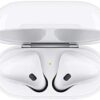
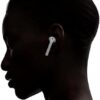
Description
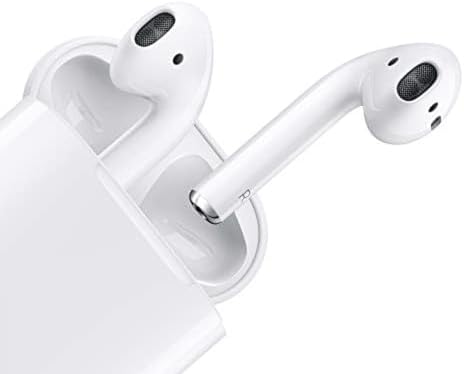
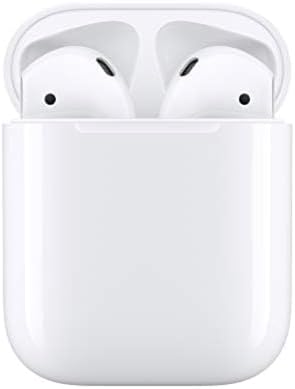
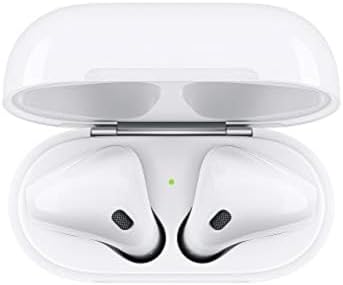
This listing is the second generation Apple AirPods, model MV7N2AM/A, ASIN B07PXGQC1Q, first available in March 2019 and supplied with the Lightning charging case. It is important to place it correctly, because Apple now sells several products called AirPods and this is the oldest one still widely listed. It has no active noise cancellation, no silicone ear tips, no water resistance rating and a Lightning port rather than USB-C. Everything below works from the published specification.
Who this suits in 2025
The buyer this fits is someone inside the Apple ecosystem who wants the pairing behavior and nothing more. The H1 chip handles one tap setup, automatic switching between an iPhone, iPad, Mac, Apple Watch and Apple TV on the same Apple account, and hands free Siri without reaching for the phone. That switching behavior is the actual product. It is also a reasonable choice for someone who dislikes the pressure of sealed ear tips, because the hard plastic shell rests in the outer ear rather than plugging the canal.
It is a poor fit for anyone who wants noise cancellation, anyone training in the rain, and anyone on Android. On a non Apple phone the automatic switching, the Siri integration and the in ear detection either disappear or become unreliable, and what remains is an ordinary Bluetooth earbud with no seal. Android owners are better served elsewhere, for example by the sets collected in the true wireless earbuds section.
Connection: what the H1 chip does and does not do
Apple lists Bluetooth 5.0 and the H1 headphone chip. The wireless communication field also lists NFC, which is not a feature Apple documents on AirPods and should be treated as import noise rather than a capability. There is a more significant error in the same block: the specification lists “Headphones Jack: 3.5 mm Jack”. These have no headphone jack of any kind. That field is inherited from another category and is simply wrong.
On codecs, the listing names none. Apple’s earbuds run SBC and AAC, and AAC is the codec that matters on an iPhone. What they do not carry is aptX, aptX Adaptive or LDAC, so there is no path to a high resolution or lossless stream here regardless of the source device. Any claim otherwise would be unsupported. The H1 chip’s contribution is connection stability, low latency and fast switching, not extra audio data.
Multipoint and device switching
Apple’s automatic switching is not standard Bluetooth multipoint. It moves the connection between Apple devices signed into the same account, which is smoother than manual repairing but is not the same as holding a laptop and a phone connection simultaneously. If you need genuine two device multipoint across mixed platforms, this is not the product.
Battery: the numbers Apple actually publishes
Apple rates a single charge at up to 5 hours of listening or up to 3 hours of talk time, and states more than 24 hours of total listening with the Lightning charging case. The 24 hour figure is the number the title leads with, and it is the combined system figure, not what you get from a charge. The bud figure is 5 hours, and that is the one to plan around.
Two qualifiers matter more here than on a new product. These figures are Apple’s original 2019 ratings at moderate volume. Lithium ion cells in earbuds of this size degrade noticeably over a few years of daily charge cycles, and AirPods batteries are not user replaceable, so a used or long shelved unit will not hit the rated figures. The specification block also states “2 Lithium Metal batteries required”, which is wrong: these use rechargeable lithium ion cells and require no batteries to be supplied. Treat that field as import noise.
If long runtime is the priority rather than Apple integration, sets built around a bigger case reserve, such as the Beats Solo Buds, take a different approach to the same problem.
Fit, seal and water resistance
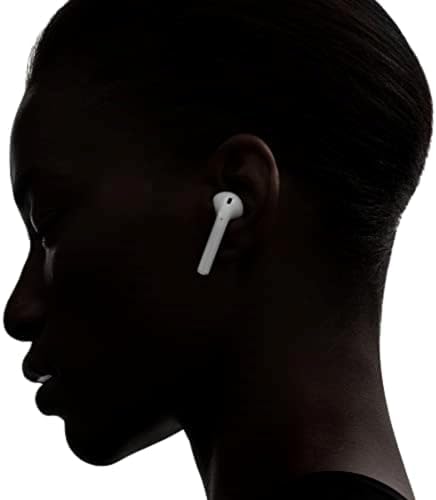
This is the section where the specification contradicts itself. The listing’s Noise Control field reads “Sound Isolation”. These AirPods are an unsealed, one size hard shell design with no silicone tips, which means they do not isolate. Ambient noise reaches your ears essentially unblocked. That field is inaccurate, and it matters, because sound isolation is the reason many buyers pick in ear designs.
The open fit has two real consequences. First, perceived bass depends entirely on how the shell happens to sit in your ear, and it varies far more between people than a tipped earbud does. There is no way to improve the fit, because there are no tip sizes to change. Second, because they do not seal, you continue to hear your surroundings, which is safer near traffic than a sealed design but also means you may raise the volume in noisy places. That is the hearing risk with an open fit: the temptation is to compensate for the environment. Keep the volume where you can still hear conversation.
On water, the specification says “Water Resistance Level: Water Resistant”. No IP code is published for this model. Apple did not rate second generation AirPods for water or sweat resistance at all, and a marketing phrase without an IP code is not a rating. Do not train in them in the rain on the strength of that field. If sweat resistance is a requirement, buy something with a published IPX number.
What the listing leaves out, and the alternatives
There is no driver size, no frequency response and no impedance figure. Controls are double tap only, with no volume control on the bud itself, so volume runs through Siri or the phone despite the Control Type field listing “Volume Control”. The sensors are documented properly: dual beamforming microphones, dual optical sensors, a motion accelerometer and a speech detecting accelerometer, which is what drives the automatic pause when you remove a bud. Compatibility starts at iPhone 6s and iPod touch 7th generation.
Within Apple’s own range, the honest comparisons are upward. The AirPods 3rd generation keep the open fit but add a sweat rating and a shorter stem, while the AirPods Pro 2 add silicone tips, active noise cancellation and transparency mode, which is the upgrade most people are actually looking for. The AirPods 4 are the current open fit generation and use USB-C rather than Lightning.
Who should buy this, and who should not
Buy it if you want Apple device switching at the lowest entry point, you prefer an unsealed fit, and 5 hours per charge covers your day. It remains a competent product for that narrow brief, and the case still holds more than 24 hours of reserve.
Do not buy it if you want noise cancellation, a sweat rating, USB-C charging or any control over fit. Do not buy it as an Android earbud. And check what you are actually being shipped: this model dates from 2019, the Lightning case has been superseded, and stock at this age may have been sitting long enough for the cells to have lost capacity. Confirm the model number MV7N2AM/A and whether the unit is new or renewed before ordering.
![SAMSUNG Galaxy Buds 3 Pro AI True Wireless Bluetooth Earbuds, Noise Cancelling, Sound Optimization, Redesigned Comfort Fit, Silver [US Version, Amazon Exclusive, 2Yr Warranty]](https://wirelessemporium.com/wp-content/uploads/2025/04/samsung-galaxy-buds-3-pro-ai-true-wireless-bluetooth-earbuds-noise-300x300.jpg "SAMSUNG Galaxy Buds 3 Pro AI True Wireless Bluetooth Earbuds, Noise Cancelling, Sound Optimization, Redesigned Comfort Fit, Silver [US Version, Amazon Exclusive, 2Yr Warranty]")