

Description
Where the E1 sits in the range
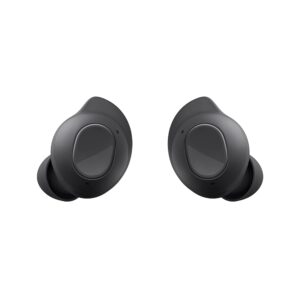
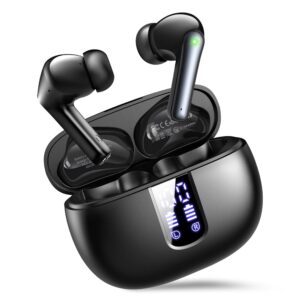
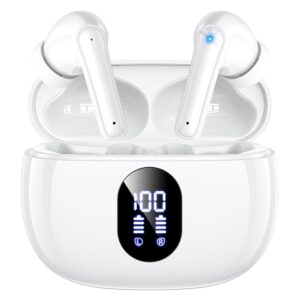
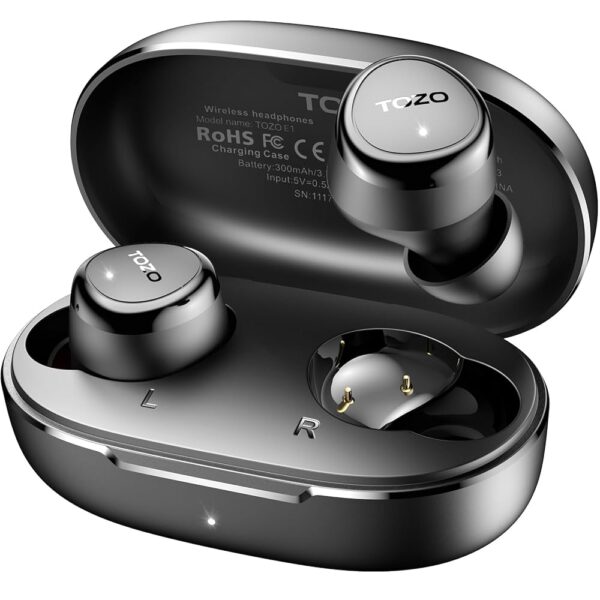
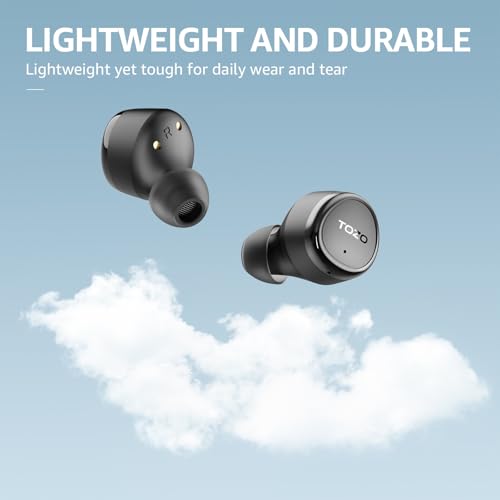
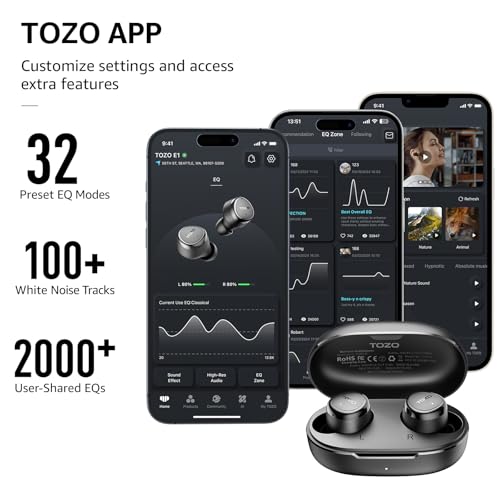
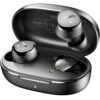
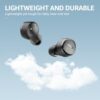
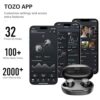
The TOZO E1 is the small, light and inexpensive end of TOZO’s line. The headline specification is a 6mm driver, which is genuinely small for an in-ear product, paired with a 3.9 gram earbud and a case that measures 62.5 by 36.3 by 29.3 millimeters and weighs 34.1 grams. The pitch is comfort and portability rather than output, and the honest way to read a 6mm driver is that it moves less air than the 10mm to 14.2mm units common across this catalog. What TOZO adds to compensate is app support, with 32 equalizer presets and an unusual feature where users share custom equalizer profiles with each other.
The published rating is 4.7 out of 5, the highest average in this group, but across only 605 ratings, and the listing places the model 1,021st in the earbud and in-ear headphone category. It first appeared in August 2024 under model code T11173. A high average on a small sample carries less weight than a slightly lower one on a large sample, and TOZO’s own T10 sits at 4.4 across more than 97,000 ratings for comparison.
Connection and codecs
The specification gives Bluetooth 5.3 with a 12 meter range. Bluetooth 5.3 governs connection stability, interference handling and power efficiency rather than sound quality.
No audio codec is named anywhere on this listing. SBC is the guaranteed baseline, AAC is unconfirmed, and neither aptX nor LDAC is claimed. The product title uses the phrase premium stereo sound and the bullets promise an immersive audio experience, but neither is a codec claim and there is no basis here for describing the product as high resolution or lossless. Multipoint pairing is not mentioned. Sensitivity is given as 112 dB and impedance as 16 ohms, both plausible for a battery powered earbud.
The Frequency Response field reads 20 KHz as a single value, which is not a frequency response, while the separate Frequency Range entry of 20 Hz to 20,000 Hz is the conventional boilerplate that appears on nearly every headphone listing. Neither tells you how the product sounds.
Battery, split properly
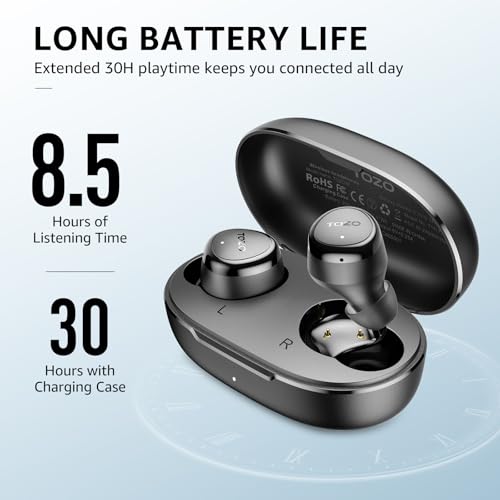
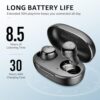
The bullet gives the real numbers: up to 8.5 hours of playback on a single charge, with 30 hours in total once the case is included. Both the Battery Life field and the Carrying Case Battery Average Life field read 30 hours, which is the same total duplicated across two fields rather than a genuine split, so the bullet is the source to trust.
Eight and a half hours per charge is a solid figure for a small earbud and is the number to compare against other products. The case holds 400 mAh and takes 1.5 hours to refill. One detail dates the package slightly: the included cable is USB A to USB C rather than USB C to USB C, so if every charger you own has moved to USB-C you will need your own cable. Wireless charging is not mentioned.
Two entries in this section are unusable. The Item Weight fields read 0.01 grams and 0 ounces, neither of which describes any physical object, though the bullet’s 3.9 grams per bud is believable. And the Batteries field reads one lithium metal battery required and included. Lithium metal is a non rechargeable chemistry used in coin cells and camera batteries. A rechargeable earbud uses lithium ion or lithium polymer. That entry is wrong.
Fit, seal, controls and a water rating in the title only
Three pairs of ear tips ship in the box, in small, medium and large, stated clearly in the included components field. That is the standard count and it is published, which matters because the seal decides how much bass a sealed in-ear product appears to have. On a 6mm driver a good seal matters more than usual, because there is less driver area to make up for a leak. Earpiece Shape reads Rounded Tip and the material is silicone.
The water rating claim is IPX6, and it appears only in the product title. The Water Resistance Level field says nothing more than Water Resistant, and no bullet repeats the code. IPX6 is a valid rating meaning protection against powerful water jets from any direction, which sits above splash resistance and below immersion. If accurate it is a reasonable sport rating. But a title only claim with no supporting specification entry deserves caution, and it should be verified with TOZO before you rely on it. As always, no IP code covers seawater, chlorinated pool water or pressurized hot water, the X means no dust testing was done, and seals degrade with age.
Control is by touch and through the TOZO app. Noise Control reads Sound Isolation, so any quiet comes from the seal alone. There is no active noise cancellation, no transparency mode and no wear detection described.
The fields that came from somewhere else
This listing carries the same keyword dump that appears across TOZO’s range, and it produces some results that should be ignored. The Specific Uses field lists Business, Fitness, Entertainment, Gaming, Professional, School, Sleeping, Travel, TV Series, Video Game, Sport, Music, Motorcycling and Office Meetings. The Recommended Uses field adds Audio Monitoring, Cycling, Disc Jockey Use and Radio Communication. The Cartoon Character field contains the phrase Bean-shaped in-ear, which is the earbud shape rather than a character.
Two of those entries need a direct response. Cycling and motorcycling appear on a sealed, sound isolating product, and sealing both ear canals on a road removes the cues you use to place traffic. Several states restrict earphone use in both ears while operating a vehicle. An open ear design is the correct category for road use, not this one. Sleeping also appears, and sealing both ears overnight reduces your chance of hearing a smoke alarm, with no volume limit or sleep timer described anywhere in this specification.
What else to consider
Within TOZO’s own range the comparisons are straightforward. The TOZO A1 Mini at a similar compact size is the closest sibling, while the TOZO NC3 with active noise cancellation and the TOZO Crystal Pods with a hybrid cancellation system add the feature this model does without. The TOZO T20 is another step across the range. Browse the true wireless earbud section and the wider in-ear headphone listings for more.
Who should buy it, who should not
Buy it if small and light is what you want, if 8.5 hours per charge suits your day, and if app based equalizer control at a low price appeals. Skip it if you want output and bass authority, because a 6mm driver is the smallest in this part of the catalog. Skip it if you need active cancellation or a named codec, treat the IPX6 rating as a title claim to verify, and disregard the listing’s own suggestions for cycling, motorcycling and sleeping.