



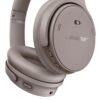
Description
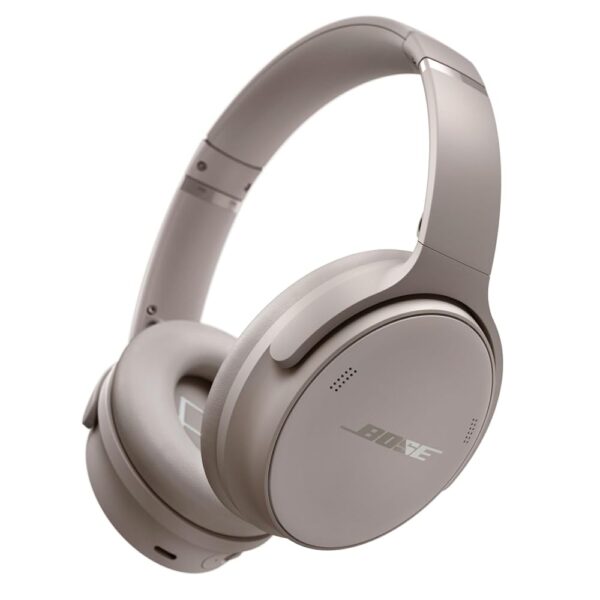
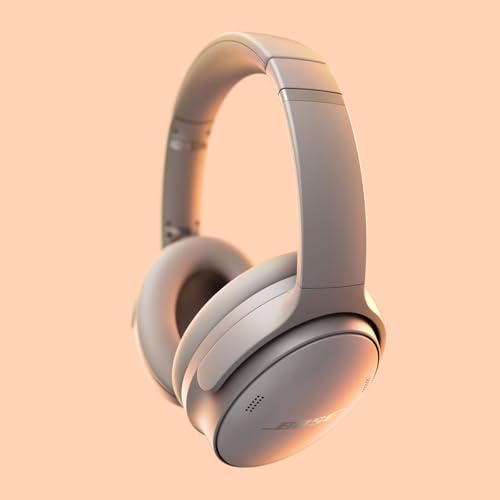
The Bose QuietComfort Headphones, model 884367-1100 in the Sandstone colorway, are over-ear noise cancelling Bluetooth headphones that became available on October 1, 2024. Bose quotes up to 24 hours of battery, Bluetooth 5.1, multipoint switching, adjustable EQ, and a wired option over an included cable. The listing shows a 4.5 star average across 8,623 ratings, ranked 2,343rd in Electronics and 114th in Over-Ear Headphones in the captured data.
A naming caution before anything else. Bose sells several products under the QuietComfort name and they are not interchangeable. This one is simply “QuietComfort Headphones.” The QuietComfort Ultra is a separate, higher model, and the QuietComfort 45 is an earlier one. Check the model number on the box against what you ordered, because the product names alone will not tell you apart.
The listener this suits
This is a travel and focus headphone. Bose lists travel, entertainment and gaming as the intended uses, and the design follows: plush cushions, a padded band, a nylon carry case, a folding over-ear shape and 240 grams of weight. The Quiet and Aware mode toggle is the core interaction, letting you either shut the room out or let it back in with one control. Custom modes let you set intermediate cancellation levels, and a Wind Block setting is offered for breezy conditions, which is a specific and unusually practical inclusion.
It is not a gym or outdoor sport headphone. No IP rating is published and there is no water resistance field in the record at all, so there is no stated protection against rain or sweat. It is also a closed, actively cancelling design and should not be worn cycling or running in traffic, because cancellation is at its most effective on exactly the low frequency engine sound that would tell you a vehicle is approaching.
Connection: multipoint is real, the codec is not stated
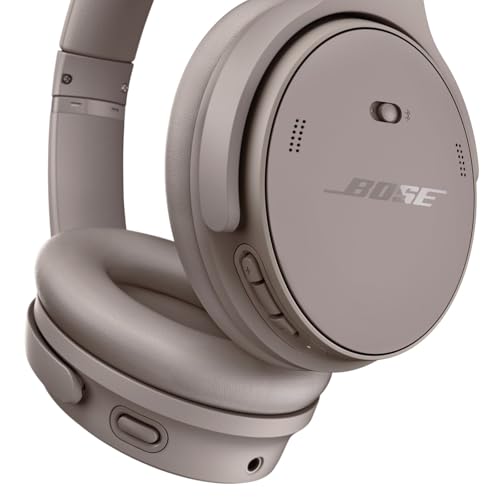
Bluetooth 5.1 is listed, along with a multipoint toggle that Bose describes as letting you switch between connected devices “without disconnecting and reconnecting each time.” Multipoint is one of the features most worth having on a headphone used across a laptop and a phone, and having it stated rather than implied is a genuine advantage over several competitors in this catalog. Spotify Tap is listed as a shortcut that resumes listening from a button on the ear cup.
The listing also claims “powerful high-fidelity audio” and “high-fidelity audio with Adjustable EQ.” No Bluetooth codec is named anywhere in the record. There is no mention of SBC, AAC, aptX or LDAC. High fidelity over a wireless link depends entirely on which codec the phone and the headphone negotiate, and with none published, SBC is the only baseline you can safely assume. Read the high fidelity wording as brand language, not as a specification, and note that the same description also reaches for an unquantified superlative about the EQ, which is marketing rather than measurement.
The one path where audio quality does not depend on a codec is the wired one, and Bose covers it properly. A 3.5mm to 2.5mm audio cable with an in-line microphone is in the box, and the listing states explicitly that the headphones work over it “even when the battery is depleted.” That is a real, checkable advantage over models with no analog input, and it is stated more clearly here than on most listings.
Battery: 24 hours, and the condition is unstated
Bose quotes up to 24 hours of battery life on a single charge, with a 15 minute charge returning up to 2.5 hours of additional playing time, and a full charge quoted at 2.5 hours. As a single headphone with no charging case, 24 hours is the whole figure and there is no case total to untangle.
Twenty four hours is on the shorter side for this category. Several cancelling headphones in this catalog quote 30 to 40 hours, and the Sony WH-1000XM4 quotes 30. What Bose does not state is whether the 24 hour figure is measured with cancellation on or off, or at what volume. Given that cancellation is the entire point of this product, most buyers will run it constantly, and a quoted playtime is always a best case. Plan accordingly rather than assuming 24 hours of cancelling use.
Charging is over USB-C, with an A to C cable listed at 12 inches in the box. That is a short cable and worth knowing before you plan to charge from a wall socket.
Fit, comfort and the fields that are wrong
The QuietComfort weighs 240 grams, or 8.5 ounces, in a leather and plastic build with plush ear cushions and a padded band. Over-ear cups seal around the ear rather than pressing on it, and that passive seal contributes real isolation before the cancellation circuit does anything. The frequency range is given as 20 Hz to 20,000 Hz, which is the standard nominal figure quoted on nearly every headphone and tells you nothing comparative.
Three fields in this record do not survive scrutiny and are worth naming rather than smoothing over.
“Audio Driver Type = Balanced Armature Driver” is not a plausible description of an over-ear headphone of this size. Balanced armature drivers are small transducers used in in-ear monitors and hearing aids. Nothing else in the listing supports it, and the driver diameter is not published at all, so treat the driver type as unstated.
“Bluetooth Range = 3E+1 Feet” is 30 feet written in scientific notation, which is a data import artifact rather than a specification anyone wrote deliberately. “Batteries = 1 A batteries required” describes an A-size cell in a product with a built-in rechargeable battery. And “Carrying Case Material = Nylon or Aluminum” leaves you to guess which case actually ships. On controls, the record says “Control Method = Remote” while the description talks about a button on the side of the ear cup; those are not the same thing and the listing does not reconcile them.
What cancellation actually delivers here
Bose publishes no decibel attenuation figure, which is the honest approach, because there is no agreed consumer test standard to quote one against. What it does describe is the mechanism: cancellation combined with the passive isolation of the cups, plus adjustable custom modes so you are not stuck with a single setting.
Set expectations by physics rather than by adjectives. Active cancellation is very effective against constant low frequency sound such as cabin drone, engines and air conditioning. It is markedly weaker against speech, keyboard clatter and other irregular high frequency noise, which is why an open plan office is a harder problem than a plane. No headphone makes a room silent. Aware Mode is the reverse setting, deliberately passing outside sound through, and Wind Block targets the specific problem of wind noise across the microphones rather than any external sound.
What is not published, and where else to look
Missing from the record: codec support, driver diameter, sensitivity, impedance, microphone count, cancellation attenuation, app feature detail, and whether Adjustable EQ is a fixed set of presets or a full band control. The model name field contains an entire marketing sentence instead of a model name, which is why the actual identifier, 884367-1100, is worth writing down.
For alternatives, the Sony WH-1000XM5 is the closest cross-brand equivalent at the top of its range. Broader comparison across the shape sits in the wireless headphones section.
A note on listening level. The point of cancellation is that it removes the background noise which otherwise makes people turn the volume up on a plane or a train. Switch it on and then turn the music down, rather than treating the new quiet as headroom.
Who should buy it
Buy the Bose QuietComfort if you want stated multipoint, a Quiet and Aware toggle with custom cancellation levels, and a wired cable that keeps working with a flat battery. Skip it if you need a longer battery than 24 hours, a published water rating, a named codec, or a specification block you can trust field by field, because several fields in this one are plainly wrong.