





Description
The case for a neckband from a major brand
The Sony WI-C100 is a wireless in-ear headphone on a flexible neckband, not a true wireless pair. Two sealed buds hang from a collar that rests around the neck, with the battery and the button controls built into the band. Sony lists it at 20 grams, and Amazon first carried it in June 2022. It has since gathered roughly 11,019 ratings at a 4.2 star average, ranking 572nd in Electronics and 96th among earbud and in-ear headphones.
The reason to choose this shape over true wireless is straightforward. There is no charging case to carry, lose or forget, there is no possibility of dropping a single bud down a drain, and the battery is large enough to run for a full day rather than a few hours. The reason not to is equally straightforward: the collar is always around your neck, it catches on hoods and shirt collars, and there is no case to top the buds up mid day. When it is flat, it goes on a cable.
Sony rates the WI-C100 at up to 25 hours on a charge. Because there is no case, that figure is the complete battery picture, and it needs none of the translation that combined true wireless numbers demand. The specification table repeats 25 hours as the battery life, and then also lists charging time as 25 hours, which is the runtime pasted into the wrong field rather than a real charging figure.
What DSEE does, and what it is not
Sony’s headline audio feature here is DSEE, described on the listing as restoring “high frequency sounds lost in compression.” That description is accurate as far as it goes, and it is worth being precise about what it means, because it is easy to mistake for something it is not.
DSEE is digital signal processing applied inside the headphone. It analyzes the incoming audio and generates high frequency content that a lossy file or a lossy Bluetooth stream discarded. It estimates what was removed rather than recovering it. The original data is gone, and nothing in the headphone can bring it back. Whether the estimate improves the result is a matter of taste, and many listeners cannot reliably hear the difference.
Crucially, DSEE is not a codec and it is not high resolution audio. No Bluetooth audio codec is named anywhere on this listing, which means SBC, the baseline every Bluetooth device supports, is all you can safely assume. There is no published evidence of AAC, which is what Apple devices use, and none of LDAC, the Sony codec actually marketed for high resolution transmission, which only functions when the source phone supports it as well. If LDAC support is the reason you are considering a Sony product, this listing does not establish that it is present.
The rest of the connection specification
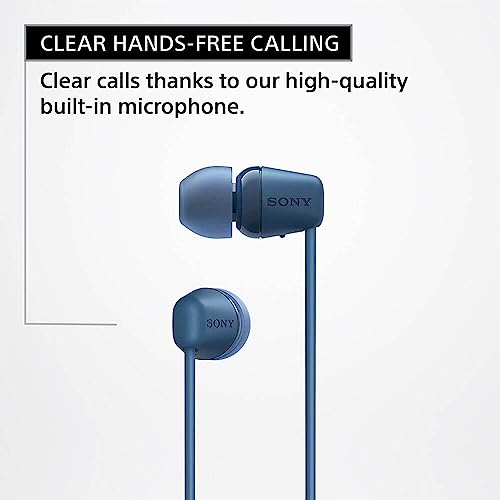
Sony lists Bluetooth 5.0 with a 10 meter range, 9mm dynamic drivers, an impedance of 20 ohms and a frequency range of 20Hz to 20,000Hz quoted without a tolerance. Google Fast Pair is supported for one tap setup on Android. The Sony Headphones Connect app is published as a real feature and provides equalizer adjustment, which is more control than most products in this bracket offer. The noise control field reads “None,” so there is no active noise cancellation here and Sony does not claim any. Controls are physical buttons for play, pause, track skip and volume, which is the right choice on a neckband.
IPX4 means splash, and Sony says so
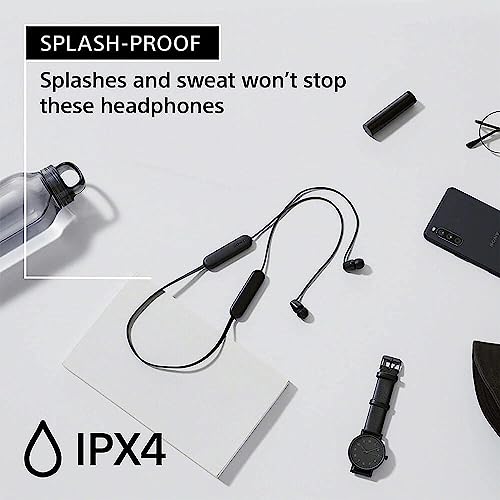
The rating is IPX4, and both the product description and a dedicated bullet state it clearly as “splash-proof and sweat-proof.” That is a splash rating. It covers water hitting the product from any direction, so sweat and light rain are inside it. It is not immersion protection, it does not cover a shower or a hose, and this product should never be described as waterproof. The specification table falls back to the phrase “water resistant” with no code, which is less useful than the description.
As with any IP rating, seawater and high pressure water are outside the scope entirely, and the protection degrades as seals and port covers age. Rinse with fresh water after salty sweat and dry the charging port before plugging in.
Fit, seal and the one bullet everyone should read
The first bullet on this listing is the most useful sentence Sony has written for a general audience, and almost every competitor omits it. Sony states that if the ear tip size does not match your ear canal, or the headset is not worn properly, you may not get the correct sound quality or call performance, and advises changing to tips that fit more snugly.
That is exactly right, and it applies to every sealed earphone in this catalog. A poor seal drains the bass out of anything, and listeners routinely blame the drivers for a problem the tips would fix in ten seconds. What Sony does not publish here is how many tip sizes are in the box. The included components list says only “hybrid silicone rubber earbud tips” with no count, which is a real omission on a listing that goes out of its way to explain why size matters. Confirm the selection before buying if you have unusually small or large canals.
Because the WI-C100 seals the ear canal, it reduces your awareness of traffic and is not the right choice for cycling or road running. The neckband shape encourages outdoor use, so this is worth stating plainly rather than assuming. If awareness matters more than isolation, an open ear design that leaves the canal clear is the format to look at instead.
Data oddities, and what else to consider
One field on this listing contains a literal “[PARTIAL]” placeholder token where the compatible devices value should be, which is an import artifact rather than a specification. Country of origin is listed as Vietnam.
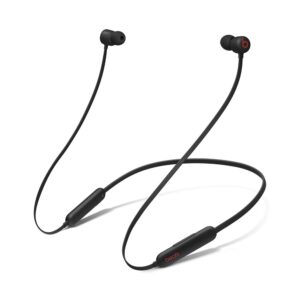
Within Sony’s own range, the WF-C510 is the true wireless alternative if you would rather have a case than a collar, and the MDR-EX15AP is the wired option if you want to remove the battery question entirely. For neckbands from other brands, the Beats Flex is the closest direct competitor and the TONEMAC N18 covers the budget end of the same format. The wider set sits in our earbud headphone reviews, with full size options in our wireless headphone reviews.
Buy it, or skip it
Buy the WI-C100 if you want 25 hours from one charge with no case to manage, button controls you can find without looking, real app based equalization, Fast Pair setup and a major brand behind it. Skip it if you want active noise cancellation, a named codec, immersion grade water protection, or a case that tops the buds up during the day. And read the IPX4 rating as splash and sweat, never as waterproof.