Description
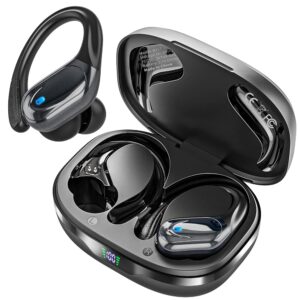
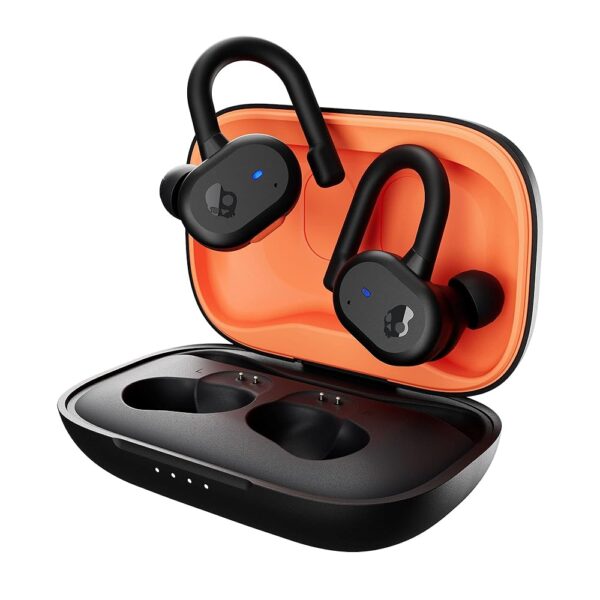
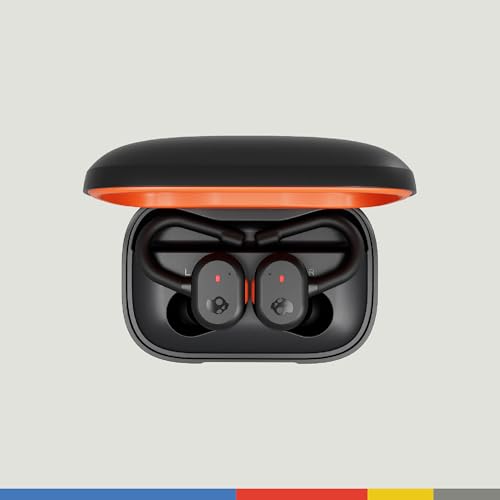
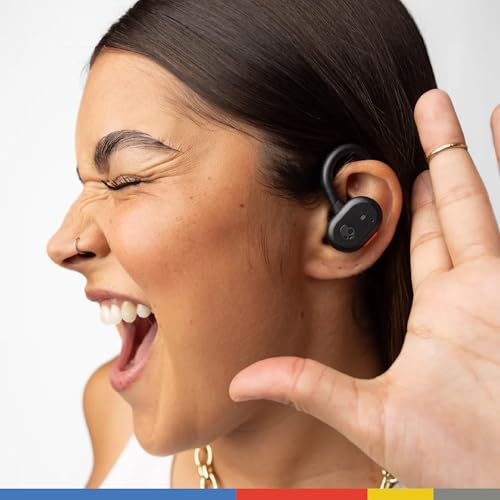
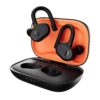
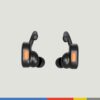
The Skullcandy Push Active, model S2BPW-P740 in True Black and Orange, is a sport oriented true wireless earbud with flexible over ear hooks, Skull-iQ hands free voice control, Alexa support and Tile tracking. It carries a one year US warranty and rates 3.9 out of 5 across 6,556 ratings. It also publishes four different battery figures on a single page, which is the worst battery documentation in this group and the place to start.
Four battery numbers, none of them a bud runtime
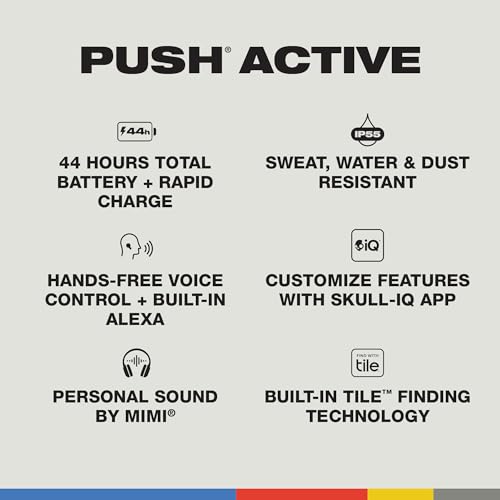
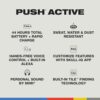
The product title claims a 43 hour battery. The feature bullet is headed 44 Hours of Power and its body states that between the charging case and earbuds, Push Active delivers 44 hours of listening time. The specification block lists Battery Life as 32 Hours and Carrying Case Battery Average Life as 35 Hours.
So the page publishes 43, 44, 32 and 35 for what is presumably the same combined total. None of the four are explained, and no two agree. The bullet is the only one that states what it is measuring, describing the figure as the case and earbuds together.
More significantly, the runtime of the earbuds themselves on a single charge is not published anywhere. That is the number that determines whether the product lasts a long training session, a flight or a working day without a return to the case, and it is the figure a buyer most needs. A combined total in the 32 to 44 hour range on a hook design typically implies something in the region of 6 to 10 hours from the buds, but we are not going to guess. Ask Skullcandy for the bud runtime on model S2BPW-P740 before buying if session length matters.
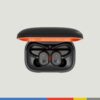
No charging time is published for the buds or the case, and no fast charge claim is made. The Included Components field does list a Wireless Charging Case, which is a genuine convenience and not universal at this level, though no charging standard is named and no wireless charging is mentioned in any bullet.
IP55, which is at least a valid code
The sport bullet claims an IP55 sweat and water resistant rating. Unlike the sibling Skullcandy Grind, which publishes no code at all, this listing gives a complete two digit rating, and that is worth crediting.
IP55 means protection against dust ingress, though not dust tight, and protection against low pressure water jets from any direction. In practice that covers sweat and rain during exercise, which is exactly what a workout earbud needs. It does not cover immersion, it will not survive a drop into a sink, and this product should not be described as waterproof. The description’s phrase superior water and sweat resistance is marketing on top of the code; IP55 is the code and it is a mid tier rating rather than a superior one.
The usual limits apply. No IP rating anywhere covers seawater, chlorinated pool water or pressurized water from a shower head. The rating covers the earbuds and not the charging case, which here carries wireless charging coils. And ratings describe new units, with seals degrading as coatings wear and debris accumulates around the acoustic mesh. The specification field’s bare Water Resistant label is a phrase; IP55 in the bullet is the actual rating.
The software features, and what they depend on
Skull-iQ Smart Feature Technology provides hands free voice control and can route to Alexa, and it requires downloading the Skull-iQ app. Tile Finding Technology allows either earbud to be located individually through the Tile app, which addresses the most common way earbuds are lost.
Both depend on apps that Skullcandy and Tile maintain, and in Alexa’s case on a cloud service. That is a different kind of purchase from hardware. The listing gives no commitment about how long either platform will be supported. Buy this for the hooks and the IP55 rating, and treat the voice and tracking features as software that may change.
What this product does not have, notably, is an ambient mode. The Grind lists an Adjustable Stay-Aware Mode; the Push Active listing mentions nothing of the kind, and the Noise Control field reads Sound Isolation, meaning passive blocking from a sealed ear tip and nothing electronic.
The outdoor adventure positioning, and the safety gap it creates
The description sells this as the audio partner for any active adventure, and the sport bullet invites you to take it on any outdoor adventure or workout. That framing needs qualifying.
This is a sealed in ear design with no transparency or ambient mode described anywhere on the listing. On a road, hearing a vehicle approach from behind is the safety input that matters most, and a sealed tip removes a meaningful part of it. We would not use this for road cycling or road running. Trails away from traffic, gyms, treadmills and indoor training are the appropriate settings. If you want the hook retention and outdoor use together, either an open ear design from our open ear headphones category or a sealed product with a documented ambient mode such as the JLab JBuds Air Sport is the better answer.
Connection, fit and what is missing
Bluetooth version is listed as 5.0 with a stated range of 10 meters. Version 5.0 is an older generation, consistent with the July 2021 first listing date, and it governs connection management and power behavior rather than sound quality.
No Bluetooth codec is named anywhere. SBC is the universal baseline and the only thing that can be assumed, so no high resolution or lossless description can be supported. Multipoint is not claimed. Wear detection is not claimed. Impedance is listed at 22 Ohm, which is plausible, and the driver is a dynamic unit with no diameter published. Frequency range is given as 20 Hz to 20,000 Hz with no tolerance, which makes it decorative.
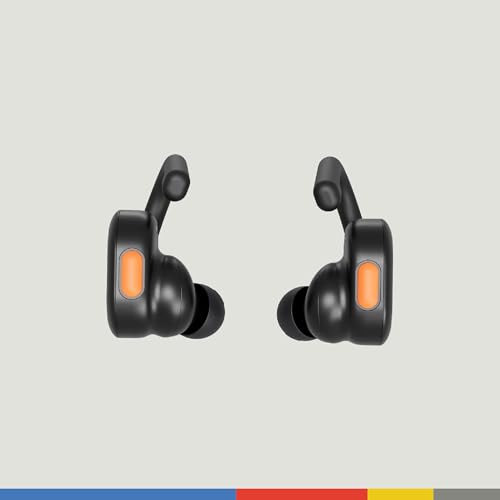
Fit is the least documented part of a product whose main selling point is fit. The Included Components field lists a cable, the earbuds and a wireless charging case. No ear tips are itemized and no tip sizes are stated anywhere. On a sealed design the tip produces the bass by sealing the canal and determines how much outside noise is blocked, so the tip count is a real specification. Confirm it before buying. The flexible ear hooks themselves are the retention mechanism and Skullcandy claims a fit that will not fall out, which is the reasonable expectation for a hook design.
Item weight appears as 95 grams and as 3.35 ounces, which agree with each other and describe the packaged product rather than an earbud. Product Dimensions of 7 by 4 by 2 inches describe the box. Country of origin is Vietnam.
What to compare it against
Inside Skullcandy’s range, the Grind offers the same software package in a non hook shape with an ambient mode but no published IP code, and the Sesh ANC XT adds active cancellation. Outside the brand, the JLab JBuds Air Sport is the direct hook rival with a stronger IP66 code, a documented 6 hour bud runtime and a two year warranty, and the JBL Endurance Race covers the same brief. More sit in our wireless earbuds category.
Who should buy it, who should not
Buy it if you want hook retention from a named brand with a one year US warranty, if a valid IP55 rating covers your training conditions, and if Tile tracking and hands free voice control are useful additions. The wireless charging case is a real convenience at this level and the hook design is the most secure retention method available on a wireless earbud.
Do not buy it if you need to know the bud runtime, because the page publishes four combined totals and no single charge figure at all. Do not use it for road cycling or road running, since it is sealed with no ambient mode described. Do not treat IP55 as waterproof. Do not expect a named codec, multipoint or active cancellation. And confirm what ear tips ship in the box, because the listing does not say.