



Description
Who these earbuds are built for
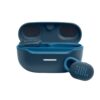
The JBL Endurance Race is a sport earbud first and a general listening earbud second. JBL files it under Sports and Exercise in the listing’s own use case field, wraps each bud in an ear hook the brand calls Twistlock, and builds the whole product page around sweat and water durability. That aims at one buyer clearly enough: someone who runs, lifts, rides an indoor trainer or moves around a gym and wants earbuds that stay seated and survive perspiration. It is a poor match for someone shopping mainly for quiet on an airplane, because the listing records Noise Control as Passive Noise Cancellation, which is another way of saying there is no active noise cancellation circuit in this product at all.
The published customer rating sits at 4.1 out of 5 across 7,374 ratings, and the listing places the model 720th in the earbud and in-ear headphone category. Those are reference points, not verdicts. The product first appeared in September 2021, which matters for one specific reason covered further down: the Bluetooth generation it shipped with.
Connection, codecs and what the radio actually delivers
The specification gives Bluetooth 5.0 and a 10 meter range. It names no audio codec whatsoever. That absence is the single most important thing on this page. Every Bluetooth headphone supports SBC, so SBC is what you are guaranteed here. Whether the Endurance Race also accepts AAC, the codec that matters most to iPhone and iPad owners, is not stated anywhere in the published specification, and JBL does not claim aptX, aptX Adaptive or LDAC either. Nothing on this listing supports a high resolution or lossless description, and any copy that suggests otherwise is going past what JBL published.
The listing does confirm compatibility with both Android devices and Apple iOS devices, and it confirms voice assistant access to Google Assistant and Alexa through tap controls. It does not mention multipoint pairing, so assume these connect to one device at a time until JBL states otherwise. It also publishes no latency figure, which is worth knowing if you intend to use them for video or games.
What Bluetooth 5.0 changes, and what it does not
Bluetooth 5.0 is a connection standard, not a sound quality standard. It governs how stable the link is, how efficiently the radio uses power and how far the signal reaches before it stutters. It does not make music sound better on its own, and a higher version number on a competing product does not automatically mean better audio. What 5.0 does mean here is that this design predates LE Audio and the LC3 codec, so features built on that newer foundation are not part of the picture. If that platform matters to you, something more recent such as the Soundcore Sport X20 and its own sport oriented feature set is worth reading next.
Battery, split into the two numbers that matter
JBL advertises up to 30 hours, and the specification field labelled Battery Life says 10 hours. Both are correct and they describe different things, which is exactly the confusion these listings create. The feature bullet resolves it: 10 hours from the earbuds themselves, and 20 more hours held in the charging case. A single continuous listening session is therefore a 10 hour proposition, and 30 is the total available before the case itself needs a wall socket. If you are comparing against another product that quotes only a combined figure, compare bud runtime to bud runtime or the comparison means nothing.
Two more numbers are published. Charging time is listed as 2 hours, and JBL states that 10 minutes of what it calls Speed Charge returns roughly an hour of playtime. Treat all of these as best case figures. Quoted playtimes are measured at a moderate volume, and since this model has no active noise cancellation to switch on, at least you are not also losing runtime to an ANC circuit. Volume, call time and cold weather all shorten real results.
Fit, seal, controls and what IP67 is actually worth
This is one of the rare listings in this catalog where the water rating is stated as a real IP code rather than a vague adjective. JBL publishes IP67, and the bullet explains it correctly: fully dust tight, and able to withstand submersion in water up to one meter. That is a genuine sport rating and considerably beyond the IPX4 splash resistance most workout earbuds carry. Two caveats belong alongside it. No IP rating covers seawater, chlorinated pool water or pressurized water, and seals degrade with age, heat and repeated charging port use, so a three year old pair is not the pair that was certified.
Fit is handled by the ear hook enhancer with Twistlock. JBL’s own product note is unusually candid and worth restating: if the tip size does not match your ear canal, or the headset is not seated properly, you will not get the intended sound quality or call performance. That is the seal problem described by the manufacturer itself. What the listing does not do is say how many ear tip sizes are in the box, which is a real omission, because tip count is the specification that decides whether an unfamiliar ear canal gets a seal at all. Controls are tap based on the bud, and the microphone array is described as dual beamforming for calls. Weight is given as 57 grams for the packaged set and 2.01 ounces for the item, figures that agree with each other. The driver is a 6mm dynamic unit and impedance is listed as 16 ohms.
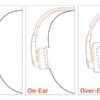
Ambient Aware and TalkThru are JBL’s names for letting outside sound back in, either to stay alert to your surroundings or to hold a conversation without pulling a bud out. Those are useful, but they are not the same thing as an open ear design when you are near traffic. If road safety is the reason you are shopping, the products in our open ear listening section leave the ear canal clear by design and are the more honest answer for cycling and road running.
What the listing does not publish
Several things are missing and worth confirming before you buy. There is no codec list. There is no ear tip count. There is no multipoint claim. There is no app named, so equalizer adjustment should not be assumed. There is no latency figure. The Age Range field says Adult and Kid, and that deserves a flag of its own: nothing in this specification describes a volume limiter, and a product carrying a marketing field that mentions children is not the same as a product with a hardware volume cap. Any ceiling that lives in a phone setting can be switched off by whoever is wearing the earbuds, so it is not a hearing protection feature. Nobody should treat these as safe for a child’s hearing on the strength of an age range field.
If the Endurance Race is close but not right, the obvious next reads sit inside JBL’s own sport range. The JBL Endurance Peak 3 and its hook mounted sport design sits directly alongside this one, and the wired JBL Endurance Run 2 removes the battery question entirely if you would rather not charge anything. For a competitor’s take on secure fit with a published sport rating, the Jabra Elite 8 Active and its rugged brief is the reference point, and the wider true wireless earbud section holds the rest of the field.
Who should buy it, who should not
Buy it if you want a sweat resistant, hook secured sport earbud from a known brand with a real IP67 rating and a 10 hour bud runtime, and you are content with SBC level audio over a Bluetooth 5.0 link. Skip it if you need active noise cancellation, if you want multipoint switching between a laptop and a phone, if you require a named high quality codec, or if you are buying for a child on the assumption that a volume limit exists. On that last point the listing simply does not support the purchase.