


Description
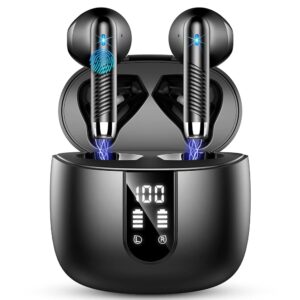
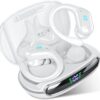
The Sajawass BX30 is a hook mounted sport earbud with 12 mm drivers, a case carrying a dual LED battery display and one of the longest single charge figures in this catalog: 15 hours. That number is the reason to look at it. The listing also gives the product two different model designations, publishes an 80 hour total that its own arithmetic does not support, and lists a battery type that cannot exist in an earbud.
Who this is built for
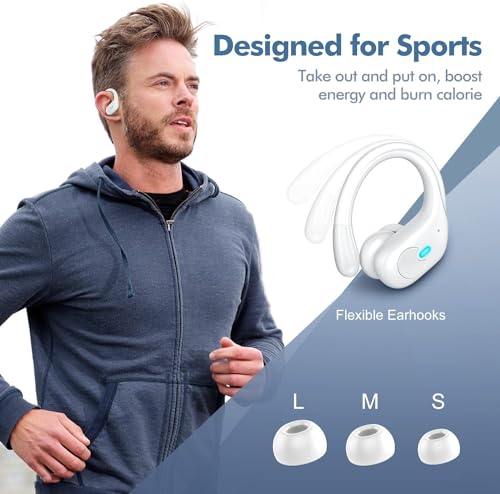
This is a gym product. Elastic silicone ear hooks wrap the outer ear, three tip sizes ship in the box, and Sajawass names running, gym work and workouts as the recommended uses. Hook plus tip is the most reliable retention arrangement in true wireless, considerably more secure than a bare bud, and it is what makes this worth considering for anyone whose stem style buds work loose during movement.
The buds seal the canal, so awareness of surroundings drops sharply and no transparency mode is published to restore it. That rules out road running and cycling in traffic regardless of what sport marketing implies. Anyone who needs to hear a vehicle should be looking at the clip and hook designs in the open ear headphone category. There is a volume point attached: a sealed bud in a loud gym tempts the listener to push the level until the music beats the room, and sustained high volume is the ordinary route to hearing damage that gives no warning while it happens.
Connection: Bluetooth 5.3 with no codec named
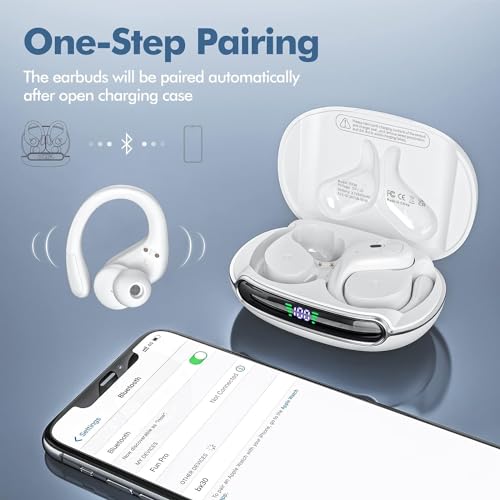
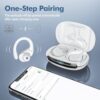
Sajawass publishes Bluetooth 5.3. The version improves connection stability and power draw over earlier releases and provides groundwork for LE Audio, but it is a radio specification and does not raise audio quality by itself. A hall switch in the case means the buds power on and reconnect to the last device as soon as the lid opens, which is a small convenience that works reliably in practice.
The Hi-Fi claim
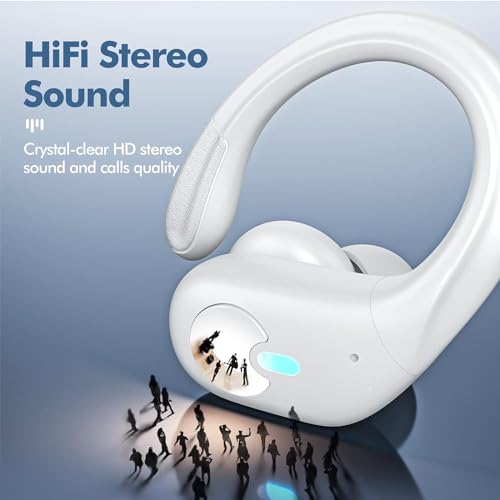
The product title describes HiFi stereo sound. No codec is named anywhere in this listing: not AAC, not aptX, not aptX Adaptive, not LDAC. With nothing named, SBC is the only codec a buyer can rely on, since every Bluetooth audio device supports it, and SBC does not carry high resolution audio. Any high fidelity claim over Bluetooth depends on a named codec and on the source phone supporting the same one independently, since both ends of the link negotiate together. On the published specification the Hi-Fi wording here is unsupported. No latency figure appears anywhere either, and multipoint pairing, wear detection and app support are all absent. Buyers who want a codec they can verify against their own handset should compare the Soundcore Space A40 review, which names LDAC and states its device requirement openly.
Battery: fifteen hours in the ear, and arithmetic that does not close
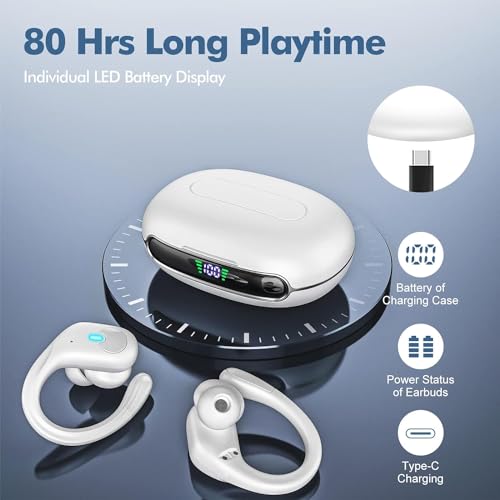
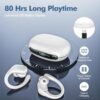
The structured Battery Life field records 15 hours as bud runtime, and the fourth feature bullet confirms it: one earbud can be used for 15 hours on a single charge. That is genuinely long. Most buds in this catalog sit between 5 and 10 hours, and 15 hours means a full working day plus a commute without returning to the case.
The total figure is where it stops adding up. The case runtime field records 80 hours, and the title repeats it. The same bullet also says the case provides eight further full charges. Fifteen hours multiplied by eight recharges, plus the initial charge, comes to 135 hours rather than 80. The listing publishes both claims without reconciling them. We are naming the discrepancy rather than picking one: either the case holds fewer charges than stated, or the 80 hour figure understates it, and there is no way to tell from what is published. Plan around the 15 hour bud figure, which is stated twice and consistently, and treat the total as unverified.
Charging time is recorded as 30 minutes, which would be exceptionally fast for a full charge and is more likely a partial or quick charge figure. The Batteries field states that one 9V battery is required and included. A 9V battery is the rectangular block used in smoke detectors and could not fit inside an earbud, let alone power one; this is import noise rather than a specification.
Fit, sound and the IPX7 claim
Three tip sizes ship in the box according to the first bullet, though the included components field lists only wireless earbuds with no accessory detail. Tip sizing is the specification with the largest practical effect on how any sealing earbud sounds, because a leaking seal drains low frequency energy and leaves the result thin and bright. Anyone underwhelmed on first listen should change the tip before drawing conclusions.
The driver is 12 mm, which is mid sized for an in ear. Sajawass describes a cavity design that balances internal and external air pressure to avoid sound loss, which is a construction claim rather than a measurement, and publishes no frequency response, no sensitivity and no impedance figure. The noise handling is call side: the third bullet describes ENC noise cancelling, which processes the outbound microphone signal so the person on the other end hears the speaker clearly. The structured Noise Control field records None, confirming there is no active cancellation and no transparency mode for the wearer.
The water claim is IPX7 in both the title and the first bullet, while the structured Water Resistance Level field says only Waterproof with no code. Two of three sources agreeing on IPX7 is better than most listings here manage, but a buyer intending immersion should still get it in writing. A genuine IPX7 covers fresh water immersion under laboratory conditions. It does not cover seawater, chlorinated pools or high pressure spray, and seals degrade with age and with sweat salt building up around the housing. For a hook set whose rating is stated consistently across every field, the JBL Endurance Peak 3 review is a fair benchmark.
Model confusion, data problems and alternatives
The Model Name field reads BX36 while the item model number and every mention in the copy read BX30. The fourth bullet also describes this as an upgrade over a BX30 first generation, so there are potentially three designations in play. Confirm which one the seller is shipping. Ear Placement reads In Ear, Form Factor reads In Ear and Earpiece Shape reads over ear with hooks; only the last describes the product. The fifth bullet promises intuitive button touch controls and describes a button, while the Control Method field says Touch, so the input mechanism should be confirmed. Sajawass states a 4.7 out of 5 average across 338 ratings alongside an Amazon rank of 94,831st in Electronics and 5,166th in earbud headphones, which is the weakest rank in this part of the catalog despite the strong rating.
Buyers who want long runtime with a fully consistent specification should compare the JBL Endurance Race review or the Skullcandy Push Active review. More sport designs sit in the true wireless earbud listings.
Who should buy it and who should not
Buy the Sajawass BX30 if the 15 hour single charge figure is what you need and hook retention suits your training. That runtime is the strongest thing in the listing and it is stated consistently. Skip it if you want active noise cancellation, a named codec, or a total playtime figure you can rely on, since the 80 hour claim conflicts with the listing’s own charge count. Confirm the model designation, the IPX7 rating and whether the controls are a button or a touch panel before ordering.