Description
The listener this pair is built for
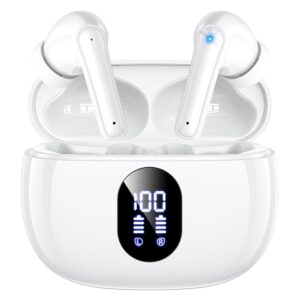
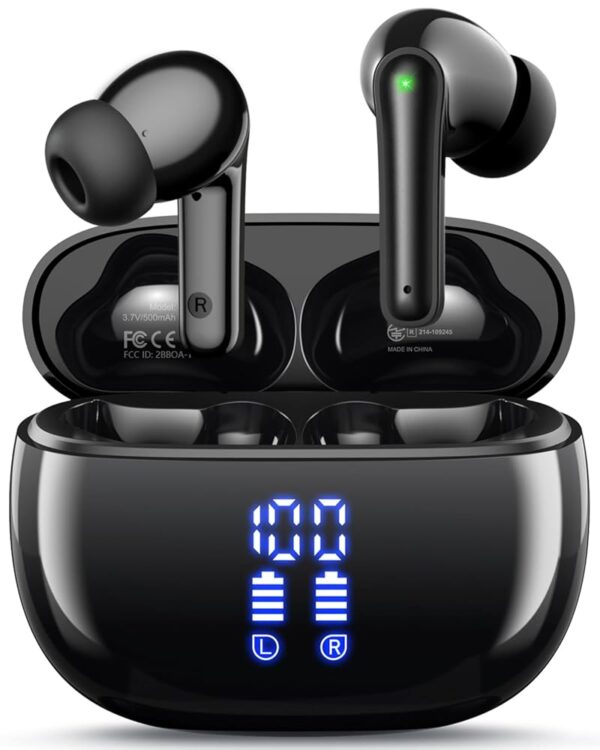
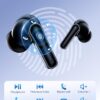
The HUIFU T12 is a sealed in-ear true wireless earbud aimed at the everyday budget buyer: commuting, gym sessions, podcasts and calls. HUIFU sells it on three things, a 13.2mm driver, a case with an LED charge display, and a battery claim that for once is written the right way round.
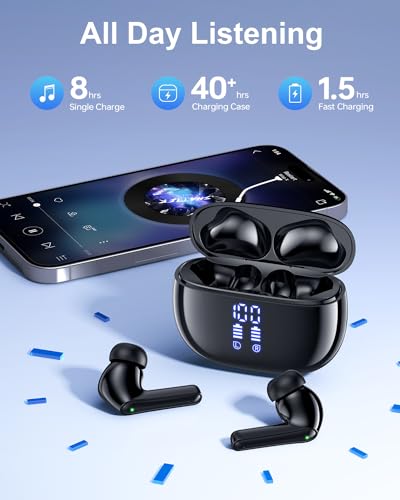
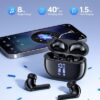
That last point deserves credit before anything else. The headline bullet reads “40(8+32) Hrs,” which spells out that the earbuds themselves run 8 hours and the case supplies a further 32. Nearly every competing listing quotes only the combined figure and lets the reader assume it applies to a single charge. HUIFU does not, and that alone makes the specification easier to trust than most in this bracket. Whether the rest of the page holds up is a different question, and the answer is mixed.
Connection: two latency figures, and no codec
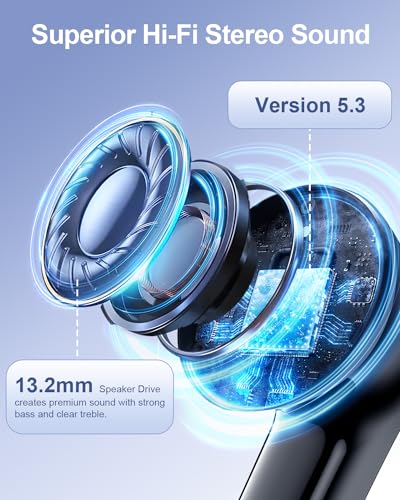
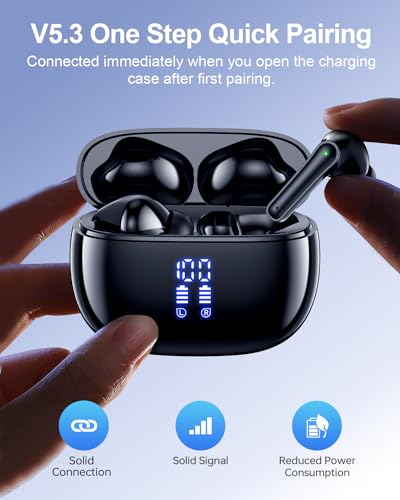
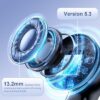
HUIFU lists Bluetooth 5.3. The bullet claims 50 millisecond ultra low latency, while the specification table records audio latency as 60 milliseconds. Both are in the range where video lip sync stays acceptable and competitive gaming does not, so the practical difference is small, but a listing that publishes two different numbers for the same measurement is telling you how carefully the page was assembled.
The same bullet claims the chip can “increase the sound quality transmission fidelity by 50%.” That is not a measurement of anything. Transmission fidelity is governed by the codec, and no Bluetooth audio codec is named anywhere on this listing. SBC, the baseline every Bluetooth device supports, is all you can safely assume. There is no published evidence of AAC, which matters on Apple devices, and none of aptX or LDAC, which only work when the phone and the earbuds both support the same one. Nothing here supports a high resolution description of the audio.
Range in millimeters
The specification table lists the Bluetooth range as “15 Millimeters.” The bullet says 15 meters, which is the number that makes sense, so the specification field is off by a factor of a thousand. It is a small error but a revealing one, because the same table also lists the impedance as 0.8 ohms, which is far below anything a real driver would present, and claims the product requires “1 D batteries,” which is impossible for a sealed rechargeable earbud. Read the structured specification table on this page as unreliable and work from the bullets.
Battery: the good figure and the field that contradicts it
The working numbers are 8 hours from the buds and 40 hours in total with the case, which holds 500mAh and recharges in about 1.5 hours over USB-C. A 15 minute fast charge is quoted as returning 90 minutes of playback, which is the feature that actually rescues a morning when you forgot to close the case lid.
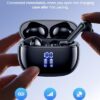
The specification table then records Battery Life as 1.5 hours. That is the case charging time pasted into the wrong field, and no reader should take it as the runtime. The 8 hour bullet is the credible figure. As with every product in this category, quoted playtime is a best case number measured at moderate volume, and the listing does not state a test volume, so plan for less at higher levels. The LED display on the case is the useful part of the package: it shows remaining charge numerically rather than through three ambiguous dots, which removes the usual guesswork about whether the case has anything left in it.
Fit, seal, water rating and the manufactured percentages
Three silicone ear tip sizes are included in small, medium and large. That matters more than any driver specification, because seal decides how much bass a sealed earbud produces. If these sound thin, the tips are the first thing to change. HUIFU adds that the tips carry “15 bend points” and fit “99% of ear shapes,” neither of which is a measurable claim, and the second is exactly the kind of number that no manufacturer could test.
The driver is quoted at 13.2mm with a four magnet arrangement, “more than 30% drive power” and a low frequency response “of up to 14 Hz.” None of those has a baseline or a measurement condition. A 14Hz figure in particular is a number you would expect from a subwoofer specification rather than an earbud, and it is published without any tolerance, so it describes nothing usable. The call microphone section claims a “3X larger microphone” and 25 percent better acquisition accuracy, again with no comparison point.
The water rating is IPX7, stated in the title and the bullets, with the specification table falling back to the bare word “Waterproof.” IPX7 is a genuine immersion rating, tested in fresh water at roughly one meter for about thirty minutes, so sweat and heavy rain are well within scope. It does not cover seawater, it does not cover high pressure water such as a shower jet, and the protection degrades as the housing seals and port covers age. HUIFU describes the protection as a nano coating on the earbud surfaces rather than a sealed housing, which is worth knowing because coatings wear.
Weight is given as 4.4 grams per earbud in the bullets, while the specification table lists 40 grams, which is the case weight recorded in the wrong place. The noise control field reads “Sound Isolation,” which is accurate: quietness here comes from the tip blocking the canal, and there is no active noise cancellation on this product and none is claimed.
What to know before you shop, and the alternatives
Amazon lists the T12 as ranked 1,451st in Electronics and 226th among earbud and in-ear headphones, with a 4.5 star average across roughly 763 ratings. The manufacturer of record is Daximen (Shenzhen) Technology, selling under the HUIFU brand name, and the product first appeared in January 2025.
One practical warning: “T12” is one of the most reused model codes in this whole catalog, and the products carrying it are unrelated. The TOZO T12 and the Qecnato T12 are entirely different earbuds from different sellers with different specifications. Match the brand name and the ASIN, not the model code, or you will order the wrong thing.
Because these seal the ear canal, they reduce your awareness of traffic and are not the right choice for cycling or road running, whatever the water rating suggests about outdoor use. If you want comparable battery from a brand with a longer track record, the Soundcore Life P2 Mini from Anker and the TOZO T10 line are the sensible cross shopping options. The rest of the format sits in our true wireless earbud reviews and our earbud headphone reviews.
Buy it, or skip it
Buy the T12 if you want a cheap sealed pair with an honestly stated 8 hour bud runtime, a 15 minute fast charge that actually helps, three tip sizes, an LED case display and an immersion grade IPX7 rating. Skip it if you need a named codec, active noise cancellation, or a specification table that agrees with its own marketing copy, because on this page the impedance, the range unit, the battery field and the battery type are all wrong.