
Description
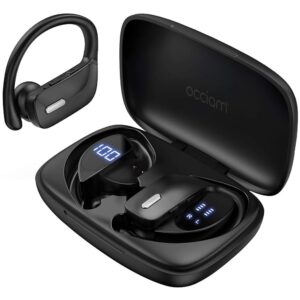
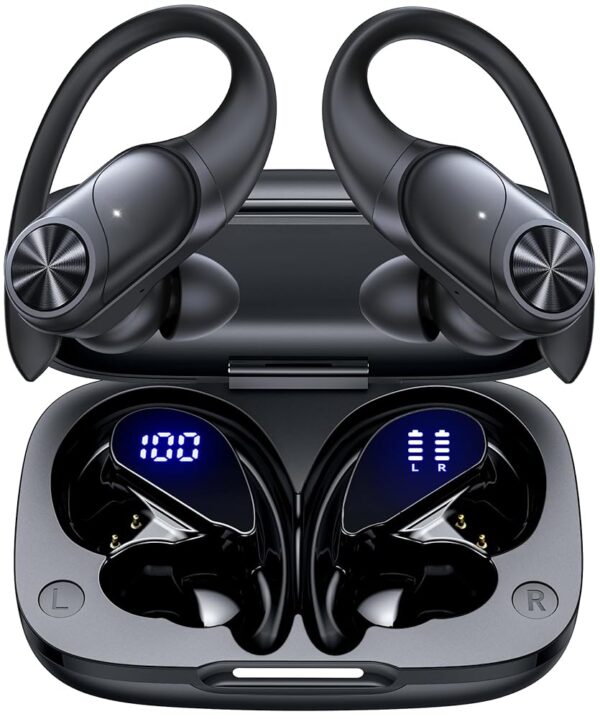
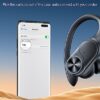
The PocBuds T60 is a sports-oriented true wireless earbud with flexible ear hooks, 13mm drivers, a wireless charging case carrying a dual LED battery display, and a published IPX7 water rating. It became available on June 6, 2023, shows a 4.4 star average across 13,276 ratings, and is ranked 186th in Electronics and 32nd in Earbud and In-Ear Headphones in the captured listing data.
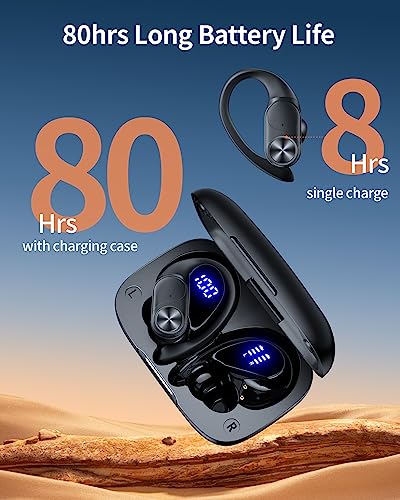
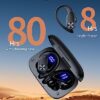
The product title leads with “80hrs Playtime.” That figure is the charging case, not the earbuds. PocBuds states it correctly in the first bullet: each earbud offers up to 8 hours of listening time on a single charge, and 80 hours is the total achieved by taking turns with the case. Eight hours is the number that decides whether these last a session; 80 is the reservoir in your pocket.
Who this suits, and one use case to rule out
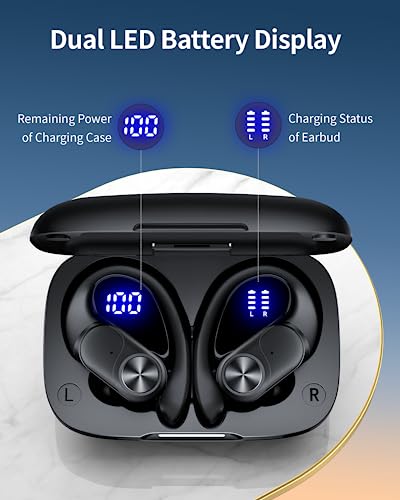
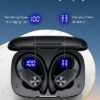
Ear hooks are the right retention method for exercise, because a hook over the ear does not depend on the tip alone holding the bud in place. Combined with three tip sizes in the box, a one hour case charge and an IPX7 rating, this is a gym, treadmill and running-track product. The dual LED display on the case is a genuinely useful addition, showing the remaining charge of both the buds and the case at a glance.
Now the part the listing gets wrong. The recommended uses field lists “Cycling, Motorcycling, Running, Calling, Snowboarding, Skateboarding, Exercising, Gaming.” These are sealed in-ear earbuds. The noise control field says “Sound Isolation,” meaning the tips block outside sound, and no transparency or ambient passthrough mode is mentioned anywhere in this listing. On a road, that seal removes the cues that tell you a car is approaching from behind, and on a motorcycle it removes your ability to hear traffic, sirens and your own engine.
Nothing in this catalog should be read as endorsing that. Sealed earbuds belong in the gym, not in traffic. If you want audio while moving on a road, an open-ear design that leaves the ear canal clear is the correct category. The recommended uses field on this listing reads as generated rather than considered, and it should be ignored.
Connection: Bluetooth 5.3, and no codec at all
PocBuds lists Bluetooth 5.3 with a range of up to 30 feet, and describes a low latency listening experience without publishing a millisecond figure. A newer Bluetooth generation improves connection stability and power behavior; it does not by itself change how music sounds.
No codec is named anywhere in the record. There is no mention of SBC, AAC, aptX or LDAC. The second bullet claims “Hi-Fi Sound Quality” and “high-fidelity sound reproduction,” and neither is supported by any published transmission specification. SBC is the baseline every Bluetooth device supports and the only assumption available here. A codec only functions when both the earbuds and the phone support it, and this page identifies neither.
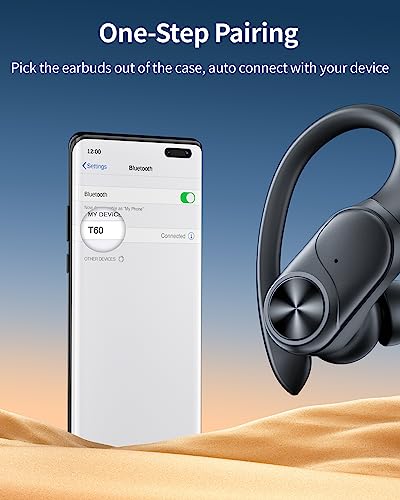
Two connection features are stated and are useful: automatic power on and connection when the buds leave the case, and a multi-use mode allowing binaural stereo or a single bud on its own. The single bud mode is worth having if you take long calls. Multipoint, wear detection and an app are all unmentioned, so treat them as absent.
A truncated sentence about wired use
The first bullet ends mid-phrase with “Bluetooth headphones support wired c” and stops. A wired connection on a true wireless earbud is unusual enough that the unfinished sentence is worth flagging rather than guessing at. The specification field “Headphones Jack = Bluetooth” is not a jack at all, and “Cable Feature = Detachable” appears on a product whose only cable is the Type-C charging lead. None of these adds up, and buyers should not assume a wired option exists.
Battery and charging
Eight hours per bud is a strong figure and the case is quoted at enough capacity to reach 80 hours in total. Charging time is given as 1 hour, and the case supports wireless charging as well as Type-C. No volume level is stated for the 8 hour figure, and quoted playtimes are always measured at a moderate level with any extras off.
One field is not real: “Carrying Case Battery Average Life = 3 Years.” That is a product lifespan guess sitting in a field meant for runtime, and it tells you nothing. Another, “Bluetooth Range = 3E+1 Feet,” is 30 feet written in scientific notation, an import artifact rather than a specification anyone typed deliberately.
Fit, drivers and a form factor the record cannot settle
Three ear tip sizes ship in the box, sized S, M and L, alongside the flexible ear hooks. Seal is what decides whether a sealed in-ear sounds full or thin, so tip choice is a real specification. If these sound hollow, change the tip before you change the volume.
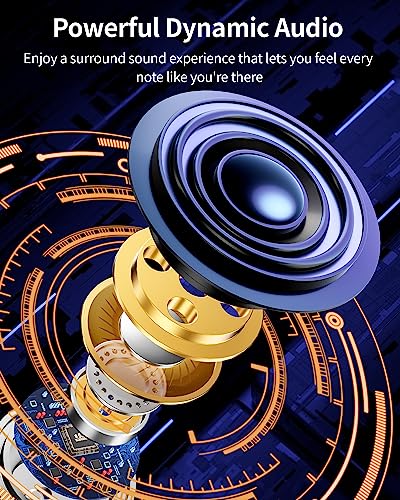
The drivers are 13mm double-layer diaphragm units with a 32 ohm impedance and a stated frequency range of 20 Hz to 20,000 Hz, which is more driver detail than several competing sets publish and more than the Samsung Galaxy Buds Plus listing in this catalog gives. A separate field reads “Frequency Response = 20 KHz,” which is a single number where a range belongs and is contradicted by the proper range in the same record.
The form factor fields say “Over Ear” and the style field says “Over-Ear,” while the ear placement is described as over ear too. These are in-ear earbuds with hooks that pass over the ear, which is a different thing from an over-ear headphone, and the fields conflate the two. The control description is also inconsistent: the copy describes one-button control while the specification says “Control Method = Touch.”
On water, IPX7 is a published code and it means immersion in fresh water under test conditions, which is stronger than the “sweat-resistant” framing PocBuds attaches to it. The specification field, meanwhile, says only “Water Resistant” with no code. Take the IPX7 figure as the published claim, and note that no IP rating covers seawater, pools or pressurized water, and that seals degrade with age and sweat salt.
The hearing safety point
Two fields in this record need reading together. The age range says “Adult, Teen, Kid,” and a separate field gives the department as “Unisex Child.” This product is being offered for children.
There is no volume limiter published anywhere on this listing. No decibel cap, no app, no parental control and no hardware limit. Sealed in-ear earbuds sit close to the eardrum and remove the cue that tells a listener a room is loud, which is exactly the situation where volume creeps up unnoticed. We cannot describe this or any headphone as safe for a child’s hearing. If it is going to a young listener, set a volume limit on the source device and check that it cannot be switched off in settings.
What is missing, and where else to look
Not published: codec, microphone count, latency in milliseconds, bud weight as distinct from packaged weight, case capacity, or app support. For comparison, the TOZO T9 publishes IPX7 with a stated 60 percent volume condition on its battery figure and ships six tip sizes, the occiam sports earbuds are the other ear hook set in this part of the catalog, and the TOZO NC2 is the option if you actually want active cancellation. Wider comparison sits in the wireless earbuds section.
Who should buy it
Buy the T60 if you want ear hooks, 8 hours per bud, three tip sizes, a published IPX7 rating and a case with a battery display. Skip them if you need a named codec, active noise cancellation, a transparency mode, or a volume limit, and disregard the listing’s suggestion that a sealed earbud is suitable for cycling or motorcycling, because it is not.