

Description
The ear this product is chasing
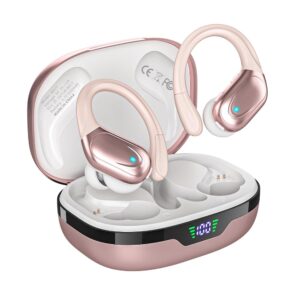
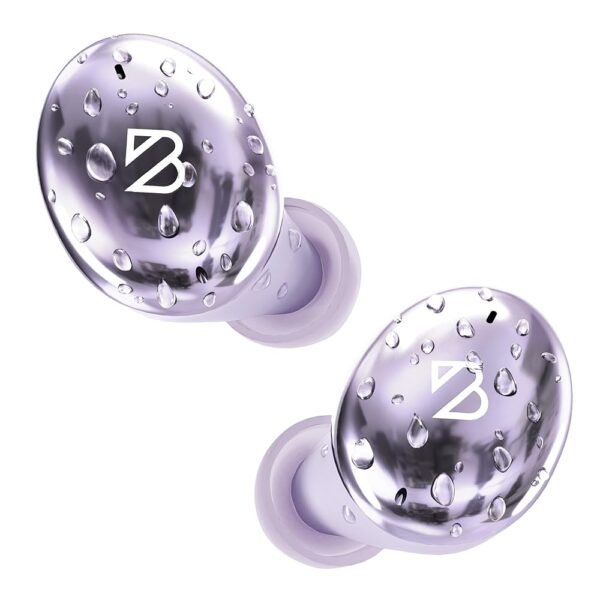
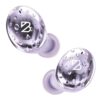
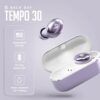
Back Bay Audio built the Tempo 30 around one problem, and it is a real one: most true wireless earbuds are designed to an average ear canal, and people whose canals sit below that average end up with a bud that will not seal, will not stay in, or aches after twenty minutes. The listing leans on that all the way through, naming small ear canals in the title and filing the product under a Department field that reads womens. The evidence behind the claim is better than usual, because the count of included ear tips is actually published: six sizes, which is double what a typical set ships with.
The published rating is 4.3 out of 5 across 13,031 ratings, one of the larger rating counts in this catalog, and the listing places the model 452nd in the earbud and in-ear headphone category. The product first appeared in August 2021. One title claim should be set aside immediately: Back Bay describes the sound as award winning, and no award, body or year is named anywhere on the listing. An unnamed award is not a specification.
How it connects, and what that gets you
The specification gives Bluetooth 5.0 and a range of 30 feet, which is roughly nine meters. Worth noting that most listings in this catalog quote range in meters, so a direct comparison needs the conversion done first. No audio codec appears anywhere in the specification. SBC is the guaranteed baseline, AAC is not confirmed, and aptX and LDAC are not claimed. Nothing here supports a high resolution or lossless description of any kind.
One number is unusually specific and worth crediting: audio latency is published at 40 milliseconds. Most listings in this catalog publish nothing at all on latency, so a stated figure is a small mark in this product’s favor even though no measurement method is given alongside it. Forty milliseconds is low enough that video lip sync should be acceptable and high enough that competitive gaming would still feel it.
Ignore the compatibility list
The Compatible Devices field on this listing runs to dozens of phone models across Apple, Samsung, Google, LG and OnePlus. That is a keyword exercise, not information. Any Bluetooth 5.0 earbud pairs with any Bluetooth phone, and the presence or absence of your handset from that list tells you nothing about how well it will work. The useful compatibility question is codec support, and that is precisely the field the listing does not fill in.
Battery, and a specification table that contradicts itself
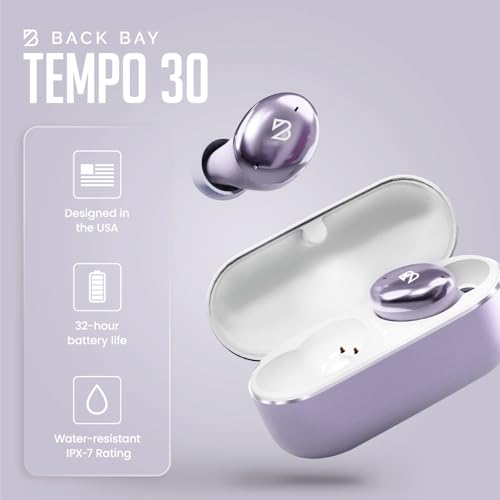
Here the listing works against itself. The Battery Life field says 32 hours. The Carrying Case Battery Average Life field also says 32 hours. Those cannot both be right, because a case that holds 32 hours and buds that run 32 hours would produce a 64 hour total. The feature bullet gives the real breakdown: 8 hours of playtime in each earbud, plus roughly 24 more hours in the charging case, which adds up to the 32 hour figure quoted on the front of the box. So the honest reading is 8 hours per charge from the buds, 32 hours in total, and the specification table has simply copied the total into two fields.
The supporting numbers are more consistent. The case holds a 400 mAh battery, takes about 2 hours to refill and the buds take about 1.5 hours. Charging is over USB-C, which is the right connector in 2026 and not something every product at this level manages. As always, 8 hours is a best case measured at moderate volume, and this model has no active noise cancellation drawing power, so there is no ANC penalty to account for. A field labelled Number of Power Levels reading 5 appears in the table with no explanation of what it counts, and it should not be read as meaningful.
Fit, seal, controls and the water rating question
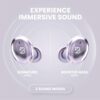
Six ear tip sizes is the single best specification on this page. Fit and seal decide how much bass an in-ear headphone appears to have, because a leaking seal drains low frequencies first and leaves the sound thin and bright. A product that ships six tip options has genuinely done more to solve that than one that ships three, and for a small canal it is the difference between the product working and the product going back.
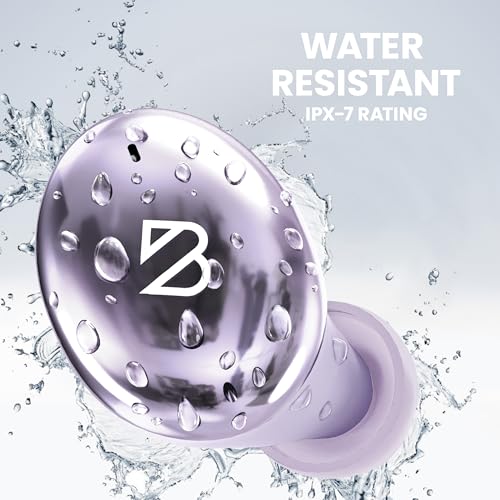
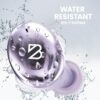
The water rating needs unpicking, because the listing gives three different answers. The title says sweatproof. The Water Resistance Level field says Waterproof, an adjective with no code attached. The feature bullet says IPX7 and then immediately adds, in the manufacturer’s own note, that these are not for swimming. IPX7 is the only actual code on the page, and it describes immersion in fresh water to one meter for thirty minutes. That is a strong rating, but the bare word waterproof in the specification field is not supported by anything more than that bullet, and Back Bay’s own swimming caveat is the honest limit. No IP rating covers seawater, chlorinated pool water or pressure, and the seal degrades as the product ages.
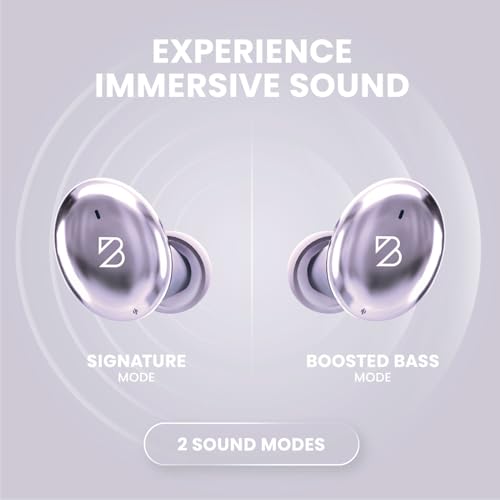
Controls contradict each other too. Control Type reads Button Control while Control Method reads Touch, and those describe different hardware. The bullets describe tapping a button to engage an Extra Bass mode, which points toward physical buttons. Other published figures: an 8mm dynamic driver, 16 ohm impedance, 110 dB sensitivity, and 45 grams for the set with an aluminum case weighing 36 grams. The Frequency Response entry reads 20000 Hz as a single value, which is not a frequency response and should be ignored. The Color field reads 3. Lavender, an import artifact where a variant number has been left glued to the color name.
What is missing, and where else to look
Noise Control is listed as Sound Isolation, meaning passive blocking from the seal alone. There is no active noise cancellation, no transparency mode, no multipoint pairing, no wear detection and no companion app named. None of those are failures at this level, but none of them should be assumed either.
If small ear fit is the reason you are here, several other products in the catalog attack the same problem from different angles. The Xmenha SK19 and its near invisible profile goes further on smallness than anything else here, while the Soundcore Life P2 Mini from Anker and the compact TOZO A1 Mini both trade features for a smaller shell. For a brand name alternative in the same shape, the JLab JBuds Mini and its keychain sized case is the closest comparison. Browse the wider true wireless earbud section or the broader in-ear headphone listings for the rest.
Who should buy it, who should not
Buy it if a poor seal has been your recurring problem and six tip sizes is worth more to you than a feature list, if 8 hours per charge covers your day, and if USB-C and a published latency figure appeal. Skip it if you need active noise cancellation, if you want multipoint switching, if a named codec matters, or if the phrase award winning in the title is doing any work in your decision, because no award is identified. Read the water rating as IPX7 with the manufacturer’s own no swimming caveat attached, not as the bare word waterproof.